Women's Lingerie — Page 2
Wholesale directory for the clothing trade — lingerie.
This second lingerie page is a guide page rather than a second list of companies: the wholesalers themselves are listed on the first lingerie page, and this page covers the product side of the department — the types of women's underwear and bras a buyer stocks, with links to the underwear and bra guides where each style is explained in full.
Lingerie Guides and Resources

Women's Wholesale Clothing Categories
Underwear Styles a Lingerie Buyer Stocks
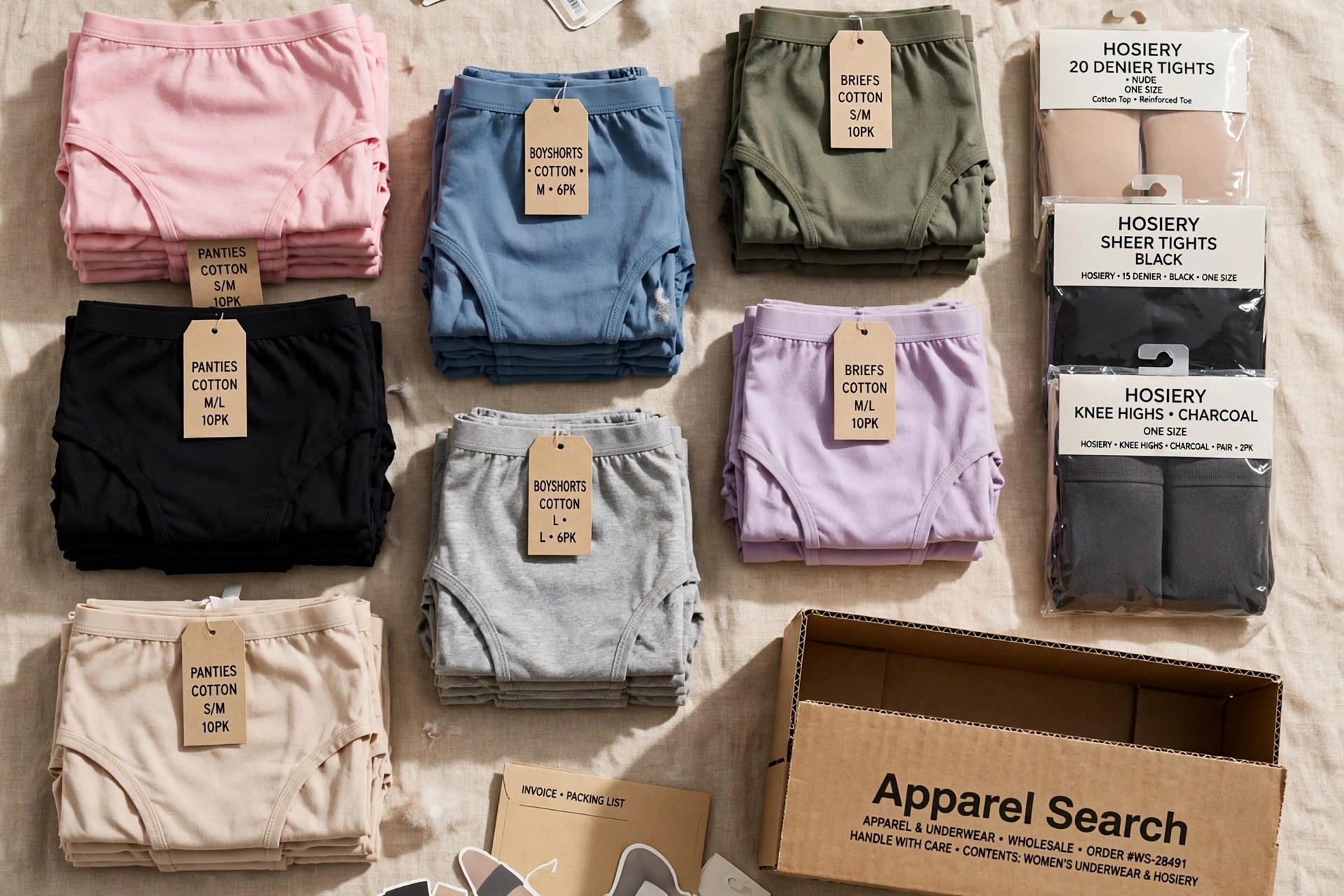
A wholesale lingerie department is organised by garment type. Panties are the volume line, and within them the styles divide by cut and coverage: briefs, boyshorts, thongs, bikinis and high-cut styles each serve a different customer and a different outfit. Buyers stocking a new store usually begin with a core of briefs and bikinis in neutral shades, then add boyshorts and thongs as fashion lines whose colours and fabrics change with the season.
Bras sit alongside as the department's fit product: band and cup sizing, underwire and soft-cup construction, and strapless and multiway styles for occasion dressing. The underwear and bra glossary sections linked from this page define each style, and the fashion influence section linked above covers panties, g-strings, boyshorts and thongs as products, style by style.
How the Two Lingerie Pages Work Together
The first page of this directory lists the lingerie wholesalers themselves — manufacturers, distributors and intimate apparel houses — with their locations and contact details. This page exists so that a buyer planning a department can work through the product types first, then return to the company listings with a clear list of the styles, size ranges and fabrics the store actually needs.
When you approach a supplier from the first page, name the styles you want rather than asking for a general lingerie range: a house whose strength is bras may not be the right source for cotton panties, and a basics manufacturer may not carry occasion styles. Samples matter most in this department, because fit and fabric hand-feel are what the customer judges, and they cannot be assessed from a catalogue photograph.
Fabric is the other planning decision. Cotton and cotton-blend panties are the everyday core of most departments; microfibre and lace styles sell as fashion and occasion lines; and seamless constructions exist because close-fitting dresses and trousers show lines. A buyer who maps each style to the outfit it is worn under — everyday, occasion, sport, or under tailored clothing — ends up with a range that covers the department without duplicating it, and can brief every supplier on the first page from the same plan.
Replenishment is the other half of lingerie buying. Core underwear styles sell all year and must never be out of stock in the middle sizes, so ask each supplier how core styles are held, how quickly they can be reordered, and whether shades stay constant between dye lots. A supplier who keeps your core range continuous is worth more than a slightly cheaper source whose styles change every delivery.
Common Questions
Why does this page have no company listings?
The lingerie wholesalers are all listed on page one of this directory. Page two covers the product side — the types of underwear and bras a store stocks — with links to the underwear and bra guides, so buyers can plan a department before shortlisting suppliers.
What underwear styles should a new lingerie department stock first?
A core of briefs and bikinis in neutral shades, supported by boyshorts and thongs as fashion lines, plus a bra range across the band and cup sizes your customers wear. Add occasion styles once the core is selling.
Where can I learn what each underwear style means?
The types of underwear and bra glossary sections linked from this page define each style — panties, g-strings, boyshorts, thongs and the main bra types — in plain terms.