Clothing
Clothing Definitions — definitions of garments and clothing terms from Apparel Search
Search Apparel Search
At a Glance
Definition: Clothing is everything worn on the body — coverings for the trunk and limbs, hands, feet and head — worn both to protect the body from weather, work and harm, and to send social messages about status, occupation, affiliation and identity.
Also known as: Apparel, dress, garments, attire
Category: Clothing Definitions
Word Origin
Clothing is built on cloth: Old English clath meant a piece of fabric, and clothes was simply its plural — pieces of cloth — before the word narrowed to mean the garments made from them. To clothe someone was, originally, to wrap them in cloth.
Clothing is the most universal human technology after language: every society wears it, and every wearer uses it twice over — once against the weather, and once as a message. In its broadest sense the word covers far more than shirts and trousers: it includes coverings for the hands, feet and head as well as the trunk and limbs, while things carried rather than worn sit at its border as accessories. This page sets out the definition properly — where clothing begins and ends, what it protects against, and how the social code it carries is read, from imperial purple to the school uniform to the deliberately shocking outfit.
On This Page
What Counts as Clothing — and What Does Not
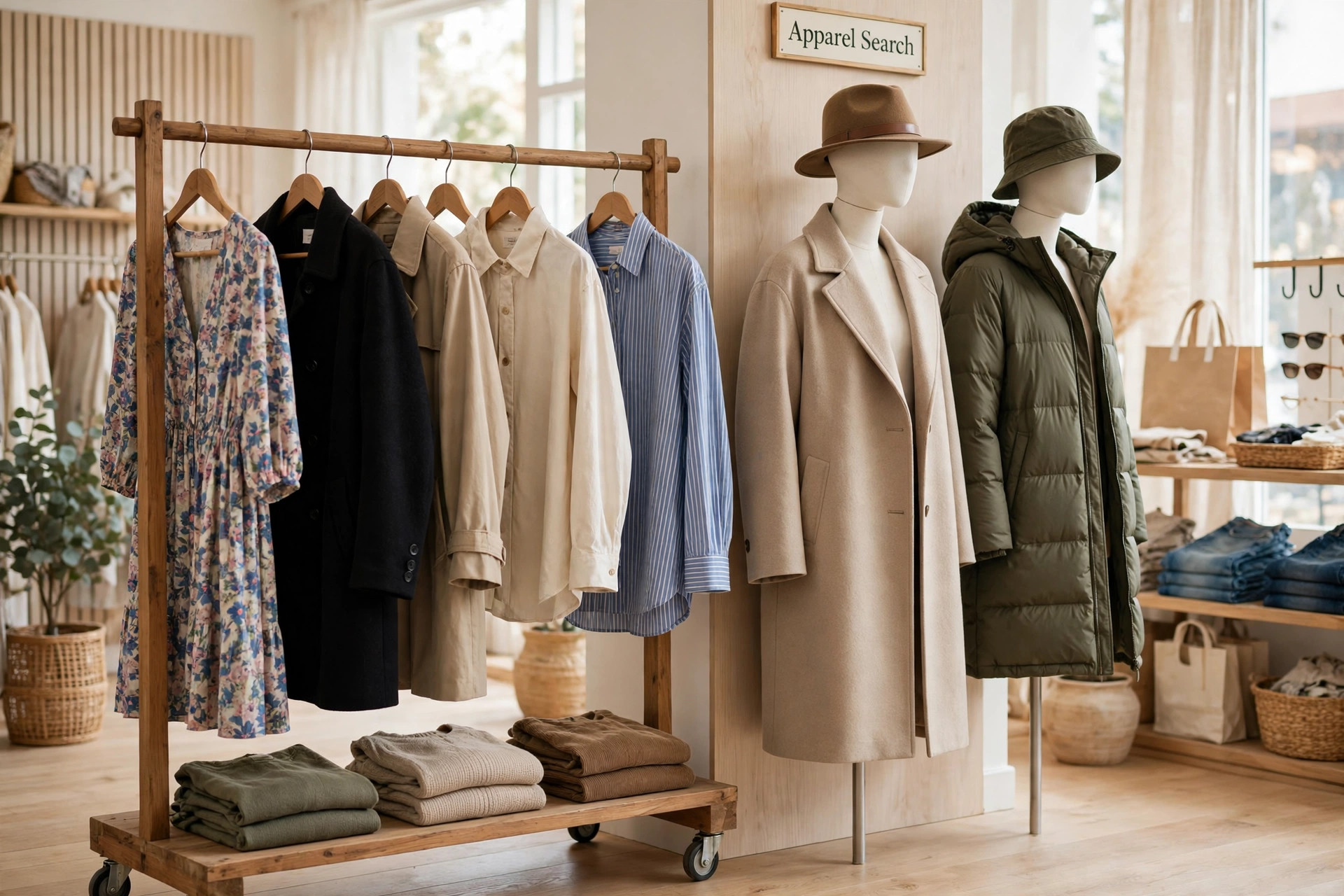
Humans often wear articles of clothing — also known as apparel, dress, garments or attire — on the body. In its broadest sense, clothing includes coverings for the trunk and limbs as well as coverings for the hands (gloves), the feet (shoes, sandals, boots) and the head (hats, caps).
The boundary of the word is drawn at wearing. Articles carried rather than worn — purses and umbrellas are the standard examples — normally count as accessories rather than as clothing, even when they are part of the same outfit. Decoration sits outside the boundary too: people adorn their bodies with makeup, perfume, jewelry and other ornament, and cut, dye and arrange their hair (see hairstyle), and sometimes mark their skin with tattoos, scarification and piercing. All of these contribute to the overall effect and message of an outfit, but none of them constitutes clothing itself.
Protection: Clothing as Equipment
People wear clothing for functional and social reasons, and the functional side comes first in history. Clothing protects the body against strong sunlight, extreme heat or cold and precipitation; against insects, noxious chemicals and weapons; and against contact with abrasive substances — in sum, against anything that might injure an unprotected human body. Humans have shown extreme inventiveness in devising clothing solutions to practical problems.
At the specialised end, clothing becomes equipment: armour, the beekeeper's suit, motorcycle leathers, the diving suit and high-visibility clothing are all garments whose social message is secondary to a physical task. Modern technical fabrics extend the same principle — a membrane such as Gore-Tex is clothing engineering, keeping rain out while letting sweat escape. Everyday dress is the mild end of this spectrum: a coat is simply weather equipment that has been domesticated.
The Social Code: Status, Work and Belonging
Clothing also delivers social messages, and the messages only work because a community shares the code. Social status is the oldest message of all. In many societies, people of high rank reserve special items for themselves: only Roman emperors could wear garments dyed with Tyrian purple, and only high-ranking Hawaiian chiefs could wear feather cloaks and palaoa, carved whale teeth. Where no law reserves status garments, cost does the reserving instead — in current Western society only the rich can afford haute couture — and the threat of social ostracism polices the boundary further.
Occupation is announced just as plainly. Military, police and firefighters wear uniforms, as do workers in many industries; schoolchildren often wear school uniforms, students wear academic dress, and members of religious orders wear the uniforms known as habits. Sometimes a single item declares the job by itself — the high toque, the chef's hat, identifies a chief cook across a crowded kitchen.
Ethnic, political and religious affiliation is the third great message. In many regions, styles in clothing and ornament declare membership of a village, caste or religion: a Scotsman declares his clan with his tartan, and a French peasant woman traditionally declared her village with her cap or coif. Marital status is coded too — Hindu women, once married, wear sindoor, a red powder, in the parting of the hair, and wedding rings do similar work in the West.
Modesty, Dissent and Dress Around the World
Clothing can proclaim dissent as loudly as belonging. In 19th-century Europe, artists and writers dressed to shock — George Sand in men's clothing, emancipationists in bloomers, male artists in velvet waistcoats and gaudy neckcloths — and Bohemians, beatniks, hippies, Goths and punks continued the counter-cultural tradition through the 20th century. What counts as modesty or as allure is part of the same code, and it varies radically between cultures and across time: many Muslim women wear a head or body covering — hijab, burka, chador, abaya — that proclaims respectability, while other dress signals flirtation, from stiletto high heels to close-fitting, body-revealing clothes. Mixed messages are common, because the code is read in details, and fashion keeps rewriting it.
Western fashion has to a large extent become international fashion, as Western media and styles reach every part of the world, and cheap mass-produced Western clothing is worn almost everywhere. Yet people still wear ethnic or national dress on special occasions and for particular roles: most Japanese women wear Western-style dress daily but keep expensive silk kimonos for special occasions, and a Tongan man may combine a used T-shirt with a Tongan wrapped skirt. Between the poles sit international standard business attire, global because business is global, and clothes for ceremonial occasions, which resist change on principle. Style tribes organise the rest — preppy polish at one end, and at the other the music-linked alternative styles: Goth, Hippie, Punk, Grunge and fetish-wear, each a uniform of nonconformity.
Materials, Maintenance and Making
Common clothing materials include cloth in its many forms, down for down-filled parkas, fur and leather; less common materials include bark, paper and rubber, along with PVC and nylon. Reinforcing materials such as wood, bone, plastic and metal stiffen garments such as corsets, bodices and swimsuits. The earliest clothing of all was probably fur, leather, leaves or grass, draped, wrapped or tied about the body — knowledge of it stays inferential, because clothing materials deteriorate quickly compared with stone, bone and metal, though bone and ivory sewing needles from about 30,000 BC survive, and genetic analysis of human body lice, which need clothing to live on a sparsely haired host, suggests clothing began roughly 40,000 to 70,000 years ago.
Clothing, once made, is under assault from within and without: the body sheds skin cells and oils and exudes sweat, while sun, damp, abrasion and dirt attack from outside, and fleas and lice take up residence in the seams. Well-worn clothing that is not cleaned and refurbished will smell, itch, look scruffy and lose function as buttons fall off and zippers fail. Most cloth clothing can be laundered and mended — felt is the standing exception, since it is not woven — and humans have developed specialised methods from pounding clothes against rocks in a stream to electronic washing machines and dry cleaning. Mending has declined in the age of cheap mass manufacture, when labour costs more than materials, but the thrifty still replace zippers and buttons and sew up ripped hems.
The making of clothing rests on two ancient textile arts, weaving and knitting, and its forms range from the wrapped kilt and sarong to the cut-and-sewn shirts and chemises of the tailored tradition, finished with details such as gussets and designed, at the top of the trade, by fashion designers. The specialist end of the subject is collected in our special suit definitions and invisibility cloaks aside — fiction's favourite garment — the vocabulary of the whole field is set out in clothing terminology.
Not to Be Confused With
Clothing and apparel mean the same thing, but they belong to different registers. Clothing is the everyday word — the one people use for what they wear. Apparel is the trade word, used by the industry that makes and sells clothing, and in retail it often stretches wider, taking in accessories such as gloves, hats and handbags alongside garments. A shopper buys clothes; a manufacturer produces apparel.
Common Questions
What is clothing?
Clothing is what people wear on the body: coverings for the trunk and limbs, and also coverings for the hands (gloves), feet (shoes, sandals, boots) and head (hats, caps). Articles carried rather than worn, like purses and umbrellas, normally count as accessories, not clothing.
What is the difference between clothing and apparel?
The words mean the same thing in different registers. Clothing is the everyday word; apparel is the trade word used by the industry that makes and sells clothing, and in retail it often includes accessories as well as garments.
Why do people wear clothing?
For functional and social reasons. Functionally, clothing protects the body against sunlight, heat, cold, precipitation, insects and abrasion. Socially, it sends messages about status, occupation, ethnic and religious affiliation, marital status and belonging — messages that only work because other people can read the code.
More to Explore
- Apparel Definition
- Clothing Terminology
- Fashion Definition
- Haute Couture Definition
- Uniforms Definition
- National Dress Definition
- Kimono Definition
- Ceremonial Clothing Definition
- Special Suit Definitions
- Designer Definition Guide
- American Fashion Designers
- Brand Name Designer Clothing List
- Clothing Industry Directory
- Clothing Industry Jobs