Men's Bowling Shoes Guide
Men's bowling shoes are the sliding footwear of the lanes: shoes built with a smooth leather or microfiber sliding sole on the front foot and a rubber braking heel, made to glide into a delivery on the polished approach and stop exactly where the foul line demands. They are the only shoes allowed on the approach for good reason - street shoes would scar the surface and refuse to slide - and owning a pair is the first equipment decision every league bowler makes.
Shop Men's Bowling Shoes Now
Shop Men's Bowling Shoes on Amazon Shop Men's Bowling Shoes on eBayThe Amazon and eBay links on this page are affiliate links. If you make a purchase through them, Apparel Search may earn a commission.
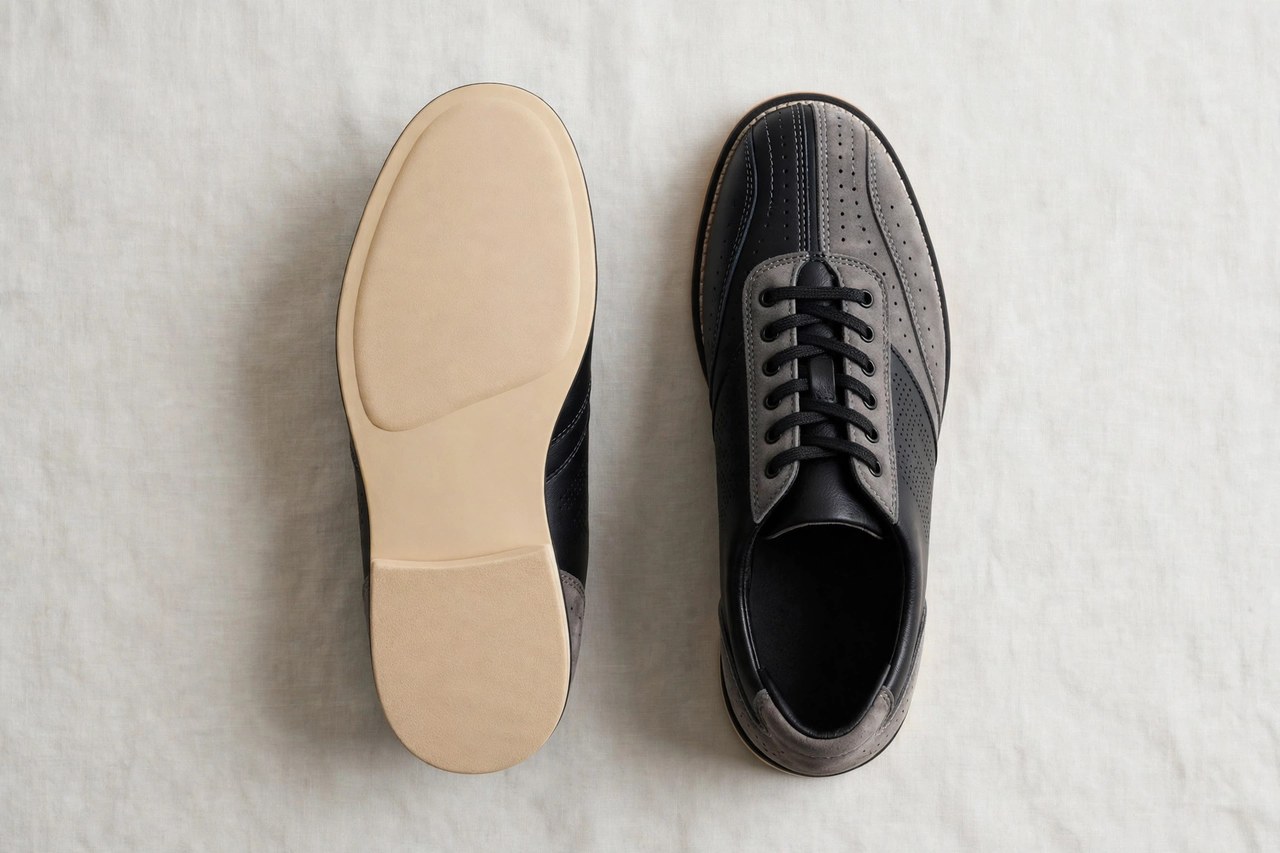
Men's bowling shoes are the sliding footwear of the lanes: shoes built with a smooth leather or microfiber sliding sole on the front foot and a rubber braking heel, made to glide into a delivery on the polished approach and stop exactly where the foul line demands. They are the only shoes allowed on the approach for good reason - street shoes would scar the surface and refuse to slide - and owning a pair is the first equipment decision every league bowler makes. This guide is built around the questions buyers actually ask: which style, which size, which fabric, and what will it look like after a year of real use - answered in order, with the trade-offs stated plainly.
Styles and Construction
House rental shoes are universal sliders, built to slide a little on both feet so either hand can rent them. Personal shoes split the jobs properly: a dedicated slide sole on the dominant sliding foot and a traction sole on the plant foot, with better models offering interchangeable slide pads and heels so a bowler can tune friction to a slick or sticky house. Athletic-style bowling shoes borrow sneaker uppers and comfort for long league nights, while classic leather styles keep the traditional silhouette.
Judge any pair by the same construction checklist: how the sole is attached (cemented soles are light and cheaper, stitched welts are repairable and dearer), what the lining does with moisture over a long day, and whether the insole is removable if you use your own supports. Weight matters more than most listings admit - a heavy pair taxes every step, while a well-balanced lighter pair disappears on the foot. Finally, check the outsole compound against your surfaces: hard rubber lasts, soft rubber grips, and the right answer is the one matched to where the shoes will actually walk, play or work.
Fit and Sizing
Fit bowling shoes like dress shoes with athletic socks: snug heel, room to wiggle toes, and no lateral slide - the plant foot's stability depends on it. Right and left-handed models differ by which shoe carries the slide sole, so buy your handedness, not just your size. New personal shoes slide more than rentals from the first game; give yourself practice frames to calibrate the approach before league scoring depends on it.
Fit footwear at the end of the day, when feet are at their largest, wearing the socks you will actually use. There should be roughly a thumb's width - about half an inch - between your longest toe and the end of the shoe, the heel should hold without lifting out as you walk, and the widest part of your foot should sit in the widest part of the shoe. Sizes are not standardized between makers, so treat your measured length and width as the truth and the printed size as a starting guess; between sizes, the one that needs no breaking-in argument is usually right.
Wearing and Care
Keep bowling shoes off every surface except the approach and the settee - one trip across a wet car park in slide soles ruins their finish and tracks grit back onto the boards. Brush the slide sole with a wire brush to restore its nap, store shoes in a ventilated bag with the soles protected, and never lend the slide shoe's job to street shoes: the approach you scar is your own next frame.
Care is rotation first: never wear the same pair on consecutive days if you can help it, because twenty-four hours lets moisture leave the lining and cushioning recover its shape. Brush or wipe down after wear, use trees or stuffing to hold the shape while drying, and never dry footwear on direct heat, which cracks leather and warps adhesives. Condition leather on schedule rather than on appearance - by the time it looks thirsty it is already dry - and reproof water-resistant finishes when water stops beading on the surface.
Common Questions
Why do bowling shoes slide on one foot only?
The delivery needs two different jobs: the front (sliding) foot glides into the release, while the trailing plant foot needs traction to push off and brake. Personal shoes specialize - slide sole on the sliding foot, grip sole on the other - matched to the bowler's handedness. Rental shoes compromise with mild sliding on both feet so anyone can use them.
Are personal bowling shoes worth buying?
For anyone bowling weekly, emphatically yes: the fit is consistent week to week (rentals vary), the slide is tuned to your delivery, hygiene is your own, and the rental fees a regular pays across a season approach the price of a solid personal pair. Occasional social bowlers are the rental market's honest customers.
What do interchangeable slide pads do?
They let a bowler tune the sliding sole's friction to the house: slicker pads for sticky approaches, grippier pads (and heels) for slick ones. Conditions vary between centers and even between morning and evening in the same center, so competitive bowlers carry a small kit of pads and heels the way golfers carry clubs.
More in Men's Clothes Guide B
Sliding Shoe, Braking Shoe
A bowling shoe is made for bowling, designed to help achieve better bowling performance; in performance or competitive bowling shoes, the sliding shoe features a sole that allows the bowler to slide easily during the delivery, while the braking shoe has a sole that provides traction, usually made of a higher-friction material such as rubber. The athletic style of bowling shoe has the look and feel of a standard gym shoe but is custom made for the sport.
Looking for Men's Clothing Stores?
This guide explains men's bowling shoes. To browse where to buy, visit our men's clothing store directory, where you can find retailers that carry them.