Start Here
A Men’s Trail Outfit, Built From the Ground Up
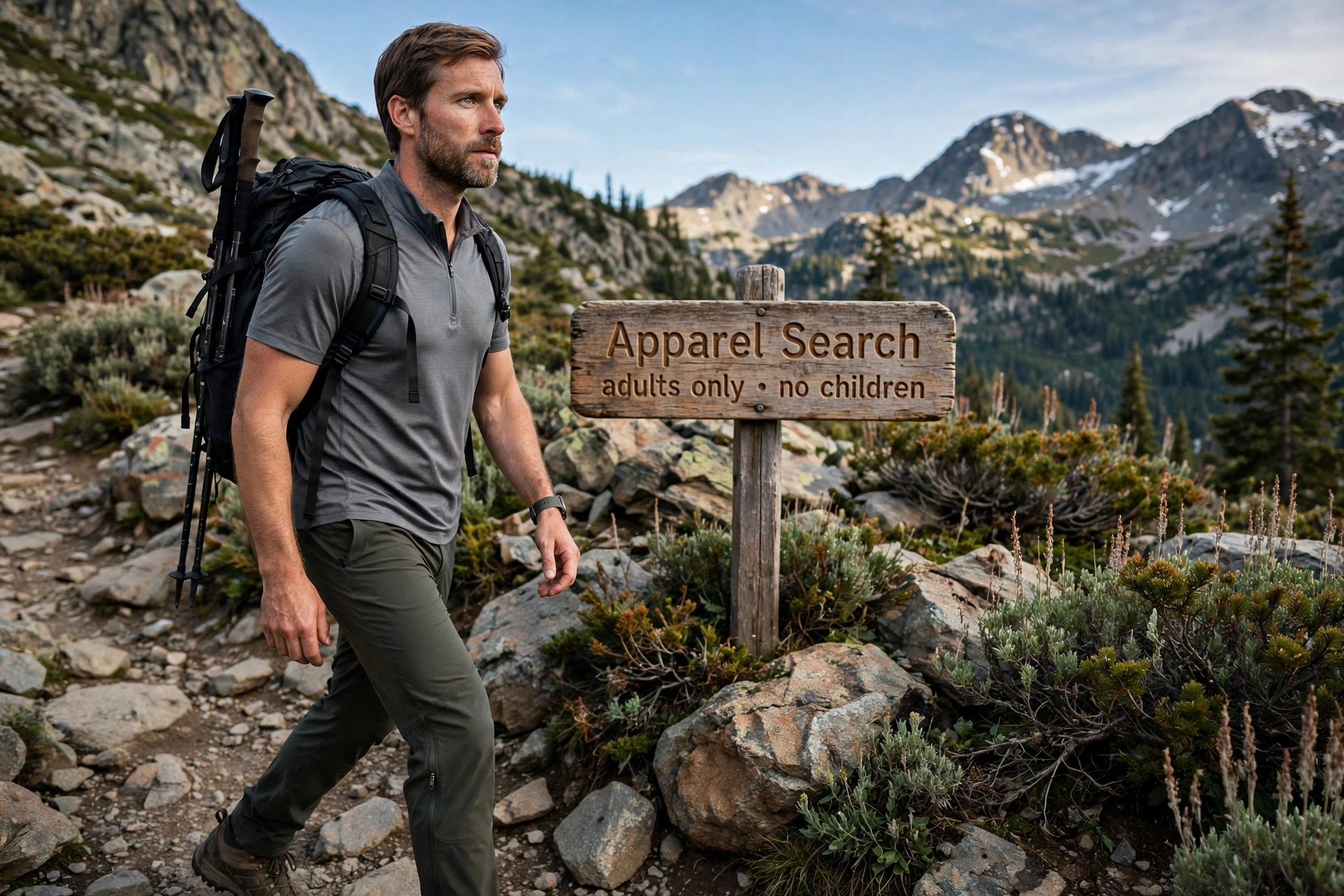
Men’s hiking clothing rewards the same discipline as any good kit: every piece earns its place. Footwear protects the feet that carry everything else, trousers handle terrain and weather, the top manages sweat, and the pack carries water plus the layer that saves the day when conditions turn. Get those four decisions right and the walk looks after itself.
Start with fabrics. Synthetic and merino clothing dries fast, resists chafing and stays comfortable across a long day; cotton — including the favourite old tee and any pair of jeans — does the opposite. Then match the outfit to the route using the temperature guide, and add the system in our men’s hiking layering guide when cold or wet weather is in play.
Bottoms
Pants, Convertibles and Shorts
Hiking pants in stretch-woven synthetic fabric are the workhorse: they shed light rain, dry in minutes, protect against brush and sun, and move through a full stride and a high step without binding. Look for a gusseted crotch, articulated knees, a secure waist and pockets that close. Convertible pants, whose legs zip off into shorts, are the pragmatic favourite for changeable days — one garment for the cold start, the hot climb and the overgrown descent.
Hiking shorts suit hot, open, well-kept trails and little else: legs take the sun, the scratches and the insects. Whichever length you choose, test the full range of movement at home — crouch, lunge and sit — because a waistband that digs or a seam that rubs at mile one is a genuine problem by mile ten.
Tops and Feet
Tops, and the Footwear Underneath It All
On top, a moisture-wicking tee or a long-sleeved hiking shirt does the work. Shirts earn their keep on sunny and buggy routes: collars protect the neck, sleeves roll or button down, and vents move air across the back. Underneath, choose underwear and a base top in synthetic or merino to prevent the chafing that ruins more hikes than bad weather does. A light fleece or shell rides in the pack as insurance.
Footwear is the foundation. The men’s hiking boots guide covers support, stiffness and fit for rough ground and heavier loads; lighter trail shoes suit firm, dry paths. Pair either with cushioned hiking socks, break boots in before any long route, and consider the men’s waterproof shoes guide if your trails run wet — while remembering waterproof membranes trade breathability for dryness in summer heat.
Packs and Carry
Packs and Carry: The Outfit’s Fifth Piece
The pack is part of the outfit, not an accessory to it. A day pack of roughly 15–25 litres carries water, food, sun and insect protection, navigation and the spare layer, with a hip belt that puts weight on the hips rather than the shoulders. Fit it loaded before the trip: shoulder straps should guide, not carry, and nothing should rub at the neck or lower back.
Carry discipline keeps the outfit working. The rain shell and warm layer go where you can reach them without unpacking; water sits accessible; and weight stays close to your back and centred. On longer trails, that discipline matters as much as any garment — a well-packed lighter load in proven clothing beats a heavy, fashionable kit every time. One last check before any new route: walk around the block in the full outfit, pack included, and fix anything that rubs, flaps or overheats while fixing it is still free. The broader wardrobe context sits in the men’s outdoor apparel guide, and when the same gear heads into town, our gorpcore guide shows how trail clothing became street style.
Questions
Common Questions
What should a man wear for a day hike?
Broken-in hiking boots or trail shoes with proper hiking socks, stretch hiking pants or convertible trousers, a moisture-wicking shirt, and a pack carrying water, food and a spare warm or rain layer. Add a hat and sunscreen in open country.
Are convertible hiking pants worth it?
Yes for changeable days: zip-off legs turn long pants into shorts without a clothing change, which covers cool starts, hot middays and brushy descents in one garment. Choose zips that work smoothly and legs that do not rub at the knee.
Can I hike in jeans or cotton shorts?
It is a poor idea beyond the shortest, easiest paths. Denim and cotton absorb sweat and rain, dry slowly, chafe when wet and turn cold in wind. Woven synthetic hiking trousers or shorts do every part of the job better.
More to Explore
Search Apparel Search