Men's Medical Apparel Guide
Medical apparel is the industry's umbrella term for every garment made for healthcare work - scrubs, lab coats, uniforms, gowns, footwear and the accessories around them. The term works exactly that way: this page sits at the head of the men's medical family beside the medical uniform stores, the wholesale medical clothing suppliers and the definitions of scrubs and the hospital gown: apparel is the procurement word, the term a hospital department, a practice or a uniform program buys under, where the wearer more often says clothing.
Shop Men's Medical Apparel Now
Shop Men's Medical Apparel on Amazon Shop Men's Medical Apparel on eBayThe Amazon and eBay links on this page are affiliate links. If you make a purchase through them, Apparel Search may earn a commission.
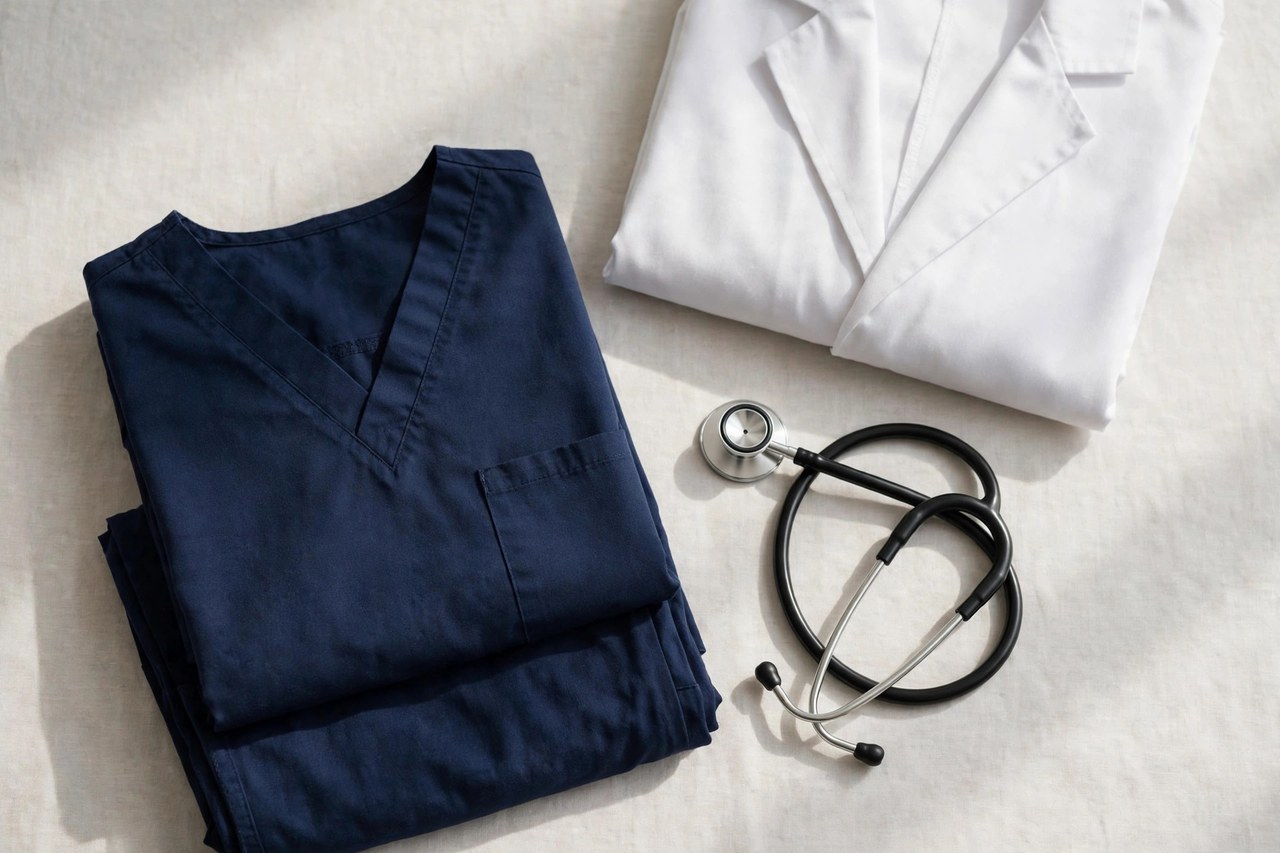
Medical apparel is the industry's umbrella term for every garment made for healthcare work - scrubs, lab coats, uniforms, gowns, footwear and the accessories around them. The term works exactly that way: this page sits at the head of the men's medical family beside the medical uniform stores, the wholesale medical clothing suppliers and the definitions of scrubs and the hospital gown: apparel is the procurement word, the term a hospital department, a practice or a uniform program buys under, where the wearer more often says clothing. This guide is built around the questions buyers actually ask: which style, which size, which fabric, and what will it look like after a year of real use - answered in order, with the trade-offs stated plainly.
The Category as a Buyer Specifies It
Sort the category the way a buyer does. The core is the scrub set - top and drawstring or elastic-waist pant in a poly-cotton or performance polyester twill, specified by color code where departments identify roles by color. Over it sits the professional layer: lab coats by length and consultation jackets, covered in the L section's lab coats guide and linked from this page. The program layer adds embroidered names and logos, sized runs from XS to 5XL, and the replacement cadence a uniform allowance implies. Fabrics are specified by laundry before fashion: poly-cotton blends that survive hot institutional washing, fluid-resistant finishes where exposure is routine, and stretch woven panels where the shift is physical. Every specification on this page is a trade between hygiene, identification and the twelve hours the garment will actually be worn.
Workwear is judged at the stress points, because the job finds them first: bar-tacked pocket corners and belt loops, double or triple-stitched main seams, reinforced knees, elbows and seats, and hardware - zippers, snaps, rivets - rated for daily cycling rather than occasional wear. Fabric weight is a specification, not a brag: heavier cloth resists abrasion and holds shape, lighter cloth breathes and dries, and the right answer is the one matched to the actual shift, climate and laundry the garment will live in.
Fitting a Workforce, Not a Mannequin
A medical apparel program fits a workforce, not a mannequin: unisex cuts sized by chest and waist measurements, men's tall lengths in scrub pants, and enough ease through the shoulder and hip for lifting, reaching and bending without seams becoming the limit. For the individual buyer, fit the scrub top so it closes and moves without pulling across the back, and the pant so the drawstring is adjustment rather than structure. Try the whole set in the postures of the job - arms overhead, kneeling, sitting at a charting desk - because apparel that only fits standing in a fitting room will argue with every task on the floor.
Fit workwear in the postures of the job: reach overhead, bend, kneel, climb, sit through a charting session or a cab ride. Seams should never be the thing that stops a movement, waistbands should stay where they were put without a belt doing structural work, and lengths should clear the floor and the machinery. Work garments are sized generously by design - buy your measured size and let the cut do its job, rather than sizing down into a uniform that fights every task.
Hygiene Is the Care System
Hygiene sets the care rules and they are stricter than ordinary laundry: wash medical apparel separately and hot where the fabric allows, treat stains before heat sets them, and never let a soiled set wait in a bag - the rotation is the hygiene. Keep at least three sets per wearer so daily washing never forces a re-wear, inspect pocket corners and drawstring channels as you fold, and retire pieces whose color has faded past the department's code or whose fabric has thinned at the seat and knees. Institutions launder some programs centrally; where they do not, the wearer's own system has to be this deliberate.
Work garments earn a laundry system, not a laundry day: wash by the employer's or the label's hygiene rules, treat stains before heat can set them, and inspect as you fold - a pocket corner letting go, a hem fraying, a button hanging by a thread are all two-minute repairs now and garment failures next month. Keep the rotation honest: a spare set washed and ready is what makes daily laundering possible without wearing any single set to death.
Common Questions
What is the difference between medical apparel and medical clothing?
Apparel is the industry and procurement term - the word uniform programs, suppliers and hospital buyers use for the whole category of healthcare garments - while clothing is the wearer's everyday word for the same things. Our directory keeps both pages for exactly that reason: this guide treats the category as a buyer specifies it, and the medical clothing guide beside it treats the same wardrobe role by role, garment by garment.
What fabrics are used for medical apparel?
Poly-cotton twill is the long-standing default - polyester for wrinkle resistance and survival through hot institutional laundering, cotton for hand and breathability. Newer programs add performance polyester with stretch and moisture management for physical roles, and fluid-resistant finishes where splashes are routine. The deciding specification is always the wash cycle the garment must survive, not the softness it shows in the package.
How many sets of medical apparel does one wearer need?
Three is the working minimum: one being worn, one washed and ready, one in the laundry. Healthcare garments are washed after every shift, so the rotation is what makes daily hygiene possible without wearing any single set to an early death. Programs that launder centrally issue more; self-laundering wearers in five-shift weeks often keep four or five.
More in Men's Clothes Guide M
The Head of the Medical Family
This page sits at the head of the men’s medical clothing family, alongside the medical uniform stores, wholesale medical clothing and the medical gowns factory, and beside the definitions the wardrobe works beside: the scrubs definition and the hospital gown definition. Wholesale uniforms, men’s apparel, men’s clothing stores and wholesalers are linked below as well.
Looking for Men's Clothing Stores?
This guide explains men's medical apparel. To browse where to buy, visit our men's clothing store directory, where you can find retailers that carry them.