Men's Pirate Clothing Guide
Pirate clothing for men is the costume and reenactment wardrobe drawn from the seafarers of the seventeenth and early eighteenth centuries: loose linen or cotton shirts, waistcoats and sashes, breeches or slops, headscarves and bandanas, sashes of pistols in fiction and plain baldrics in fact. Men buy it for costume parties, stage, Renaissance fairs, tall-ship crews and the annual excuse of Talk Like a Pirate Day. This guide separates the historical sailor's working clothes from the Hollywood embroidery, and shows how to build an outfit that looks convincing because its pieces are honest garments, not a single bagged costume.
Shop Men's Pirate Clothing Now
Shop Men's Pirate Clothing on Amazon Shop Men's Pirate Clothing on eBayThe Amazon and eBay links on this page are affiliate links. If you make a purchase through them, Apparel Search may earn a commission.
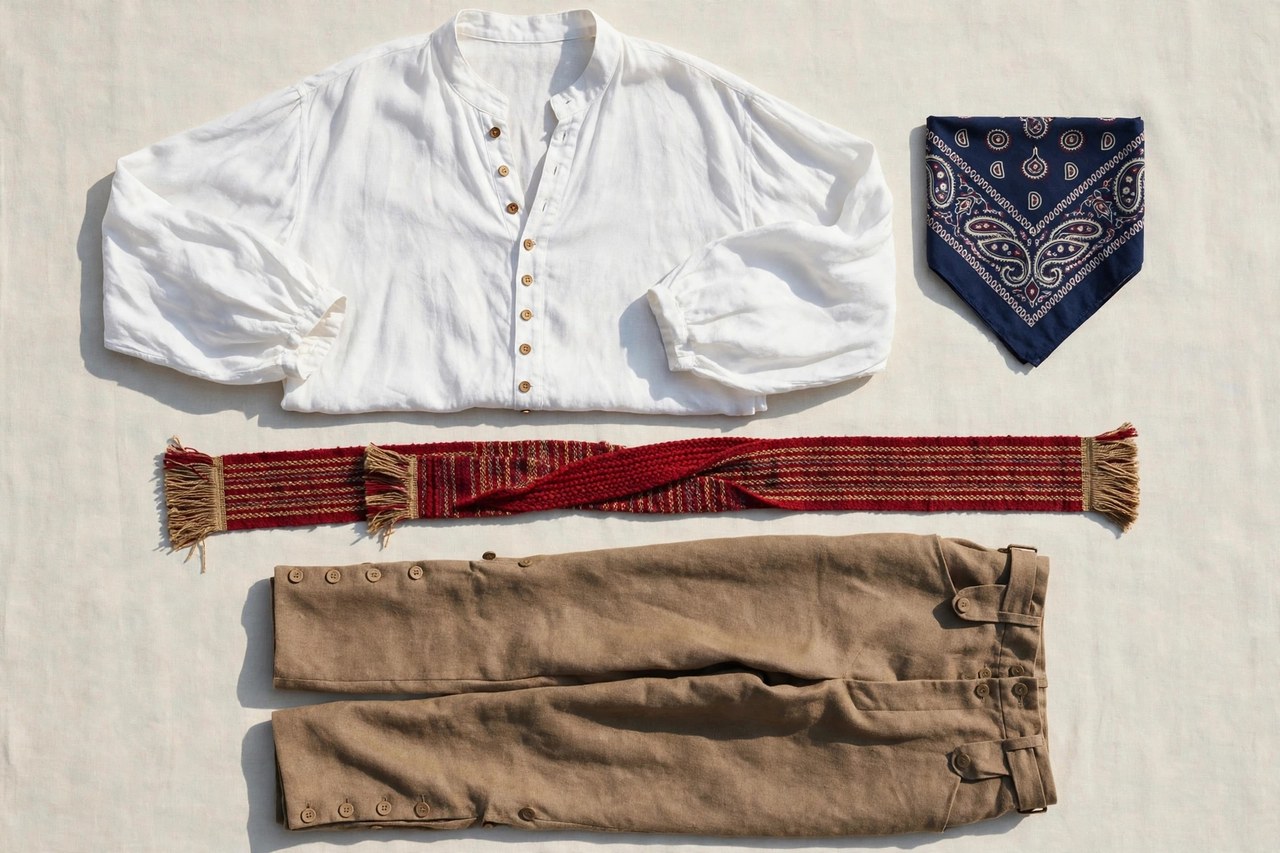
Pirate clothing for men is the costume and reenactment wardrobe drawn from the seafarers of the seventeenth and early eighteenth centuries: loose linen or cotton shirts, waistcoats and sashes, breeches or slops, headscarves and bandanas, sashes of pistols in fiction and plain baldrics in fact. Men buy it for costume parties, stage, Renaissance fairs, tall-ship crews and the annual excuse of Talk Like a Pirate Day. This guide separates the historical sailor's working clothes from the Hollywood embroidery, and shows how to build an outfit that looks convincing because its pieces are honest garments, not a single bagged costume. This guide is built around the questions buyers actually ask: which style, which size, which fabric, and what will it look like after a year of real use - answered in order, with the trade-offs stated plainly.
The Working Sailor First
Build from the working sailor outward. The base is the shirt: a loose, long, pullover shirt in linen or unbleached cotton with a dropped shoulder and gathered neck - sailors wore exactly this, and its billow is what reads as 'pirate' across a room. Over it, a waistcoat or a sash: the wide fabric sash at the waist is both period and practical, bracing the back and holding tools. Breeches ending below the knee, or loose slops - the sailor's baggy trousers - cover the leg; modern trousers cut off and hemmed at the calf convince better than shiny costume pants. The head gets a knotted scarf or bandana, sun protection before it was style. Fiction adds the frock coat, the tricorn, the boot tops and the earring: all existed, but in smaller numbers than cinema suggests, and the captain classes wore them while crews wore the shirt-and-slops kit above. Choose your rank first, then buy once at garment quality - real shirts, real leather belts, cloth that drapes - because costume-grade synthetics photograph as costume at ten paces.
The durable buying order is job, specification, budget - in that sequence. Decide what the garment must do, translate that into fiber, weight, construction and size numbers, and only then shop price. Read labels as specifications, inspect the garment inside out where finishing is unposed, and prefer the maker who publishes measurements to the one who publishes adjectives. A garment that matches your measurements, climate and laundry will be worn; one that misses any of the three becomes expensive storage.
Billow, Gathered
Fit in historical dress is ease in the right places. The shirt should billow when arms move - raised for rigging in fact, for gesturing in practice - without the body looking like a tent: gather and sash do the shaping. Breeches should tie or button below the knee and allow a deep bend; slops should break loosely at the ankle. Sashes wrap twice and knot without a belt's hardware. Footwear decides comfort at an all-day fair: period-looking shoes or boots with modern soles and insoles are the honest compromise, because cobblestones and queues punish authenticity worn on the feet. If the outfit is for stage, fit for the third row: stronger contrasts, larger closures that read at distance, and nothing that restricts the movement the part demands.
Measure yourself once a year and keep the numbers - chest, waist, inseam, foot, head - because bodies drift gradually while size habits never do. Shop from measurements, try garments under real conditions (over layers, in your own shoes, late in the day for footwear), and be honest about alterations: lengths and small waist changes tailor beautifully; shoulders, rises and patterns are the garment you bought forever.
Real Fibers Improve With Wear
Care follows the fibers you chose, which is the argument for real ones. Linen and cotton shirts wash cool and line dry, softening with every cycle and looking more period, not less - this is the rare wardrobe where honest wear improves the illusion. Leather belts, baldrics and boots want conditioning and dry storage; cheap costume pleather cracks in a season and cannot be repaired. Store the outfit clean and complete in one bag or box - hat, sash, shirt, breeches, belt - because a costume that must be reassembled from four closets is a costume that gets skipped. Repair gathers, buttons and hems when they fail; a maintained kit serves a decade of fairs and parties, and each year it looks less like a purchase and more like your clothes.
Five minutes when a garment comes off - shake it out, hang or fold it correctly, note the stain and the loose button - prevents most of the damage later blamed on quality. Keep a small kit where the clothes live: brush, lint roller, conditioner suited to your leathers, black, navy and grey thread. Clothing rarely dies at once; it fades by small neglects, and small attentions reverse the process at the same pace.
Common Questions
What did real pirates actually wear?
Working sailors' clothes, because that is what they were: loose linen or cotton pullover shirts, waistcoats, fabric sashes, knee breeches or baggy trousers called slops, and headscarves against the sun. Captured and plundered garments added color and the occasional fine coat, and officers dressed above the crew, but the tricorn-and-frock-coat ensemble of film was the exception, not the uniform. An outfit built from the working kit reads as genuinely maritime; the full Hollywood set reads as a captain - which is also a fine choice, made knowingly.
How do I make a pirate costume look convincing instead of cheap?
Buy garments, not a costume. A real loose linen or cotton shirt, a cloth sash, cotton breeches or cut-off trousers and a leather belt drape, move and photograph like clothes, while bagged synthetic sets shine and crease like packaging. Fit helps: billow gathered by the sash beats a shapeless tent. Then weather it slightly - the sea was not kind to clothing - and keep every piece in honest materials: wood, leather, brass, cloth.
What shoes work with a pirate outfit?
For a short party, period-styled shoes or plain dark boots you already own are fine. For a fair, a ship or a full day standing, choose the honest compromise: footwear that looks period from a few paces but hides a modern sole and insole, because hard ground punishes thin historical soles all day. Buckle shoes suit the finer captain register; plain boots suit the working sailor, and both beat athletic shoes, which break the silhouette instantly.
More in Men's Clothes Guide P
Piracy and the Poet Shirt
Piracy is an act of robbery or criminal violence by ship- or boat-borne attackers upon another ship or a coastal area, typically with the goal of stealing cargo and other valuable items; those who engage in acts of piracy are called pirates. The wardrobe’s signature top is the poet shirt (also called a poet blouse or pirate shirt): a loose-fitting blouse with full bishop sleeves, usually decorated with large frills on the front and on the cuffs, typically with a laced-up V-neck opening designed to pull over the head, in fabrics including linen, cotton, velvet and satin, with frills of the same fabric or of lace. Originally intended as a male garment and descended from the shirts worn by men in the 17th and 18th centuries, the modern poet blouse combines the fineness of ruffled shirts worn as an undergarment by aristocrats with the informality of plain working shirts.
Looking for Men's Clothing Stores?
This guide explains men's pirate clothing. To browse where to buy, visit our men's clothing store directory, where you can find retailers that carry them.