Men's Briefs Guide
Men's briefs are the original close-fitting underwear style: a compact garment with no leg, a supportive front, leg openings cut at the crease of the thigh, and an elastic waistband. This guide treats briefs strictly as a product - rises, fabrics, waistband and leg-elastic construction, sizing and care - for the many men for whom the brief remains the most practical style made.
Shop Men's Briefs Now
Shop Men's Briefs on Amazon Shop Men's Briefs on eBayThe Amazon and eBay links on this page are affiliate links. If you make a purchase through them, Apparel Search may earn a commission.
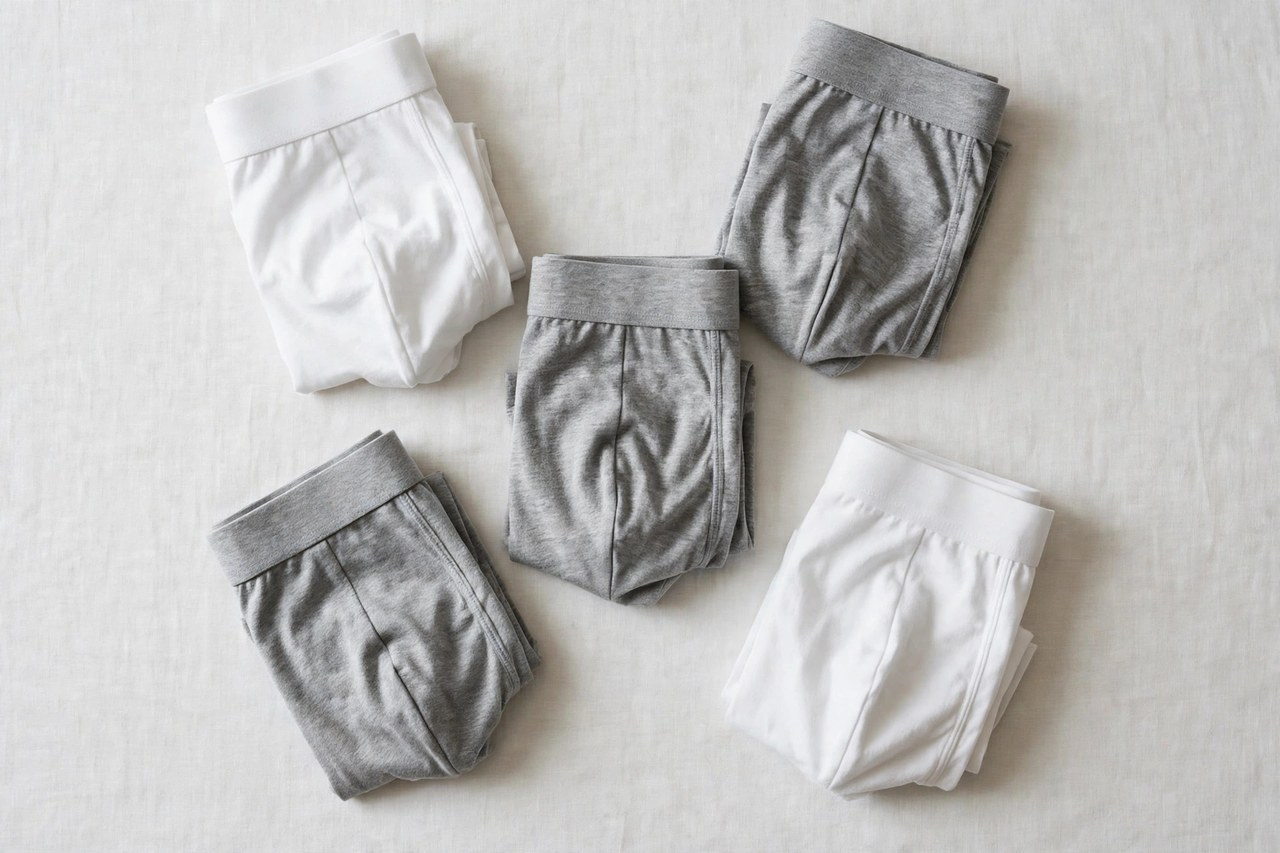
Men's briefs are the original close-fitting underwear style: a compact garment with no leg, a supportive front, leg openings cut at the crease of the thigh, and an elastic waistband. This guide treats briefs strictly as a product - rises, fabrics, waistband and leg-elastic construction, sizing and care - for the many men for whom the brief remains the most practical style made. This guide explains what to look for, how the sizing actually works, which fabrics and constructions earn their price, and how to care for the garment so it keeps doing its job season after season.
Styles and Construction
The brief's variations are rise and fabric. Full-rise (classic) briefs sit at the natural waist; mid-rise sits just below; low-rise styles have their own guide in this section. The front is built as a pouch with a functional fly on traditional patterns (Y-front or horizontal) or a smooth contour pouch on modern ones. Leg openings use elastic or fabric-covered bands: the elastic's recovery is the fit, because nothing else holds a brief in place. Fabrics run from standard carded cotton through combed and Pima cotton, cotton-modal, and performance synthetics for sport briefs; rib-knit versions add stretch without elastane. Better briefs use a double-layer front pouch, covered waistband elastic and leg elastic that lies flat rather than corded, which is what marks the skin by evening on cheap pairs.
For any leg garment the rise is the first specification, because it decides sitting comfort before fabric gets a vote: measure from front waistband through to back and compare it with a pair that already works. Then audit the stress points - bar-tacked belt loops and pocket corners, double-stitched inseams, hems finished evenly - and the pocketing, which should be deep, smooth and strong enough to carry what the garment's pockets invite you to carry.
Fit and Sizing
Size briefs by measured waist and expect a close fit: the leg elastic should sit in the thigh crease without cutting, the waistband at the rise the style promises, and the pouch supportive without compression. Sizing errors show immediately - a size small rides and binds; a size large sags and shifts. Because briefs contain elastics under constant tension, honest sizing also extends their life: overstretched elastic fails first.
Measure where the waistband will actually sit, plus inseam to your preferred break, and thigh and seat for closer cuts. Then sit, squat and climb a step in the fitting room - a leg garment that only works standing still does not work. Waistbands relax roughly half an inch in wear and inseams shrink most in early washes, so buy the fit you want after those changes rather than the fit in the mirror.
Wearing and Care
Wash briefs warm for whites (they are the style most often bought in white) and cool-to-warm for colors and elastane blends; dry low or line dry to protect the leg and waist elastics, which are the garment. An oxygen soak restores greying whites better than bleach, which attacks elastic. Retire briefs when leg elastic stops recovering or the pouch fabric thins - support is the product, and a brief that no longer supports is finished.
Wash leg garments inside out and cool; heat is the agent that fades dye, tires elastic and shortens inseams. Dry low or on the line, hang or fold promptly, and crease deliberately or not at all. Walk the stress points each season - hem edges, pocket corners, seat and inner thigh - and mend the small fray while it is still small: leg garments fail gradually, then suddenly, and the two-minute October repair prevents the November replacement.
Common Questions
Are briefs still a practical choice?
Yes - briefs remain the most compact, supportive and trouser-friendly style: nothing bunches under slim fits, nothing rides up a leg that does not exist, and they pack smallest for travel. Their unpopularity in some decades was fashion, not function. Men who run warm appreciate the minimal coverage; men who want thigh coverage or chafe prevention choose boxer briefs instead.
What rise of brief should I choose?
Match the rise to your trousers and build. Full-rise briefs pair with higher-rise trousers and give the most coverage and support. Mid-rise is the modern default for ordinary trousers and jeans. Low-rise briefs exist for low-rise jeans and a minimal waistband line. The waistband should sit where the trousers' waistband will not fight it - ideally just below or just above, not at the same line.
Why does the leg elastic on briefs matter so much?
Because it is the entire fit mechanism below the waist. Quality leg elastic is wide enough not to cord, covered or flat-laid, and retains recovery through many washes; poor elastic either cuts in on day one or relaxes within months, after which the brief shifts and chafes. When comparing pairs in hand, stretch the leg opening: it should extend easily and return completely.
More in Men's Clothes Guide U
Background and History
Briefs are a style of underwear or swimwear. Undergarments are items of clothing worn beneath outer clothes, usually in direct contact with the skin. Briefs are a type of short, snug underwear and swimwear, as opposed to styles where looser material extends down the thighs. In North America, "jockey shorts" or "jockeys" became an often used generic term for men's briefs. Also, "tighty-whiteys" have become a commonly used nickname for this style of undergarment. In the case of men's underwear, briefs , unlike boxer shorts, hold the wearer's genitals in a relatively fixed position, which make briefs a popular underwear choice for men who are participating in athletic activities or who feel they need more support than loose-fitting underwear can provide. There are variations on the brief with different cuts, some offering a wider leg and others a narrower leg, names including, midi, full, sport, active, mini, bikini. Some briefs have the cut all the way to only the waistband on the side, called a tanga brief. History of the
More to Explore on Apparel Search
- Men's Underwear Guide
- Men's Underwear Stores
- Men's Underwear Wholesalers
- Underwear Factories
- Men's Clothes
- Underwear Glossary
- Men's Underwear
- brief style of underwear
- Men's Fashion
- Men's Clothing Stores
- Men's Fashion News
- Men's Apparel
- Men's Fashion Brands
- Men's Fashion Store
- Men's Clothing on eBay
- Men's Clothing on Amazon
- Men's Clothes Guide H-P
- Men's Clothes Guide Q-Z
Looking for Men's Clothing Stores?
This guide explains men's briefs. To browse where to buy, visit our men's clothing store directory, where you can find retailers that carry them.