Men's Utility Pants Guide
Men's utility pants are work-and-field trousers defined by their pockets and reinforcement: cargo, carpenter, painter and double-knee styles built to carry tools, phones and kit while surviving kneeling, abrasion and frequent washing. This guide covers the styles and their pocket systems, the canvas, twill and ripstop fabrics they are cut from, and fit for men who actually work in them.
Shop Men's Utility Pants Now
Shop Men's Utility Pants on Amazon Shop Men's Utility Pants on eBayThe Amazon and eBay links on this page are affiliate links. If you make a purchase through them, Apparel Search may earn a commission.
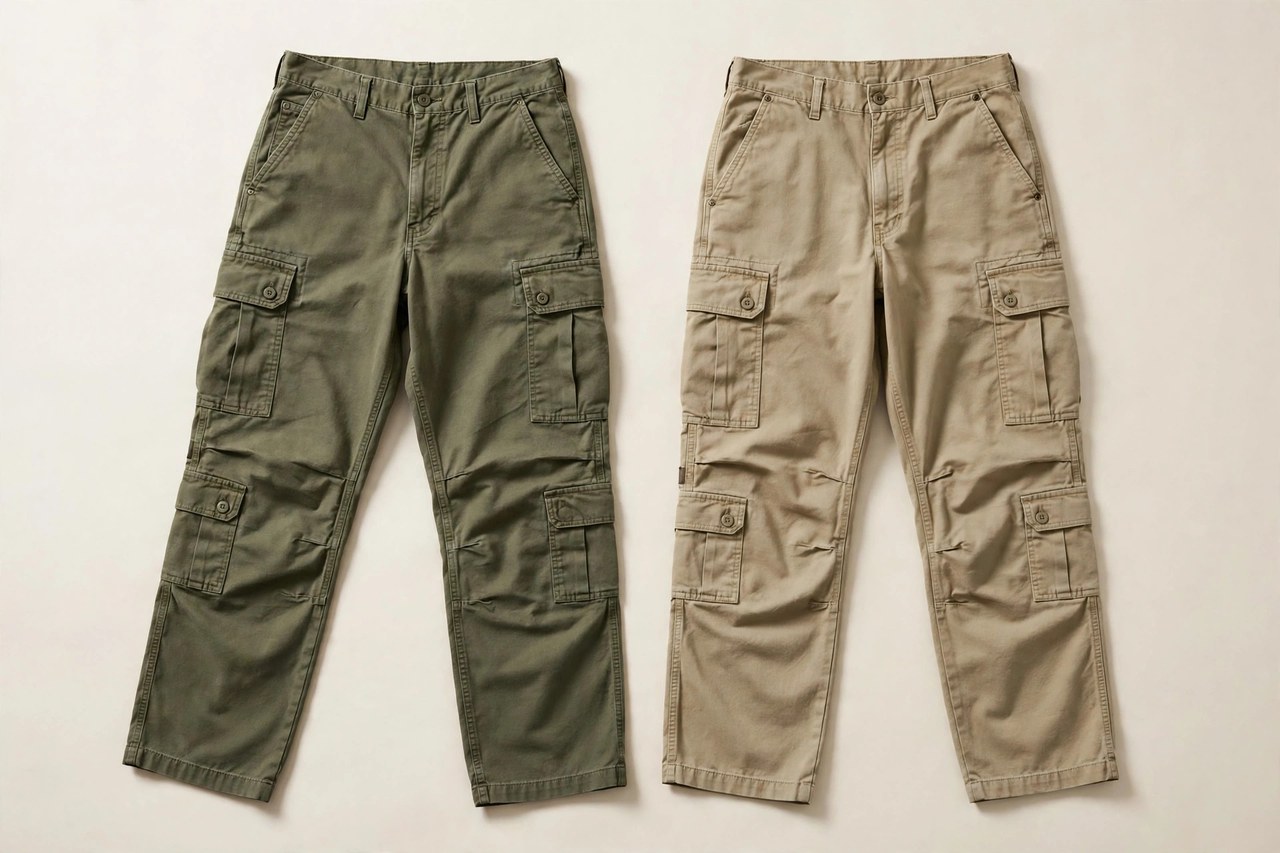
Men's utility pants are work-and-field trousers defined by their pockets and reinforcement: cargo, carpenter, painter and double-knee styles built to carry tools, phones and kit while surviving kneeling, abrasion and frequent washing. This guide covers the styles and their pocket systems, the canvas, twill and ripstop fabrics they are cut from, and fit for men who actually work in them. This guide is built around the questions buyers actually ask: which style, which size, which fabric, and what will it look like after a year of real use - answered in order, with the trade-offs stated plainly.
Styles and Construction
The styles divide by trade heritage. Cargo pants carry bellows pockets on both legs with flap or snap closures. Carpenter pants add a hammer loop, a ruler pocket and often a double knee; painter pants are the lighter, off-white variant with brush loops. Modern utility pants blend the patterns: slimmer legs, one or two low-profile cargo or phone pockets, articulated knees and a gusseted crotch, in cotton canvas, cotton-polyester twill or nylon ripstop for field and travel use. Reinforcement is the quality frontier: double knees (with openings for knee-pad inserts on work versions), bar-tacked pocket corners, triple-stitched main seams and rivets where pockets meet stress. A utility pant whose pockets are sewn decoration rather than structure fails its name within a month of real carrying.
For any leg garment the rise is the first specification, because it decides sitting comfort before fabric gets a vote: measure from front waistband through to back and compare it with a pair that already works. Then audit the stress points - bar-tacked belt loops and pocket corners, double-stitched inseams, hems finished evenly - and the pocketing, which should be deep, smooth and strong enough to carry what the garment's pockets invite you to carry.
Fit and Sizing
Fit utility pants by waist and inseam measurement, then test them loaded: phone, wallet, keys and the tools the pockets promise to carry, followed by a squat, a kneel and a stair climb. The waistband should hold without a belt doing structural work, the knee should bend where your knee bends (articulation matters), and the leg should clear a work boot without pooling. Work fits run easier than fashion fits on purpose - a utility pant that fits like a dress trouser will bind at exactly the moment you kneel on gravel.
Measure where the waistband will actually sit, plus inseam to your preferred break, and thigh and seat for closer cuts. Then sit, squat and climb a step in the fitting room - a leg garment that only works standing still does not work. Waistbands relax roughly half an inch in wear and inseams shrink most in early washes, so buy the fit you want after those changes rather than the fit in the mirror.
Wearing and Care
Wash utility pants empty - every pocket, every time; screws and blades in a wash destroy the load and the machine - inside out, warm for work soil, and dry them fully before storage because canvas and twill hold moisture in their seams. Mend bar-tacks and pocket corners early. Duck canvas softens and fades into its working life; judge retirement by the knees and seat, and demote a worn pair to garden duty before it fails on a job.
Wash leg garments inside out and cool; heat is the agent that fades dye, tires elastic and shortens inseams. Dry low or on the line, hang or fold promptly, and crease deliberately or not at all. Walk the stress points each season - hem edges, pocket corners, seat and inner thigh - and mend the small fray while it is still small: leg garments fail gradually, then suddenly, and the two-minute October repair prevents the November replacement.
Common Questions
Cargo pants vs carpenter pants - what is the difference?
Carrying layout and heritage. Cargo pants put large bellows pockets mid-thigh on both legs for bulky items. Carpenter pants put a hammer loop and narrow tool and ruler pockets along one leg and usually add a double knee, suiting them to building trades. Modern utility pants often combine both pocket systems in a cleaner cut - choose by what you actually carry.
What fabric is best for utility pants?
Cotton duck canvas for abrasion and kneeling work - it is the toughest common option and molds to the wearer. Cotton-polyester twill for lighter weight, faster drying and better color retention in service jobs. Nylon or polyester ripstop for field, travel and hot weather, trading some abrasion resistance for weight and dry time. Match the cloth to the hazard: knees and thorns want canvas; heat and water want ripstop.
Should utility pants have double knees?
If your work kneels - trades, gardening, flooring, field work - yes: a double-knee panel doubles the garment's life at its first failure point, and work versions accept foam knee-pad inserts that turn kneeling from damage into routine. For pocket-carrying without kneeling, single knees keep the pant lighter and cheaper with no real loss.
More in Men's Clothes Guide U
Background and History
Utility clothing basically means clothes that are useful. Especially through being able to perform several functions. They are often functional rather than attractive. However, utility fashion can be attractive as well as functional. Utilize pants typically have multiple pockets. Utility wear can also be defined as clothing that was originally designed and intended for a specific activity. For example snowboarding, water sports, carpentry, or skiing. A type of utility pant would be a cargo pants are loosely cut pants originally designed for tough, outdoor activities, and whose design is distinguished by one or more cargo pockets. Learn more about men's cargo pants and cargo pants in general. Carpenter pants are another type of utilitarian pant. Apparel Search is a leading guide to fashion, style, clothing, glam and all things relevant to apparel. We hope that you find this Men's Utility Pants page to be helpful. Learn about different pant styles for men, women, & children in our terminology section. What ever pant style you are wearing today is in fashion.
More to Explore on Apparel Search
Looking for Men's Clothing Stores?
This guide explains men's utility pants. To browse where to buy, visit our men's clothing store directory, where you can find retailers that carry them.