Women's All-Terrain Sandals Guide
Adjustable sport sandals that hike, wade and wander — how to choose a pair that goes from trail to riverbank.
Shop Women's All-Terrain Sandals Now
Shop Women's All-Terrain Sandals on eBay Shop Women's All-Terrain Sandals on AmazonThe eBay and Amazon links on this page are affiliate links. If you make a purchase through them, Apparel Search may earn a commission.
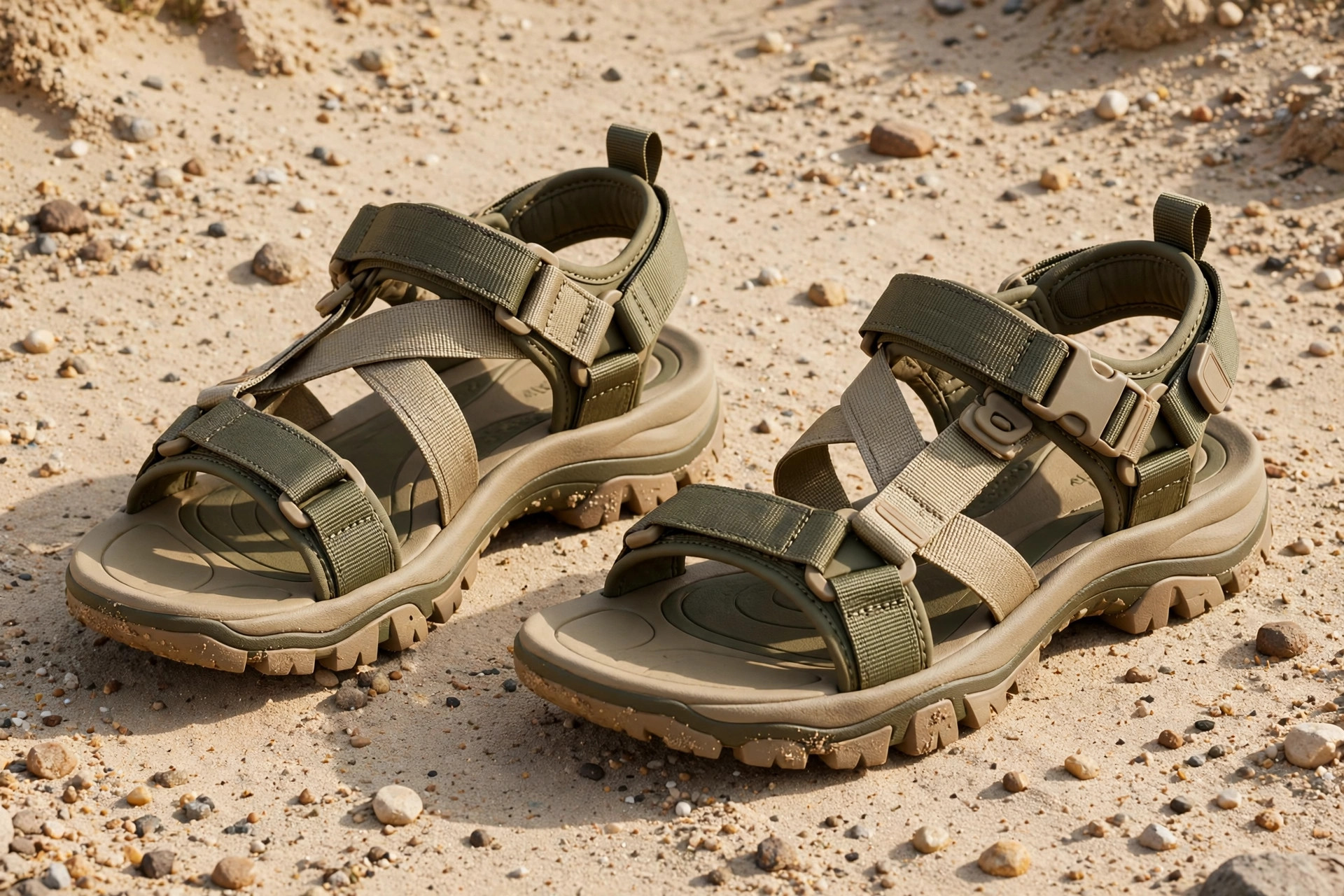
All-terrain sandals are the open-toed answer to adventure shoes: rugged sport sandals with real tread, secure adjustable straps, and materials that shrug off water, dust, and rocky paths. They have been the footwear of river guides, summer hikers, and minimalist travelers for decades, because one pair can handle a morning trail, an afternoon swim, and dinner on a patio without missing a beat. This guide covers the main designs, what makes a sandal trail-worthy, and how to fit a pair that will not leave you with blisters at the trailhead.
Anatomy of a Trail-Worthy Sandal
Three things separate all-terrain sandals from fashion sandals. First, the outsole: lugged rubber with enough depth to grip wet rock and loose dirt, often with a slightly sticky compound borrowed from approach shoes. Second, the strap system: most use a continuous webbing design that threads through the midsole and adjusts at multiple points, locking the heel and forefoot so the sandal moves with you instead of flopping. Third, the footbed: contoured, textured, and made from materials that stay grippy when wet rather than turning slippery. A toe post or closed toe bumper on some models adds protection for rocky descents.
Styles: Open, Closed & Water-Ready
Classic open sport sandals maximize airflow and dry fastest — the choice for hot climates and water sports. Closed-toe hiking sandals add a rubber toe cap that guards against stubbed toes on rocky trails, at the cost of some ventilation. Leather-look terrain sandals trade a little technical performance for styling that works in town. For sizing, remember that straps do the work of a shoe upper: polyester webbing stretches less when wet than nylon, and padded straps are kinder on long distances. If your plans mix hiking with swimming or kayaking, prioritize quick-drying materials and a tread pattern that channels water away from the footbed.
Fitting Without the Blisters
Your foot should sit entirely within the footbed: toes or heels hanging over the edge invite scrapes and change how the sandal flexes. Adjust straps snugly in sequence — heel first, then forefoot — and walk around: your foot should not slide forward on a downhill slope of your hand or the store ramp. New webbing softens with wear, but friction hotspots on day one rarely improve, so moleskin the first hikes or choose padded straps if your skin is sensitive. Most hikers find their sandal size matches their shoe size; if you are between sizes, the larger footbed usually serves better on trails.
Care & Making Them Last
Terrain sandals are refreshingly low maintenance. Rinse off mud and salt water after outings, wash webbing with mild soap and a soft brush when odors build, and air-dry in the shade — prolonged heat can warp footbeds and weaken strap adhesives. Check strap anchor points and tread depth at the start of each season. With basic care, a quality pair handles several summers of trails, travel, and river days before the cushioning tires.
Sandals vs Shoes on the Trail: An Honest Comparison
All-terrain sandals beat shoes in heat, around water, and on trips where every ounce and inch of luggage matters — they dry fast, pack flat, and never trap sweat. Shoes win when the trail turns technical, the weather turns cold, or the route crosses sharp scree, cactus country, or anything that punishes exposed toes. Many experienced summer hikers carry both: shoes for the hard miles, sandals for camp, river crossings, and evenings. If you can only pack one, let the worst hour of your itinerary decide — dress your feet for the hardest terrain you will actually cross, not the average of the day.
Related Women's Guides
Photos

More to Explore on Apparel Search
Looking for Women's Clothing Stores?
This guide helps you choose women's all-terrain sandals by use and terrain. To browse where to buy, visit our women's clothing store directory, where you can find retailers that carry them.