Women's Bedgown Guide
A good nightgown is sleep equipment, not an afterthought — lengths, breathable fabrics and seasonal weights for genuinely better rest.
Shop Women's Bedgowns Now
Shop Women's Bedgowns on Amazon Shop Women's Bedgowns on eBayThe Amazon and eBay links on this page are affiliate links. If you make a purchase through them, Apparel Search may earn a commission.
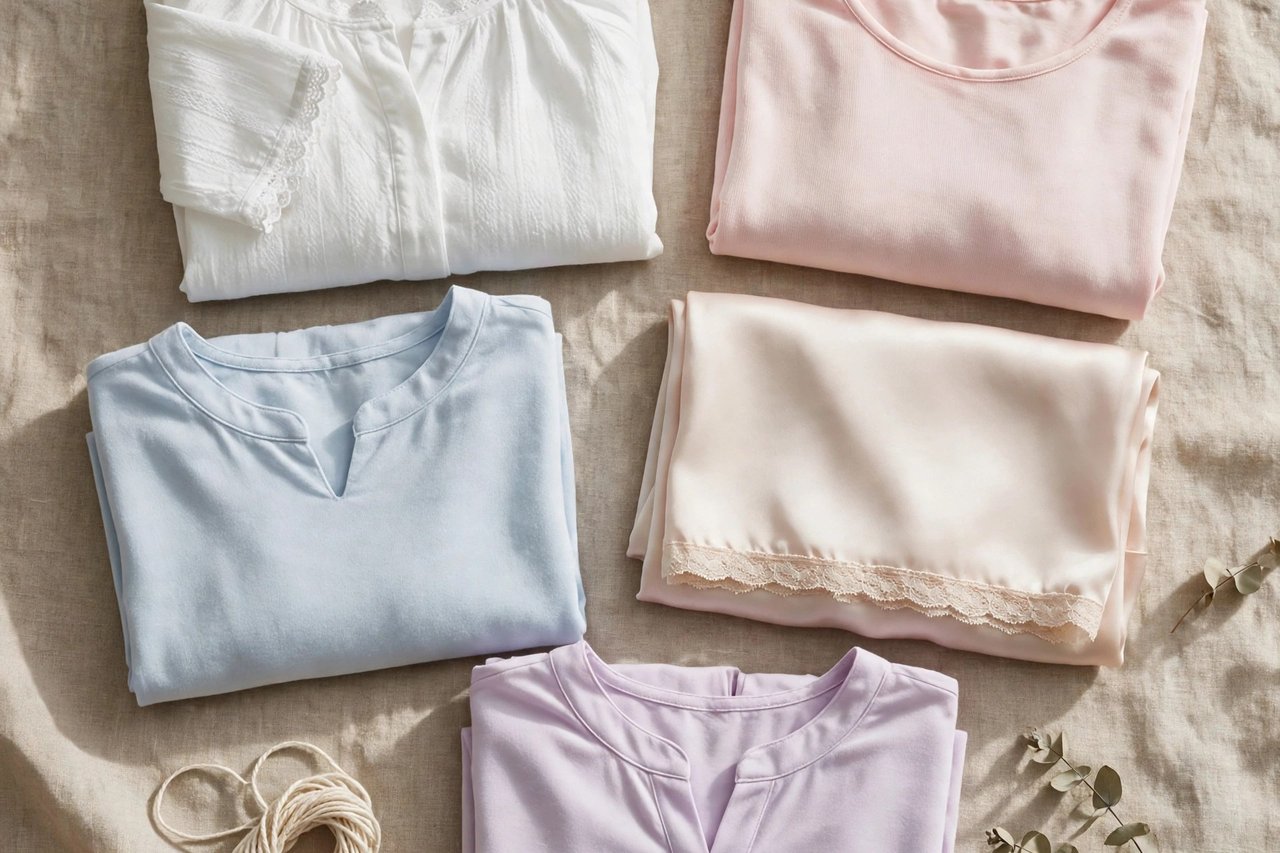
The bedgown — known today mostly as the nightgown or nightdress — is one of the oldest garments in the wardrobe, a loose, pull-on dress designed purely for sleeping. Its virtues are simple and real: nothing binds at the waist, air circulates freely, and the whole garment moves with a sleeper who turns, stretches, and sprawls. For many women a nightgown simply sleeps cooler and more comfortably than any two-piece set, especially in warm weather or heated bedrooms.
Modern bedgowns range from simple cotton shifts to elegant silk nightdresses, with every length and sleeve combination in between. Choosing well is mostly about matching fabric and weight to your sleep temperature, then picking a cut that stays comfortable and untangled through the night.
Lengths: Short, Midi, Long and Sleeve Options
Short nightgowns end at mid-thigh to the knee. They are the coolest option, the easiest to move in, and the natural pick for warm sleepers and summer. Midi or waltz length falls below the knee to mid-calf — the classic bedgown proportion, offering coverage and warmth while staying clear of the feet. Long or full-length gowns reach the ankle, bringing the most warmth and a graceful, traditional look; they suit cooler rooms and anyone who dislikes bare legs against sheets.
Sleeves scale with the seasons: sleeveless and cap-sleeve gowns for summer, short sleeves for spring and fall, and long sleeves — often with soft cuffs — for winter styles. Necklines vary from scoop and V to button-front openings; a partial button placket is practical for nursing mothers and anyone who runs warm and likes an adjustable neckline. Flutter and raglan sleeves move most easily in bed, while fitted sleeves in stretch fabrics stay put without twisting.
Fabrics for Sleep Comfort
Cotton is the bedgown standard: breathable, absorbent, easy to wash, and available from featherlight voile and lawn for summer to brushed flannel for deep winter. Cotton jersey adds softness and a little stretch. Modal and bamboo-derived viscose feel noticeably silkier and cooler against the skin, drape without clinging, and manage moisture well — a favorite for warm sleepers and anyone who finds cotton rough.
Silk sits at the luxury end: it regulates temperature in both directions, glides over sheets so the gown does not twist around you, and feels unmistakably special, at the price of delicate care. Satin-weave polyester imitates the glide cheaply but breathes less. Cotton-modal and cotton-bamboo blends split the difference, keeping washability while gaining softness. Whatever the fiber, avoid heavy embellishment in sleep areas — scratchy lace, raised seams, and back fastenings all announce themselves at 2 a.m.
Seasonal Weights and Temperature
Think of bedgowns in three weights. Warm-weather gowns use voile, lawn, single-layer jersey, or modal in sleeveless or cap-sleeve cuts, often in pale colors that feel as cool as they look. Mid-weight gowns — standard cotton jersey, modal blends, or light interlock — handle spring, fall, and climate-controlled bedrooms year-round. Winter gowns turn to flannel, brushed cotton, thermal-knit cotton, or fleece, usually with long sleeves and longer hems.
Temperature honesty matters more than the calendar: a hot sleeper in January may still want modal, while a cold sleeper in a drafty house needs flannel in October. Layering helps at the margins — a bed jacket or robe over a light gown adjusts faster than owning every weight. If night sweats are a factor, prioritize moisture-moving modal or bamboo blends and skip satin synthetics, which trap heat against the skin.
Fit and Choosing Well
A bedgown should fit generously without being a tent. Look for room through the shoulders and bust, a body that skims rather than hugs, and a hem wide enough to walk and climb stairs comfortably. A-line and empire-waist cuts give the most freedom; bias-cut silk gowns drape closer while still moving beautifully. Armholes should be deep enough not to bind when you reach or roll over.
Practical checks before buying: sit and stand in it (in the fitting room, over your clothes) to confirm the length behaves, raise your arms to test shoulder ease, and feel the inner seams, lace edges, and label placement — anything rough will feel rougher at night. Front-button styles deserve a gap test at the bust. Sizes in sleepwear run relaxed, so buy your usual size and resist sizing down; comfort is the entire point of the garment.
Care and Making Gowns Last
Bedgowns wash often, so durable easy care is a feature, not a compromise. Cotton and modal gowns machine wash well in warm or cool water; wash silk by hand or on a delicate cycle in a mesh bag with a gentle detergent, and dry it away from direct heat and sun. Skip heavy fabric softeners on modal and bamboo blends — a small amount or none keeps the fibers absorbent and smooth.
Because nightgowns are worn against skin for many hours, launder before the first wear and change into a fresh gown regularly; rotating two or three gowns extends each one's life significantly. Mend small seam splits early, before nightly movement turns them into tears. Store folded or on padded hangers — thin straps stretch on wire hangers. A bedgown that is washed gently and rotated sensibly stays soft for years, which is the quiet economics behind buying better fabric in the first place.
Related Women's Guides
More to Explore
- Bedgown Definition
- Clothes
- Clothing Retail Stores
- Fashion
- Fashion Designers
- Fashion News
- flannel pajamas
- nightgown
- Popular Brands
- Women's Clothes
- Women's Clothes Directory A
- Women's Clothes Directory C
- Women's Clothes Directory D
- Women's Clothing Directory E
- Women's Clothing Directory F
- Women's Clothing Directory G
- Women's Clothing Stores
- Women's Clothing Wholesalers
- Women's Fashion
- women's pajamas
Photos

Looking for Women's Clothing Stores?
This guide helps you choose women's bedgowns and nightgowns by length, fabric and season. To browse where to buy, visit our women's clothing store directory, where you can find retailers that carry them.