Women's Medical Clothing
The garments themselves — scrub tops and pants piece by piece, lab coats, warm-up jackets, and the layers that make a shift work.
Shop Women's Medical Clothing Now
Shop Women's Medical Clothing on Amazon Shop Women's Medical Clothing on eBayThe Amazon and eBay links on this page are affiliate links. If you make a purchase through them, Apparel Search may earn a commission.
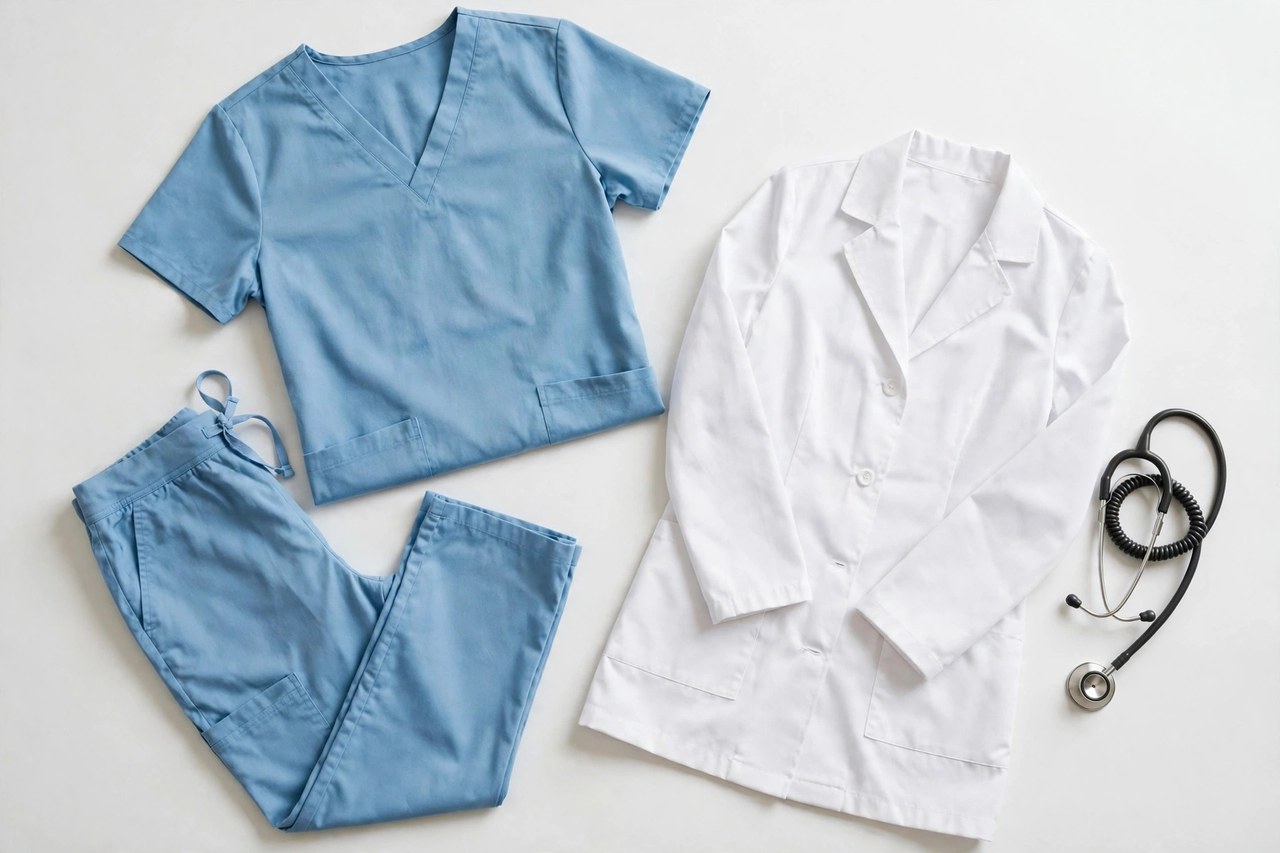
While the medical apparel category covers the whole industry, medical clothing means the actual garments — the tops, pants, coats, and layers a healthcare worker pulls on before a shift. Every piece has a job beyond looking professional: it must move with the body through twelve hours of bending, lifting, and reaching, carry the tools of the trade, and come clean in the wash. Women's medical clothing refines those workhorse designs with proportions, rises, and seam placements shaped for women's bodies.
One rule governs everything here: healthcare clothing should follow good hygiene — the conditions and practices conducive to maintaining health and preventing disease, especially through cleanliness. Keep your medical clothing clean, retire stained or threadbare pieces, and choose designs with minimal fussy trim where contaminants could hide. The rest of this guide picks apart the cuts, necklines, pockets, and lengths.
Scrub Tops, Piece by Piece
The scrub top is the workhorse of the wardrobe, and its details matter. The classic V-neck remains the most popular neckline: it flatters, ventilates, and layers neatly over an underscrub. Mock-wrap tops cross at the front for a shaped, feminine silhouette with a secure overlap, while empire-waist styles gather just below the bust for extra room through the midsection. Tunic lengths that cover the hip offer more coverage for bending and lifting, and side vents add stride room when you are moving fast.
Pockets turn a top into a toolkit. Look for a chest pocket sized for a pen and badge, patch pockets deep enough for a phone, gloves, and tape, and specialty dividers that keep instruments from tangling. A badge tab or bungee loop keeps ID visible and scannable, and double-needle stitching at stress points survives industrial laundering. Shoulder and sleeve construction should let you raise your arms fully without the hem riding up — reach overhead in the fitting room as if for an IV bag.
Scrub Pants: Cuts, Waistbands & Lengths
Scrub pants come in more silhouettes than most shoppers expect. Drawstring waists are the traditional choice: adjustable, secure, and easy to retie mid-shift. Elastic and yoga-style waistbands trade the tie for a wide, soft band that sits comfortably under a tucked top and will not dig during long sits. Cargo pants add bellowed leg pockets for shears, phones, and notebooks — a favorite of emergency and surgical staff — while straight-leg and subtle flare cuts give a cleaner line. Jogger scrubs finish in a knit cuff at the ankle, keeping hems off wet floors.
Rise and inseam decide comfort. Mid-rise pants suit most figures; natural-waist cuts give extra coverage for constant bending. Petite and tall inseams are now widely available, and they matter — dragging hems collect contaminants and trip you on stairs, while high-water cuffs look sloppy and expose skin. Check that pockets sit where your hands naturally fall and that the fabric recovers after a deep knee bend.
Lab Coats & Warm-Up Jackets
The lab coat — also called the consultation coat — is the layer of authority. Women's cuts nip the waist, set the shoulder correctly, and offer lengths from hip to full 40-inch coverage. Details to compare: knit or vented cuffs that stay out of the way, interior pockets for a phone and reference cards, exterior patch pockets, instrument loops, and back vents or bi-swing pleats for reach. White remains the classic, but fashion colors and prints have earned a place in pediatrics, dentistry, and private practice.
Warm-up jackets are the scrub world's cardigan: zip- or snap-front jackets worn over scrub tops in chilly hospitals and clinics. Look for ribbed cuffs that push up easily for hand hygiene, roomy pockets, and a length that covers the scrub top's hem. Underneath it all, underscrubs — long- or short-sleeve tees in moisture-wicking knits — add warmth and modesty under V-necks without bunching. Together, the three layers handle everything from freezing radiology suites to overheated wards.
Choosing Cuts That Work on Shift
Fit for clinical work is functional, not decorative. Size for movement first: you should be able to bend, lift, reach, and sit without pulling, gaping, or flashing. Many brands run smaller than street sizing, so check the size chart and read reviews before ordering. Stretch fabrics with spandex forgive a multitude of fitting sins, but they still need the right rise and inseam — elastic cannot fix pants that are fundamentally too short.
Think in outfits, not single pieces. Match your top length to your pant rise so midriffs stay covered; pair a mock-wrap top with a mid-rise cargo for a balanced silhouette. If your facility color-codes departments, buy your core colors first, then add a print top or two where policy allows. And remember the scrubs principle: simple designs with minimal trim are easiest to keep clean, quickest to launder, and cheapest to replace — build the wardrobe around workhorses, then add personality at the edges.
Related Women's Guides
More to Explore on Apparel Search
Looking for Women's Clothing Stores?
This guide helps you choose women's medical clothing. To browse where to buy, visit our women's clothing store directory, where you can find retailers that carry them.