Women's Medical Nurses Uniforms Guide
A uniform with a story — from the starched dress, apron, and cap of classic nursing to the color-coded scrubs nurses wear today.
Shop Women's Nurses Uniforms Now
Shop Women's Nurses Uniforms on Amazon Shop Women's Nurses Uniforms on eBayThe Amazon and eBay links on this page are affiliate links. If you make a purchase through them, Apparel Search may earn a commission.
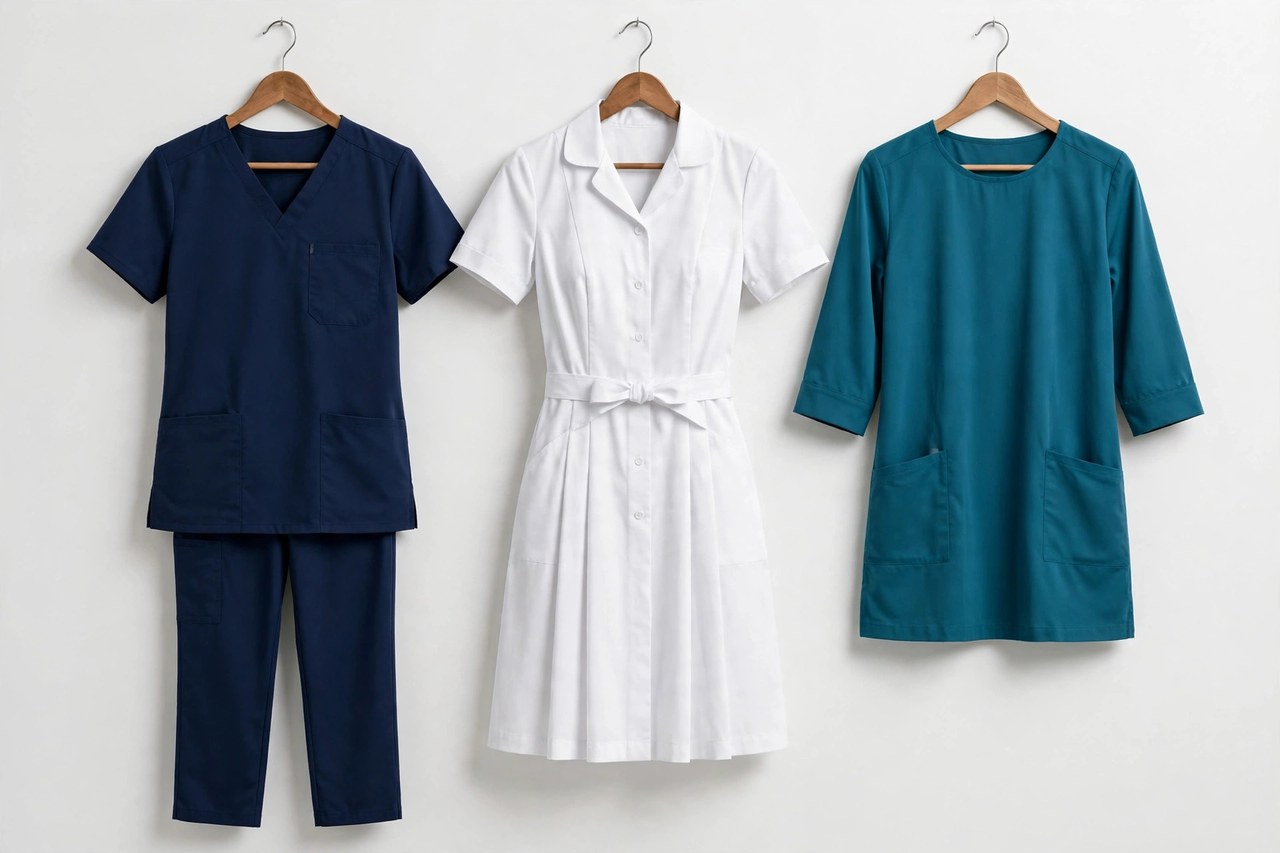
A nurse uniform is the attire nurses wear for two intertwined purposes: hygiene and identification. From the moment a patient arrives, the uniform answers questions before a word is spoken — who is the nurse, what is her role, can she be trusted with care. Nursing itself is the health-care profession focused on caring for individuals, families, and communities so they may attain, maintain, or recover optimal health and quality of life, and the uniform has always dressed that mission.
No other medical garment carries this much history. The traditional uniform — a dress, an apron, and a cap — existed in many variants, yet its basic style stayed recognizable for over a century, and it is still worn in some countries today. This guide follows its story: the classic look and what each piece meant, why white gave way to scrubs and color, and how today's nurse-specific uniforms balance heritage, identity, and hard clinical work.
The Classic Look: Dress, Apron & Cap
Historically, the nurse's uniform consisted of a dress, a pinafore apron, and a nurse's cap. A pinafore is a sleeveless garment worn as an apron, protecting the dress through the shift; in some hospitals the pinafore was replaced by a cobbler-style apron, and student nurses might also wear a nursing pin marking their school and stage of training. The white or pale dress signaled cleanliness and discipline, and starched fabric was itself a hygiene statement in an era before antimicrobial finishes.
The nurse's cap arrived early in the profession's history. Its original purpose was practical modesty: to keep the nurse's hair neatly in place and present a modest appearance. Schools developed distinctive cap designs — ruffled, winged, pleated — so a cap identified a nurse's training as surely as a diploma identified her qualification. Capping ceremonies marked a student's passage into the profession. Together, dress, apron, and cap made nurses instantly legible: to patients, to physicians, and to each other.
Why White Gave Way to Scrubs
The classic uniform faded for practical reasons. Dresses restricted movement in an increasingly physical, technology-heavy job; whites showed every stain and demanded punishing laundering; and the starched ideal sat uneasily with nursing's professionalization — nurses practice in many specialties with differing levels of authority, and nurse practitioners now practice independently in many jurisdictions, a far cry from the handmaiden image the cap implied. Caps also collided with infection-control thinking: one more laundered-at-home item in a sterile-minded workplace.
In Western Europe and North America, scrubs or tunics became the popular replacement. A “scrub dress” — a simpler, one-piece version of the uniform — is still worn almost always in operating rooms and emergency rooms, where simplicity rules. Elsewhere the two-piece scrub set won outright. The transition traded ceremony for function, but identification survived: the uniform still marks the nurse, now through color, embroidery, and role badges rather than starched cotton.
Color-Coding, Prints & Team Identity
Modern hospitals rebuilt identification with color. Many facilities assign scrub colors by department or role — one hue for nursing, another for respiratory therapy, another for environmental services — so patients and families can read the room at a glance. Color-coding improves safety and wayfinding: in a crowded emergency department, spotting “the nurse in navy” is faster than reading a badge. It also builds team identity; units take quiet pride in their colors.
Within those systems, personality found its outlets. Printed scrub tops — once confined to pediatrics and children's wards, where friendly prints calm young patients — now appear wherever policy permits, from veterinary clinics to dental offices. Embroidered names, credentials, and unit logos add a layer of personal identification the cap once provided. The balance is deliberate: standardization for instant recognition, variation for morale. A nurse's uniform today is both a team jersey and a professional credential, worn at the same time.
Today's Nurse-Specific Fits
Contemporary nurse uniforms are designed around the actual work: lifting patients, starting lines, charting, and walking miles of corridor. Women's scrub cuts use shaped waists, stretch side panels, and rises that stay put through every bend. Maternity scrub lines adapt the same department colors for pregnant nurses, and petite and tall ranges keep hems and sleeves where they belong. Pockets are engineered, not decorative — divided compartments for bandage scissors, tape, penlights, phones, and alcohol swabs, with badge tabs placed for scanner access.
Layering completes the modern kit: underscrubs for warmth and modesty, warm-up jackets with push-up cuffs for hand hygiene, and in some regions, tunic-and-trouser sets that honor modesty preferences. Traditional uniforms remain common in many countries, and even in scrubs-dominated systems the classic white coat still crowns advanced practice roles. The through-line from cap to jogger scrub is unchanged, though: the uniform exists so patients can trust, at a glance, the person caring for them.
Related Women's Guides
More to Explore on Apparel Search
Looking for Women's Clothing Stores?
This guide helps you choose women's medical nurses uniforms. To browse where to buy, visit our women's clothing store directory, where you can find retailers that carry them.