Women's Medical Uniforms Guide
Uniforms as a system — how facilities standardize what staff wear, color-code roles, and write the dress codes around it all.
Shop Women's Medical Uniforms Now
Shop Women's Medical Uniforms on Amazon Shop Women's Medical Uniforms on eBayThe Amazon and eBay links on this page are affiliate links. If you make a purchase through them, Apparel Search may earn a commission.
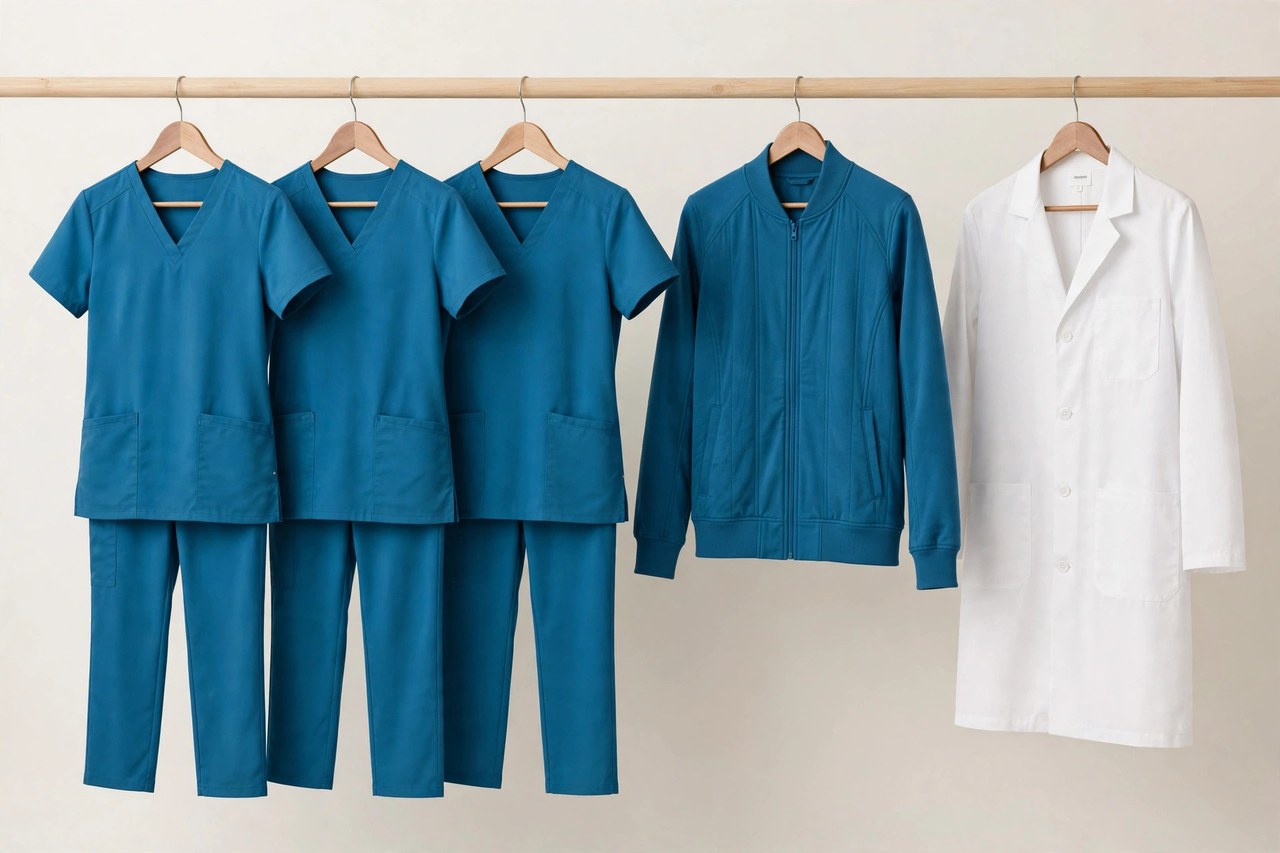
A uniform is the distinctive clothing worn by members of the same organization or profession — and in healthcare, that distinctiveness does real work. Medical uniforms can consist of scrubs, gowns, nursing uniforms, healthcare shoes, and the layers and accessories around them, all chosen so that patients, families, and colleagues can identify roles at a glance. The medical profession is the body of individuals qualified to practice medicine, and the uniform is how that body presents itself: competent, consistent, and clean.
Where other pages in this family examine individual garments, this one looks at the system: how facilities choose and standardize uniforms, how color-by-role systems work, how embroidery and names personalize within the rules, and what dress codes actually say. Whether you are a clinician shopping within a policy or a practice manager writing one, this is the page about uniforms as an organizational decision.
How Facilities Standardize
Standardization starts with a decision about control. Some hospitals issue uniforms centrally — purchasing, laundering, and replacing garments through a uniform program or linen service, so every nurse on a unit wears an identical, facility-maintained set. Surgical scrubs are commonly handled this way, since home laundering cannot guarantee the hygiene that conditions preventing disease through cleanliness demand. Other facilities set a specification — approved colors, styles, and vendors — and let staff purchase their own, trading central control for fit, choice, and lower overhead.
Group purchasing shapes both routes. Practices negotiate with uniform retailers or wholesalers for volume pricing, fitting events, and embroidery services, and smart programs build in a replacement allowance so worn garments retire on schedule. Consistency checks matter: the same “navy” differs between brands, so programs specify exact product lines, not just color names. The goal: one team look, in petite, tall, maternity, and extended sizing so the standard fits every body.
Color-by-Role Systems
The most visible standardization tool is the color-by-role system: each department or role wears an assigned scrub color — navy for registered nurses, wine for respiratory therapy, teal for technicians, black for support services, for example. Patients and families learn the code within a day and use it constantly: “ask the nurse in navy.” In emergencies, color speeds communication; in daily care, it builds trust, because visitors can verify at a glance that the person entering the room is who she says she is.
Designing a system takes care. Choose colors that read distinctly under fluorescent light and stay distinguishable for color-blind staff and patients; avoid near-duplicates like two similar blues. Coordinate footwear, jacket, and underscrub rules so the system survives layering, and leave a defined outlet — printed tops on Fridays, holiday prints in pediatrics — so morale has somewhere to go. Publish the code on wall charts and admission materials so patients benefit too.
Embroidery, Names & Personalization
Embroidery is where the standardized uniform becomes personal. Names, credentials, departments, and facility logos stitched on the chest turn anonymous scrubs into introductions: patients read “Sarah, RN — Oncology” before a word is spoken, which measurably warms the first thirty seconds of care. Programs typically specify thread color, placement, and typeface so the result stays uniform even as the names change, and logo embroidery extends the facility's brand onto every corridor and clinic room.
Personalization has limits, and good policies name them. Patches, pins, and badge flair may be restricted to approved items; embroidered credentials must match actual licensure; and some areas — sterile fields, isolation rooms — restrict anything that cannot be laundered or wiped down. Within those lines, small choices remain: embroidery versus printed name, logo placement, a permitted print jacket. The principle is balance — enough standardization that the team reads as one, enough individuality that each clinician still feels like herself inside the uniform.
Dress Codes Beyond the Uniform & Buying for a Practice
Every uniform policy contains a second, quieter document: the dress code around the garments. Typical rules cover nails (short, clean, often no artificial nails in clinical areas, for infection control), hair (tied back, contained in procedural areas), jewelry (minimal, nothing dangling), coverage and fit (no midriffs, no undergarments visible, sleeves and lengths specified), and visible tattoos or piercings, where modern policies increasingly allow expression within professional limits. Footwear rules — closed toe, cleanable, slip-resistant — belong here too. Well-written codes explain the clinical “why” behind each rule and make reasonable accommodations for religious dress, such as hijabs and undersleeves in approved fabrics.
Buying for a practice, finally, is logistics: survey staff for size runs before ordering, stock spares for new hires and mid-shift changes, budget an annual refresh, and choose vendors who support exchanges as bodies and roles change. A uniform program succeeds when staff stop thinking about it: the right garment, in the right color, clean and ready, every single shift.
Related Women's Guides
Looking for Women's Clothing Stores?
This guide helps you choose women's medical uniforms. To browse where to buy, visit our women's clothing store directory, where you can find retailers that carry them.