Women's Medical Footwear Guide
The umbrella guide to clinical footwear — clogs vs. shoes vs. sneakers, support science, and surviving the 12-hour shift.
Shop Women's Medical Footwear Now
Shop Women's Medical Footwear on Amazon Shop Women's Medical Footwear on eBayThe Amazon and eBay links on this page are affiliate links. If you make a purchase through them, Apparel Search may earn a commission.
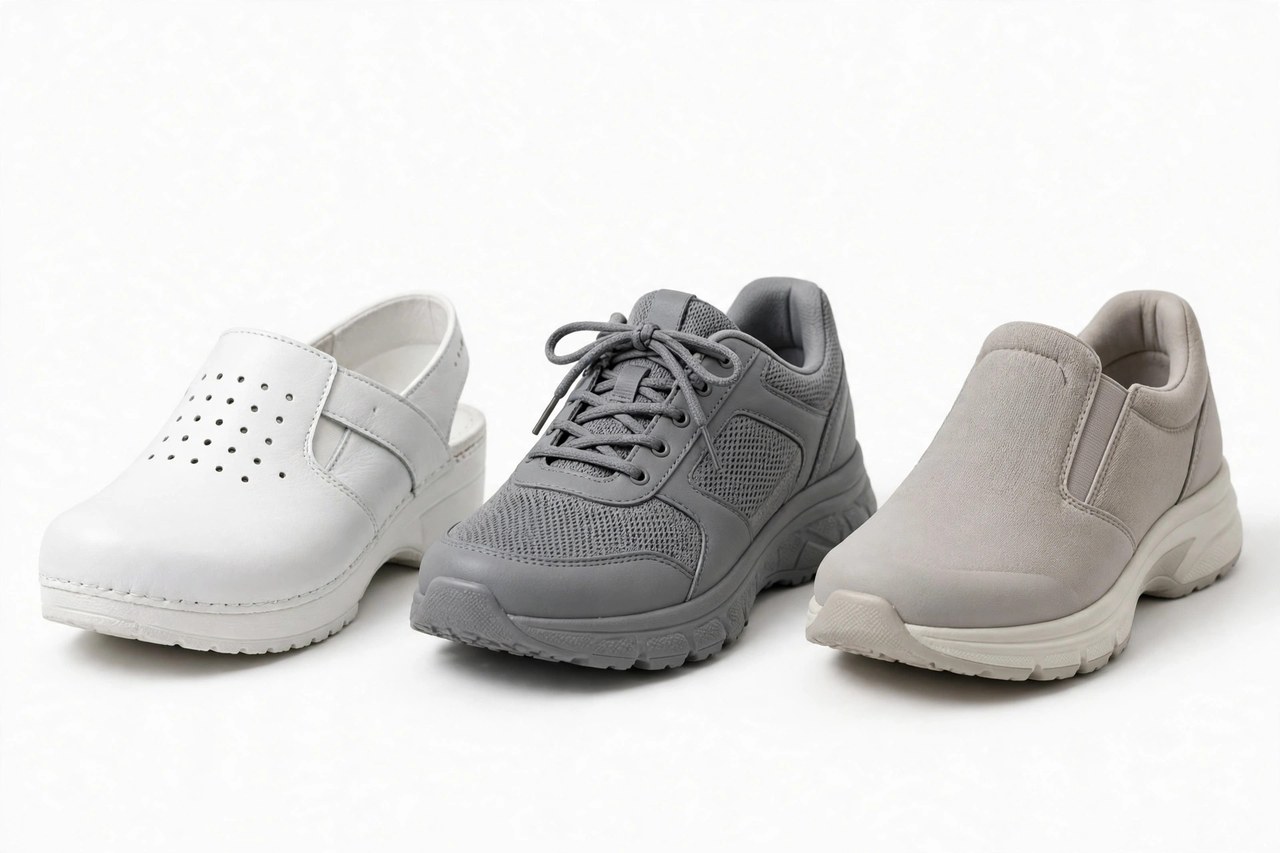
Footwear means garments worn on the feet — originally for protection against ground textures and temperature, and today for easing locomotion and preventing injuries. In healthcare, that job description gets harder: doctors, nurses, dentists, aides, and technicians spend much of the day on their feet, moving between rooms, standing through procedures, and pivoting on floors that are often wet or slick. The right footwear is not a comfort luxury; it is protective equipment.
Healthcare footwear also answers to hygiene — the conditions and practices that maintain health and prevent disease, especially through cleanliness. Whatever you wear on your feet should be clean, ideally sterile in sensitive areas, with uppers that wipe down and designs that do not harbor contaminants. This umbrella guide compares the three great families of clinical footwear, explains the support science that keeps feet happy through marathon shifts, and covers the safety features your workplace expects.
Three Families: Clogs, Shoes & Sneakers
Clogs are the classic clinical choice: slip-on, enclosed, often with a rocker or cushioned sole that encourages a natural stride. Their wipeable uppers shrug off spills, and the open-back or closed-back choice trades a little security for easy on-off. Many facilities love them for their cleanability, and generations of nurses swear by their all-day comfort — clogs remain a common sight on hospital floors for good reason.
Clinical shoes — lace-up or slip-on leather styles — offer a more secured, traditional fit with enclosed heels and structured support. Athletic sneakers built for healthcare bring running-shoe cushioning, breathable mesh, and lightweight construction to the ward. Sneakers win on cushioning, shoes win on structure and polish, clogs win on convenience and cleanability. Your facility's dress code, your foot shape, and your shift's demands decide the winner — many clinicians rotate between two types across the week.
Support Science for the 12-Hour Shift
Long shifts punish feet in predictable ways, and good design answers each one. Arch support — built-in or from an aftermarket insole — distributes weight and fights the fatigue that leads to plantar fasciitis, the heel pain that plagues standing workers. Cushioning in the midsole absorbs the impact of thousands of steps on hard tile and concrete; look for responsive foams rather than flat, dead soles. A firm heel counter keeps the rearfoot stable, and a roomy toe box lets toes splay naturally instead of cramping.
Fit matters as much as features: shop late in the day when feet are slightly swollen, leave a thumb's width at the toe, and break new pairs in on short shifts before committing to a twelve. Quality socks — cushioned, moisture-wicking, or graduated compression — multiply any shoe's comfort. If you have persistent pain, a podiatrist-fitted orthotic beats any off-the-shelf insole. Think of support as a system: shoe, insole, and sock working together.
Traction, Barriers & Safety Underfoot
Healthcare floors are an obstacle course of water, saline, and the occasional mystery spill, so slip-resistant outsoles are near-universal in clinical footwear. Look for rubber outsoles with multidirectional tread patterns designed to channel liquids away; some manufacturers test to published slip-resistance standards. Replace shoes when tread wears smooth — a bald sole on a wet floor is an injury waiting for a shift.
Enclosed toes are mandatory in most clinical settings: they shield feet from dropped instruments, rolling carts, and splashes. Fluid-resistant or fully wipeable uppers keep contaminants on the surface where they can be cleaned off, supporting the hygiene your role demands. Light-colored uppers show soil sooner, which is arguably a feature — visible dirt gets cleaned, hidden dirt does not. Check your facility's policy on open backs, mesh panels, and canvas, since rules vary by department and infection-control level.
Fit, Rotation & Keeping Them Clean
Even the best pair needs care. Rotate between two pairs when you can: alternating days lets cushioning rebound and uppers air out, dramatically extending service life. Clean wipeable uppers with a damp cloth and mild soap after messy shifts; launder machine-washable styles on gentle and air dry to protect adhesives and cushioning foams. Deodorize with baking soda or removable insoles washed separately.
Inspect regularly and retire honestly. Compressed midsoles, cracked uppers, worn tread, and persistent odor that survives washing all signal replacement time — most clinical pairs earn retirement after six to twelve months of full-time wear. Keep a broken-in backup pair ready so a blowout never strands you mid-rotation. Your feet carry you through every emergency, every round, every code: return the favor with footwear that is supportive, safe, and scrupulously clean.
Related Women's Guides
Photos

Looking for Women's Clothing Stores?
This guide helps you choose women's medical footwear. To browse where to buy, visit our women's clothing store directory, where you can find retailers that carry them.