Women's Medical Scrubs Guide
Everything about scrubs themselves — top styles, pant styles, fit, colors, fabrics, and keeping them clean shift after shift.
Shop Women's Medical Scrubs Now
Shop Women's Medical Scrubs on Amazon Shop Women's Medical Scrubs on eBayThe Amazon and eBay links on this page are affiliate links. If you make a purchase through them, Apparel Search may earn a commission.
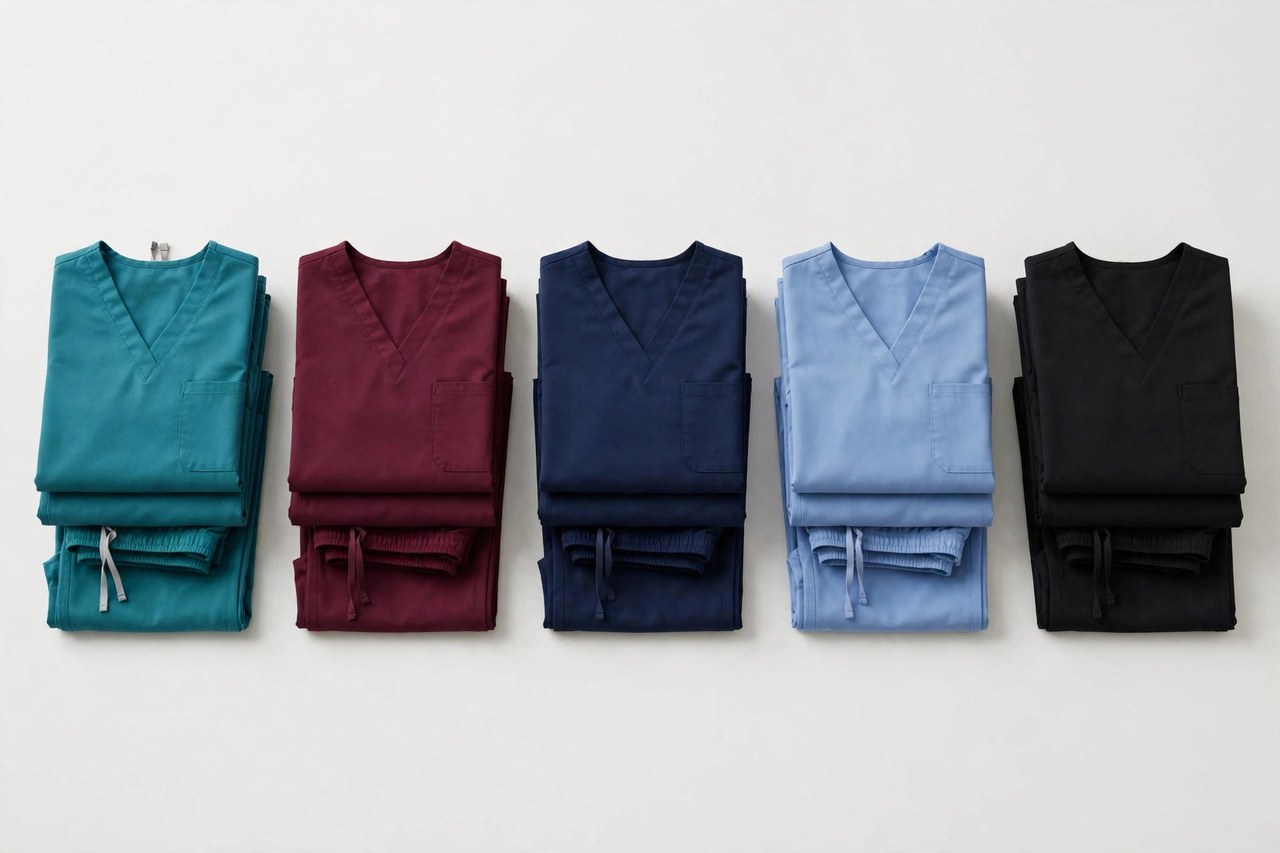
Scrubs are the sanitary clothing worn by surgeons, nurses, physicians, and other workers involved in patient care in hospitals. They earned their name honestly: originally designed for surgeons and operating-room personnel, who put them on when sterilizing themselves — “scrubbing in” — before surgery. From the operating room they spread to nearly every corner of healthcare, and beyond it: veterinarians, midwives, dental teams, and technicians all wear scrubs in workplaces where clothing may come into contact with infectious agents.
The design philosophy has never changed. Scrubs are deliberately simple, with minimal places for contaminants to hide; easy to launder; and cheap to replace if damaged or stained irreparably. What has changed is everything else — necklines, waistbands, fabrics, colors, and fit now rival casual fashion for variety. This guide covers scrubs specifically: the top and pant styles worth knowing, how to choose colors and fit, and how to care for sets so they stay clean, bright, and professional.
Scrub Tops: V-Neck, Mock Wrap & Empire
The V-neck is the original and still the bestseller: a clean, breathable neckline that layers over underscrubs and suits nearly every facility. Mock-wrap tops overlap at the front for a defined waist and a more tailored, feminine line, usually with a secure modesty snap or fixed tie. Empire-waist tops gather below the bust, skimming the midsection with extra room — a forgiving, comfortable choice for long shifts and a popular maternity-adjacent fit. Round-neck and notch-neck styles round out the options for facilities wanting a uniform look.
Judge a top by its pockets and construction. Two roomy patch pockets are standard; better tops add an interior pocket, a chest pocket with pen slot, a badge tab, and a side-vented hem that moves when you walk. Tunic lengths cover the hips for bending and lifting, while shorter contemporary cuts suit tucked-in styling with jogger pants. Shoulder seams should sit at your shoulder — dropped seams signal a boxy, unisex cut that will fight you all shift.
Scrub Pants: Drawstring, Elastic & Jogger
Drawstring pants are the traditional scrub bottom: infinitely adjustable, secure when tied well, and forgiving of weight fluctuation. Elastic-waist pants skip the tie entirely, and hybrid half-elastic, half-drawstring designs combine comfort with security. Yoga-waist knit bands borrow from activewear, sitting smoothly under tucked tops. On the leg, straight cuts remain the professional standard, gentle flares balance wider hips, and multi-pocket cargo pants carry shears, phones, and supplies for high-gear roles.
The newest silhouette is the jogger: tapered legs ending in soft knit cuffs that keep hems off the floor and give scrubs an athletic edge. Joggers pair with shorter, fashion-forward tops; traditionalists in surgical areas often prefer un-cuffed legs for a cleaner line. Whichever style you choose, check the inseam — petite, regular, and tall options prevent dragging hems that wick up floor contaminants — and test the rise by bending and crouching. A scrub pant that survives a deep squat in the fitting room will survive your shift.
Colors, Prints & Getting the Fit Right
Color carries meaning in scrubs. Operating suites historically favored green and ceil blue — easy on surgeon's eyes under bright lights and forgiving of stains — and many facilities still assign colors by department or role, so patients can identify nurses, technicians, and support staff instantly. Within an assigned color, fit and fabric are your freedom; where policy allows, prints — florals, geometrics, seasonal and pediatric themes — add personality and, in children's care, genuine therapeutic friendliness.
Fit is where women's scrubs have transformed. Shaped darts, princess seams, stretch side panels, and true women's rises replace the unisex box. Order by your largest measurement and size up when between sizes — scrubs should skim, never cling, both for professionalism and for the air circulation that keeps you cool. Try sets on together: top length against pant rise, colors under fluorescent light, which is far less forgiving than your bathroom mirror. A well-fitted set looks intentional; an ill-fitted one looks borrowed.
Fabrics & Caring for Your Scrubs
Most scrubs are polyester-cotton blends or polyester-rayon-spandex performance fabrics. Polyester brings durability, wrinkle resistance, and colorfastness; cotton adds breathability and softness; spandex delivers the stretch modern fits depend on. Performance finishes — moisture-wicking, soil-release, fluid resistance, antimicrobial treatments — layer extra function on top. For messy specialties, high-polyester blends shed stains best; for hot wards, cotton-rich blends breathe best.
Care keeps scrubs sanitary and sharp. Wash work sets separately from household laundry, inside out, in warm water; pre-treat stains with an enzyme cleaner before washing, and skip fabric softener on performance fabrics since it coats the fibers and dulls their finishes. Tumble dry medium or line dry, and inspect as you fold — thinning fabric, broken ties, and stains that survive washing are retirement signals. Because scrubs were designed to be cheap to replace, honor the system: keep three to five sets in rotation and replace worn pieces promptly instead of nursing them along.
Related Women's Guides
Looking for Women's Clothing Stores?
This guide helps you choose women's medical scrubs. To browse where to buy, visit our women's clothing store directory, where you can find retailers that carry them.