Women's Medical Apparel Guide
The industry view of medical workwear — what counts, who wears it, and how fashion finally reached the hospital floor.
Shop Women's Medical Apparel Now
Shop Women's Medical Apparel on Amazon Shop Women's Medical Apparel on eBayThe Amazon and eBay links on this page are affiliate links. If you make a purchase through them, Apparel Search may earn a commission.
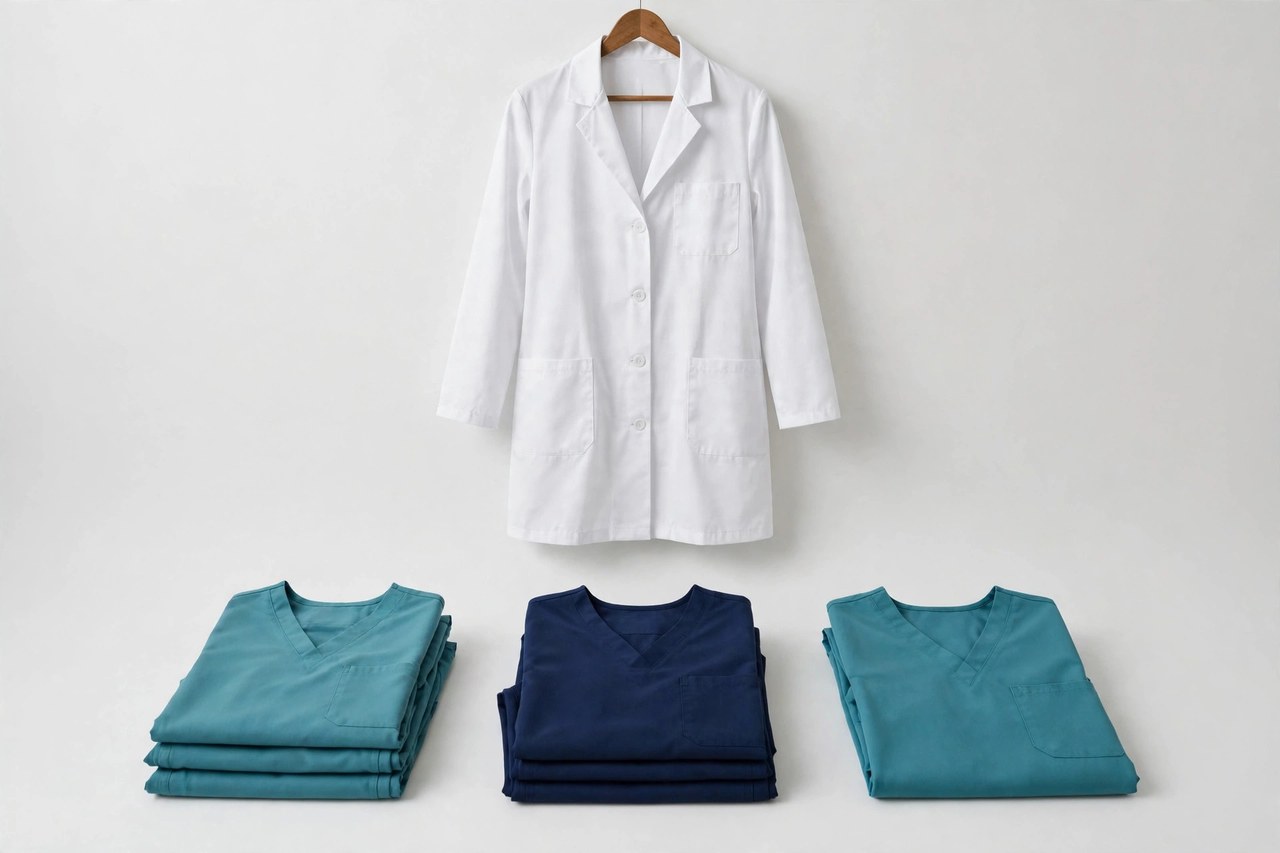
Medical apparel is the clothing worn by the medical and healthcare industry — the scrubs, lab coats, gowns, jackets, and uniforms that identify caregivers and help protect staff and patients alike. The word medical relates to the science of medicine and the treatment of illness and injury, and the medical community reaches across medicine, surgery, dentistry, midwifery, pharmacy, psychology, nursing, and the allied health professions. Women's medical apparel adapts all of that workwear to women's bodies and proportions.
You may also see this category called medwear, the trade shorthand for medical workwear covered in our fashion terms section. Whatever the label, the idea is the same: clothing engineered for clinical life, where hygiene, identification, and freedom of movement matter more than runway trends. This page takes the industry-wide view — the pieces, the people, and the places — and shows where medical apparel is heading next.
What Counts as Medical Apparel
The core of the category is scrubs, the sanitary clothing worn by surgeons, nurses, physicians, and other workers involved in patient care. Scrubs were originally designed for operating-room personnel, who pulled them on while sterilizing themselves — “scrubbing in” — before surgery. They are deliberately simple, with minimal places for contaminants to hide, easy to launder, and cheap to replace when damaged or stained beyond saving. That practical recipe explains why their use spread from hospitals into any workplace where clothing may meet infectious agents, including veterinary clinics and midwifery practices.
Around scrubs sits a full wardrobe: consultation and lab coats, warm-up jackets, underscrubs worn as base layers, patient gowns, isolation and surgical gowns, scrub caps, and clinical footwear. Some facilities issue every piece from a central uniform program; others set standards and let staff buy their own within a color and style code. Either way, each garment answers to the same masters: cleanliness, role identification, and all-day wearability.
Who Wears It: From Clinics to Kennels
Hospitals are the largest stage, employing doctors, registered nurses, nursing aides, technicians, and therapists who each need role-appropriate workwear. But medical apparel shows up far beyond the hospital lobby. Dental offices dress hygienists and assistants in scrubs built to shrug off polishing paste and rinse water. Veterinary teams need the same barrier protection as human-medicine staff, plus fabrics that survive claws, fur, and frequent washing. Pharmacies, medical and diagnostic laboratories, and physical and occupational therapy practices each put their staff in scrubs or lab coats matched to the work.
The category also follows care wherever it goes. Home health aides, who bring skilled nursing to patients — often elderly — in their own homes, need durable, professional-looking scrubs. Long-term and residential care facilities rely on nursing aides for the vast majority of direct care, and those aides live in their uniforms shift after shift. Even community and public-health workers and front-desk staff wear medical apparel or its close cousins, because the uniform signals trust the moment a patient walks in.
Settings That Shape the Rules
The workplace writes the dress code. Operating rooms demand sterile, simple garments with nothing to snag or shed; emergency departments need stretch, deep pockets, and fabrics that release stains. Outpatient centers, dialysis clinics, and ambulatory surgery suites run at a fast clip but with lighter contamination loads, so staff there often enjoy broader color and style choices. Long-term care and home health reward durability and a warm, approachable look, since the uniform is part of the patient's daily environment.
Infection control underpins all of it. Healthcare clothing should follow good hygiene — the conditions and practices that maintain health and prevent disease, especially through cleanliness. That means fabrics and finishes that tolerate hot, repeated laundering, minimal fussy trim where contaminants could lodge, and replacement schedules that retire worn-out garments before they become liabilities. Color and style policies sit on top of these rules, varying by facility and role.
Where the Category Is Heading
The biggest shift of the last decade is fit and fashion. Boxy unisex scrubs are giving way to women's cuts with shaped waists, contoured seaming, stretch panels, and petite and tall sizing. Performance fabrics borrowed from athletic wear — moisture-wicking, four-way stretch, wrinkle resistance — have moved into scrub tops and pants, and prints have exploded far beyond pediatrics into every department. What was once purely utilitarian workwear now gets designed with the same attention to silhouette as casual apparel.
At the same time, facilities are getting more deliberate about branding. Branded uniform programs put the practice name and logo on scrubs and lab coats through embroidery, turning staff into a walking identity. Color-by-role systems — navy for nursing, wine for respiratory therapy, ceil blue for surgery — help patients instantly read who is who. Expect the category to keep moving on both tracks: more comfort and self-expression for the wearer, and more consistency and polish for the organization.
Related Women's Guides
Looking for Women's Clothing Stores?
This guide helps you choose women's medical apparel. To browse where to buy, visit our women's clothing store directory, where you can find retailers that carry them.