Women's Ombre Print Clothing Guide
Ombre is the gradient: color that melts from dark to light across a garment — a print technique that turns a plain dress, top or skirt into a study in shading.
Shop Women's Ombre Print Clothing Now
Shop Women's Ombre Print Clothing on Amazon Shop Women's Ombre Print Clothing on eBayThe Amazon and eBay links on this page are affiliate links. If you make a purchase through them, Apparel Search may earn a commission.
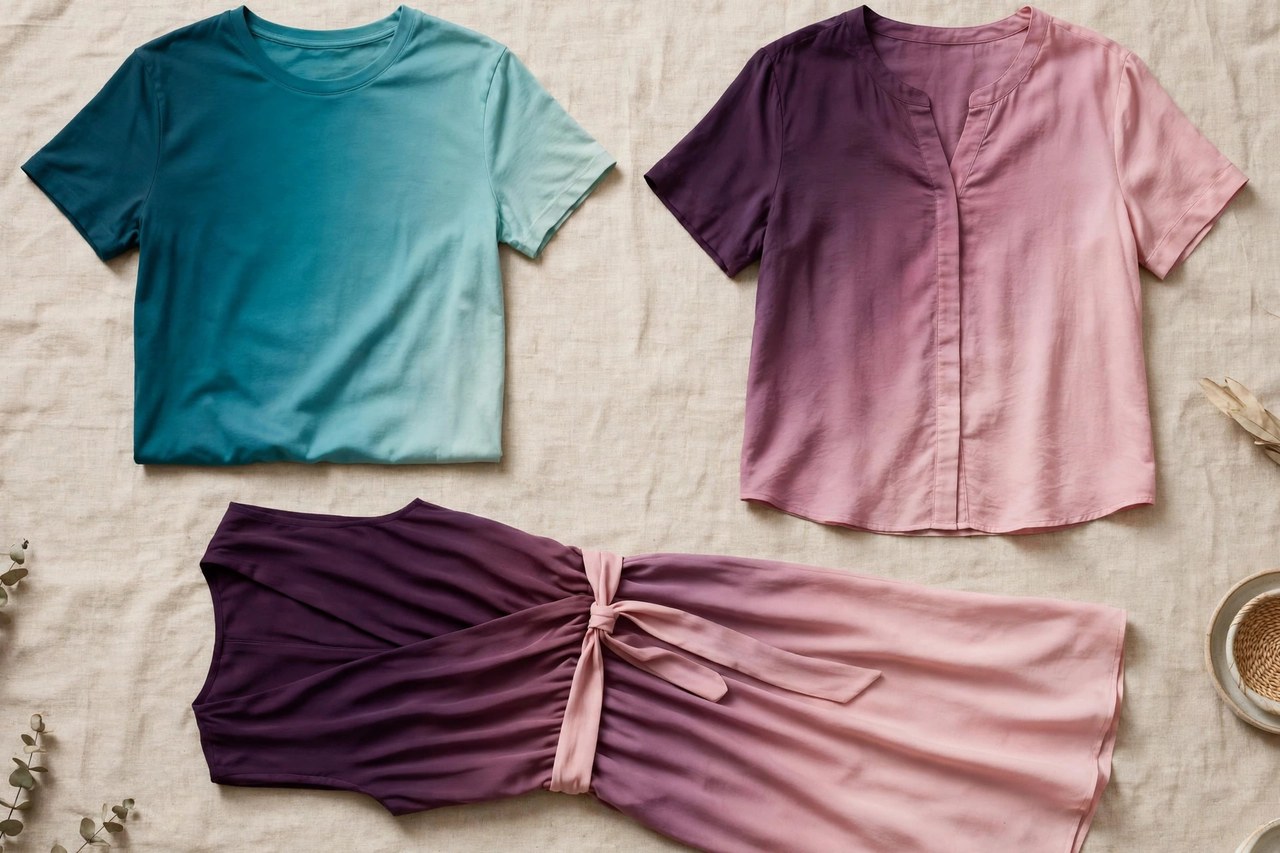
Ombré is a French word meaning shaded, and in clothing it names a gradual blending of one color hue to another — usually moving tints and shades from light to dark across the fabric. Where a stripe divides color with a hard edge, ombre dissolves the edge: a dress that is deep navy at the hem and fades to sky at the shoulders, a top that melts from plum through mauve to blush. It is one of the oldest decorative ideas in textiles and one of the most flattering, because the eye reads a gradient as movement and length.
This guide covers ombre as it appears across the women's wardrobe: dresses, tops, skirts, knitwear and swimwear. It explains the two ways the effect is made — true dip dyeing and printed gradients — why the placement of the dark and light ends changes how a garment flatters, and how to choose and care for ombre pieces so the fade stays smooth rather than going blotchy in the wash.
Dip Dye vs. Printed Ombre
True dip-dyed ombre is made by literally dipping the finished garment (or the fabric) into dye baths in stages, holding each section for a different length of time so the color builds in bands that soften into each other. Dip dyeing gives the most organic gradients, with slight irregularities that read as handcrafted, and it is the method behind most artisan, resort and bohemian ombre. Because the dye is in the fiber, a dip-dyed piece also fades as a whole in the wash rather than losing a surface print.
Printed ombre is produced by printing the gradient onto the fabric with screens or digital printers before cutting. It allows effects dip dyeing cannot: gradients that run around the body rather than down it, multi-hue rainbows of shading, photographic fades, and perfect repetition from garment to garment. Digital printing in particular made ombre cheap enough to appear on everything from t-shirts to evening dresses. When shopping, the practical difference is care and consistency: printed gradients are identical piece to piece (good for bridesmaid sets), while dip-dyed pieces vary slightly (good for one-of-a-kind character).
Placement: Where the Dark Goes
The golden rule of ombre dressing is that the eye travels toward contrast and rests on the darkest tone. A dress dark at the hem and light at the shoulders draws the eye upward to the face and lengthens the silhouette — the classic, most universally flattering arrangement, and the reason so many ombre gowns are built that way. The reverse gradient, light at the hem and dark at the top, grounds an outfit and suits tops paired with dark bottoms, where the fade continues the line of the trousers or skirt.
Garment by garment: ombre dresses use the full vertical canvas and are the statement form of the technique. Ombré tops and blouses work best with the darkest tone near the hem, so the fade rises toward the face. Ombré skirts pair naturally with a solid top in one of the gradient's own shades. Ombré swimwear and cover-ups are resort staples, the gradient echoing water and sky. And ombre knitwear — sweaters knitted from gradient-dyed yarn — produces the softest fades of all, with the color changing stitch by stitch. Whatever the garment, pick up one tone from the gradient in your shoes or accessories rather than introducing a new color.
Choosing and Caring for Ombre
Choose the color story first: tonal ombre (shades of one hue) is elegant and easy to wear; complementary ombre (two hues melting together, like teal into turquoise's opposite coral) is bolder and more seasonal. Check the gradient in daylight before buying: a good fade has no visible banding lines where one shade stops and the next starts, and on a printed piece the gradient should continue across seams without a jarring jump, at least at the front.
Care protects the fade's balance. Wash ombre pieces inside out, in cold water, with similar colors — the darkest section can bleed onto the lightest in a hot or mixed wash and muddy the whole effect. Avoid bleach entirely, including on white-to-color gradients. Dry out of direct sun, which fades the light end and the dark end at different rates, and store folded rather than hanging if the garment is a heavy knit, since gradient yarns are often loosely spun. Treated gently, an ombre piece keeps the quality that made you buy it: color that behaves like light.
Related Women's Guides
Photos


Looking for Women's Clothing Stores?
This guide helps you choose women's ombre print clothing. To browse where to buy, visit our women's clothing store directory, where you can find retailers that carry them.