Women's Petite Maternity Clothing Guide
Petite maternity clothing combines two kinds of fit at once — room for a growing bump on a frame 5'4" and under, with shorter rises, inseams and torsos so nothing drags, drowns or rides up.
Shop Women's Petite Maternity Clothing Now
Shop Women's Petite Maternity Clothing on Amazon Shop Women's Petite Maternity Clothing on eBayThe Amazon and eBay links on this page are affiliate links. If you make a purchase through them, Apparel Search may earn a commission.
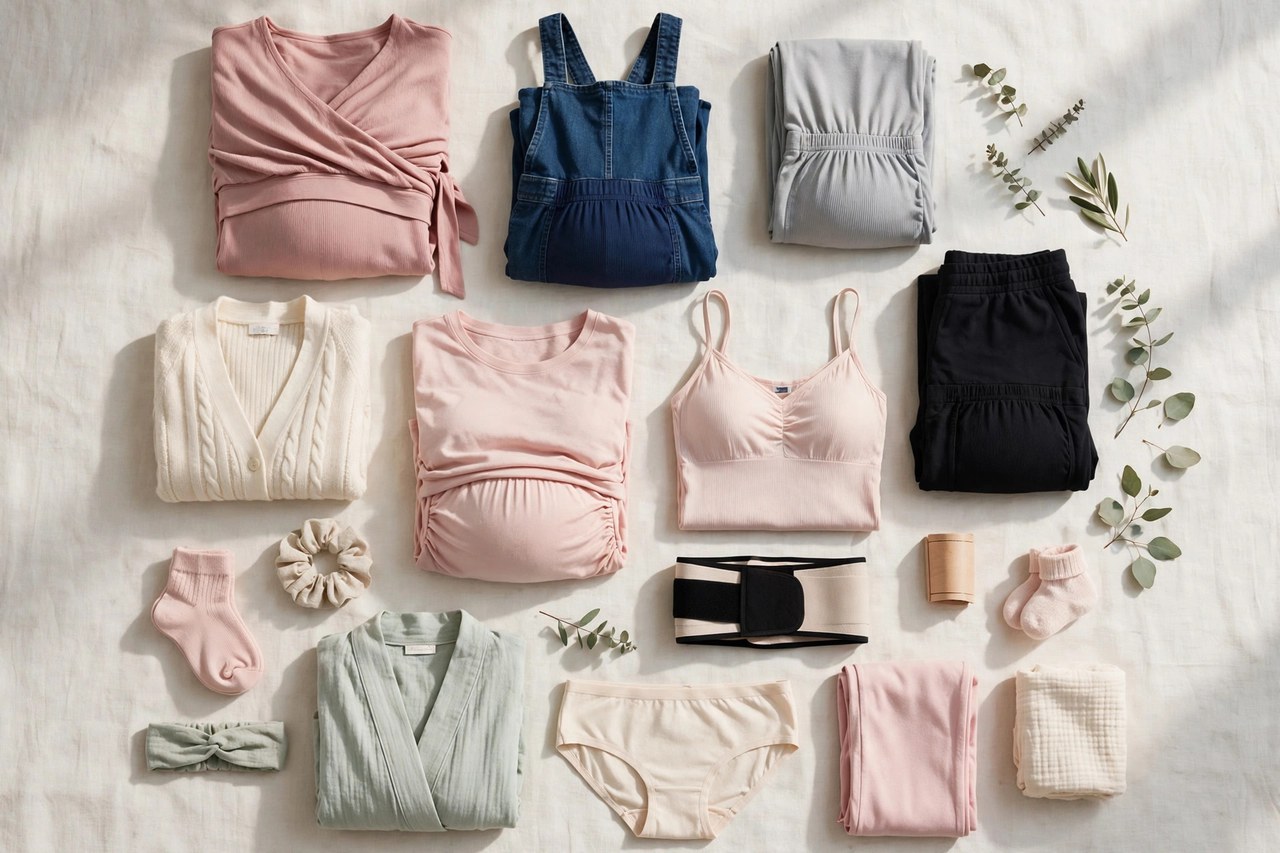
Petite maternity clothing serves women who are 5'4" and under and pregnant — a double fit challenge. Standard maternity clothing assumes an average-height frame, so its dresses hang below the knee to mid-calf, its pants pool at the ankle, and its empire waistlines sit in the wrong place on a shorter torso. Petite maternity lines grade every measurement down: shorter inseams and rises, higher-set empire seams, narrower shoulders, and bump room engineered for a compact frame.
The wardrobe is temporary but hard-working, worn daily for months and often handed on or resold. Buying well means understanding how maternity construction works — the panels, ruching and stretch that let one garment fit across trimesters — and then checking that the petite version keeps those features while fixing the lengths. This guide covers the key garments, the panel and fabric systems behind them, and a trimester-by-trimester buying strategy that avoids overbuying.
Key Garments: Pants, Dresses, Tops and Denim
Maternity pants and jeans are the foundation. They replace the front waistband with a stretch panel: an under-bump band that sits below the belly for early pregnancy and a feeling closest to normal pants, or a full over-bump panel of soft knit that pulls up over the belly for maximum support later on. In petite versions the inseam drops to roughly 27 to 29 inches for full-length styles, the rise under the panel is shortened, and back pockets are raised and scaled so they do not sit low on a shorter frame.
Maternity dresses rely on the empire waist, set just under the bust so fabric falls over the bump without a waist seam; on a petite torso that seam must sit higher than in regular maternity, or the dress reads as shapeless. Wrap and faux-wrap dresses adjust as you grow and work after delivery for nursing. Tops use side ruching — gathering that expands with the bump and keeps the hem at the right length on a short torso instead of creeping into a tunic. Petite maternity leggings, with a shorter leg and a panel waist, are the piece most women wear most.
How Petite Maternity Proportions Differ
True petite maternity is not regular maternity in a smaller size. The whole pattern is re-graded: sleeve lengths shorten so cuffs reach the wrist, shoulder seams sit on the shoulder, necklines are raised slightly so a V-neck does not plunge on a shorter torso, and skirt lengths are calibrated so a knee-length dress actually ends at the knee. Hem placement matters for balance too — a midi on a regular frame becomes a near-maxi on a petite one, changing the whole silhouette.
The bump itself changes proportions as pregnancy progresses, which interacts with petite fit. A high, compact bump on a short torso benefits from empire and wrap styles that define the narrowest point under the bust, while long cardigans and duster layers should be petite-cut so they end mid-thigh rather than at the calf. When a brand offers only regular maternity, the safest categories to buy are knit tops and leggings; the riskiest are tailored pants, structured dresses and coats, where length errors cannot be styled away.
Fabrics and Comfort Features
Stretch is the engineering of maternity clothing. Cotton-modal and viscose jerseys with elastane dominate because they expand, recover and breathe against sensitive skin. Denim uses stretch panels and elastic inserts while keeping a normal-looking front early on. Look for flat seams, tagless labels and soft panel fabrics that will not irritate skin stretched over the bump, and adjustable features — buttonhole elastic inside waistbands, drawstrings under panels, and straps that shorten — that extend a garment's useful months.
Support needs grow with the bump. Full panels distribute weight and smooth under tops; some petite maternity leggings and pants add a gentle support band at the lower back. Breathability matters because pregnancy runs warm: natural-fiber-rich knits and moisture-moving blends beat heavy synthetics for all-day wear. For work, ponte knit — a firm double-knit with stretch — is the petite maternity staple for pants and dresses, since it holds a tailored look, resists wrinkles and still gives over the bump.
Buying by Trimester and Care
Buy in waves rather than all at once. In the first trimester, most petite women need only a panel pant or two and looser tops as regular clothes tighten. The second trimester is the main buying window: dresses, work pants, jeans and tops in your petite maternity size — which is usually your pre-pregnancy petite size, since maternity sizing is built on it. In the third trimester, add only comfort essentials: extra leggings, a supportive dress, and nursing-friendly tops that will work after delivery.
Wash maternity knits cool and dry low to protect the elastane that the whole fit depends on; stretched-out panels are the usual end of a maternity garment's life. Because the wearing window is short, quality basics resell and hand down well, and many petite women buy secondhand panel jeans and dresses for exactly that reason. Keep receipts and buy versatile colors first — black, navy and denim in correct petite lengths will carry a working pregnancy wardrobe further than any number of regular-length bargains.
Related Women's Guides
Looking for Women's Clothing Stores?
This guide helps you choose women's petite maternity clothing. To browse where to buy, visit our women's clothing store directory, where you can find retailers that carry them.