Women's Petite Shoes Guide
Petite shoes mean true small sizes — often US 4 to 5.5 — on a narrower, shorter last, with heel heights and straps proportioned so the shoe fits the foot instead of being padded to fit.
Shop Women's Petite Shoes Now
Shop Women's Petite Shoes on Amazon Shop Women's Petite Shoes on eBayThe Amazon and eBay links on this page are affiliate links. If you make a purchase through them, Apparel Search may earn a commission.
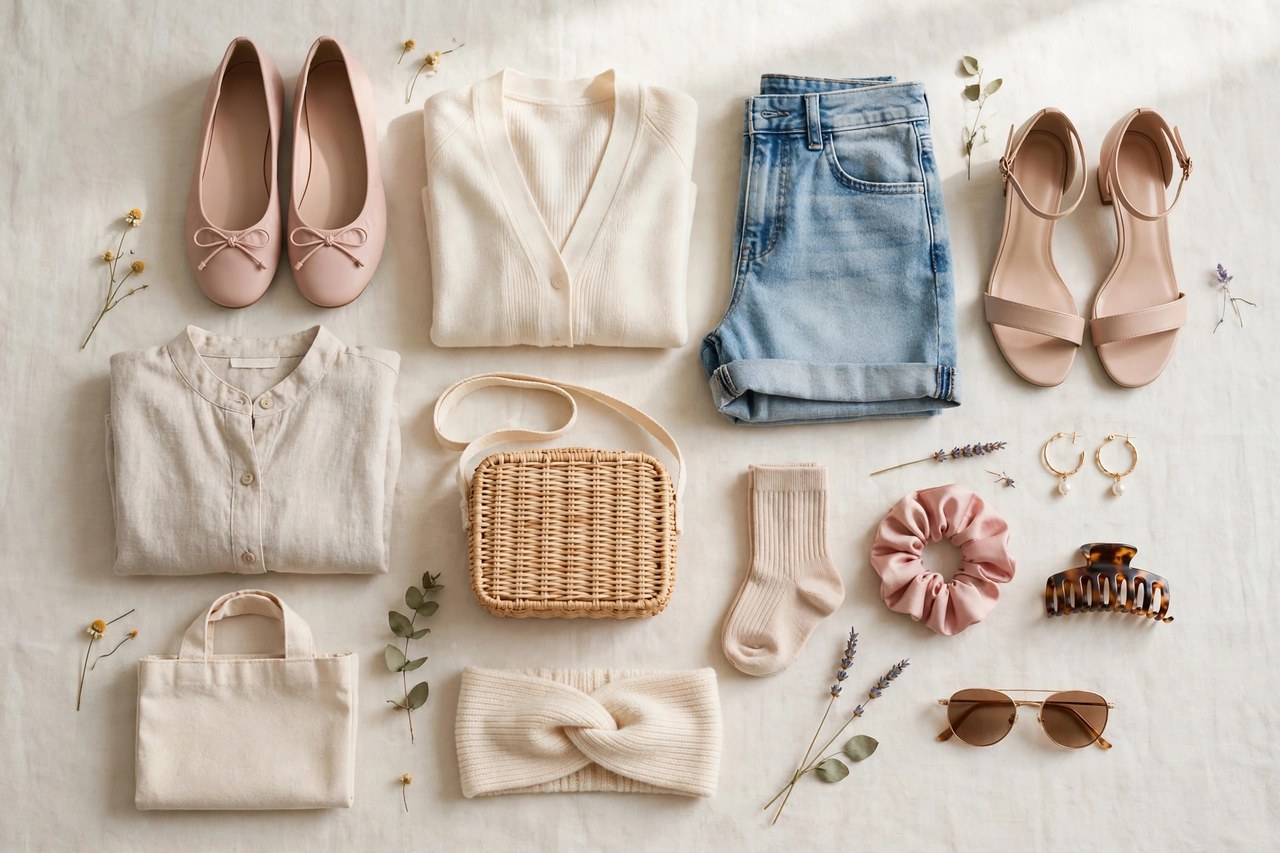
Petite shoes are shoes made in genuinely small sizes for women with shorter, often narrower feet — most commonly US sizes 4, 4.5, 5 and 5.5, and in some ranges down to size 2 or 3. Many petite women, at 5'4" and under, wear these sizes, yet mainstream ranges often start at size 6. The result is a familiar frustration: padding insoles, gripping with the toes, and straps that cannot be tightened enough on a short foot.
A proper petite shoe is built on a small last — the foot-shaped form that gives the shoe its length, width, arch position and heel pitch. Simply scaling a size 8 down does not place the arch support or the ball flex point correctly for a size 4.5 foot. This guide covers the small-size styles worth seeking out, how heel height and proportion work on a petite frame, the fit checks that prevent slipping and blisters, and where petite sizing differs for boots, sandals and athletic shoes.
Styles in Small Sizes: Heels, Flats, Sandals and Boots
Pumps and heeled shoes in petite sizes should offer lower and mid heels as well as high ones: a 2 to 2.5 inch heel gives lift that lengthens a petite leg without the instability of a towering pitch on a short foot, where the angle is effectively steeper. Look for ankle straps with enough holes punched close together, and slingback straps cut shorter. Ballet flats and loafers are petite staples, but check the vamp: a vamp cut for a longer foot can gape and slip at the heel on a size 4 or 5.
Sandals need scaled straps and a footbed that ends at your toes, not an inch beyond them; excess footbed at the front is a tripping hazard and a clear sign the shoe was graded down carelessly. Boots are the hardest petite fit: beyond foot size, the shaft height and calf circumference must be petite too, so the top of the boot lands below the knee and does not swallow the whole shin. Athletic shoes in small sizes benefit from true performance lasts rather than scaled-down casual shoes, especially for arch placement during running.
Proportion: Heels, Platforms and Detail on a Petite Frame
Proportion on the foot affects the whole silhouette. Very chunky platforms and thick lug soles can look heavy on a petite leg and add real weight with every step; a moderate platform of half an inch under the toe, paired with a heel, gives height more gracefully. Pointed and almond toes visually lengthen a short foot and leg, while very round, wide toe boxes shorten it. Neither is a rule — comfort comes first — but it explains why the same shoe reads differently in a size 5 than in a size 9.
Details scale, too. Oversized buckles, bows and hardware designed for larger shoes can cover most of a petite shoe's vamp. Petite and small-size specialists reduce hardware, narrow the straps and shorten the distance between eyelets on lace-ups so the lacing sits neatly. Color also works as proportion: a shoe close to your skin tone or matched to your tights or trousers lengthens the leg line, which is why nude-to-you pumps in small sizes are worth buying when you find them — they sell out first in petite sizes.
Fit and Sizing for Shorter, Narrower Feet
Measure both feet late in the day, standing, and fit to the larger foot. In a correct small size there should be about a thumb's width — roughly 3/8 to 1/2 inch — of space beyond the longest toe, the ball of the foot should sit on the shoe's flex point, and the heel should not lift out with each step in a closed shoe.
Children's shoes are not a substitute: youth lasts are wider in the heel relative to the forefoot, cushioning differs, and styles rarely suit adult dressing or support needs. If you fall between half sizes, fit with the sock or hosiery you will actually wear, and remember that feet swell in heat and on long days. For boots, measure your calf at its widest and compare shaft height with your under-knee length.
Care and Buying Tips
Small shoes wear at the same stress points as any shoe, but replacement is harder, so care pays. Rotate pairs to let cushioning recover, use shoe trees or tissue in pointed styles, and resole and re-heel good leather pairs before the heel tip wears to the nail. Keep heel grips and thin insoles as adjustments for minor fit tweaks only, not as a way to make a size 6 work. Clean according to material, and store sandals with straps fastened so short straps are not strained by being left dangling.
Buy petite shoes from ranges that genuinely stock your size year-round, and order early in the season: sizes 4 to 5.5 are produced in smaller quantities and sell through quickly, especially in classic colors. When you find a well-fitting last from a maker, note the model name — fit is repeatable within a brand. Prioritize, in order, one everyday flat or loafer, one mid-heel pump, one sandal and one boot, all in true small sizes. A short wardrobe of shoes that actually fit beats a shelf of padded compromises.
Related Women's Guides
More to Explore on Apparel Search
- Women's Footwear
- Shop For Shoes
- Petite Clothing Stores
- Clothes
- Petite Apparel
- Petite Apparel 2
- Footwear
- women's shoes
- Elf Shoes
- Wedges
- Women's Sandals
- Open Toe Shoes
- Turf Shoes
- High Heel Shoe Definition
- Platform Shoes Definition
- MBT Shoes
- Climbing shoe definition
- petite size clothing measurements
- Women's Apparel Brands
- Women's Apparel News
Looking for Women's Clothing Stores?
This guide helps you choose women's petite shoes. To browse where to buy, visit our women's clothing store directory, where you can find retailers that carry them.