Women's Petite Socks Guide
Petite socks fit smaller feet — roughly shoe sizes 4 to 6 — with a shorter foot, a correctly placed heel pocket and cuffs that end where crew, quarter and knee lengths should on a shorter leg.
Shop Women's Petite Socks Now
Shop Women's Petite Socks on Amazon Shop Women's Petite Socks on eBayThe Amazon and eBay links on this page are affiliate links. If you make a purchase through them, Apparel Search may earn a commission.
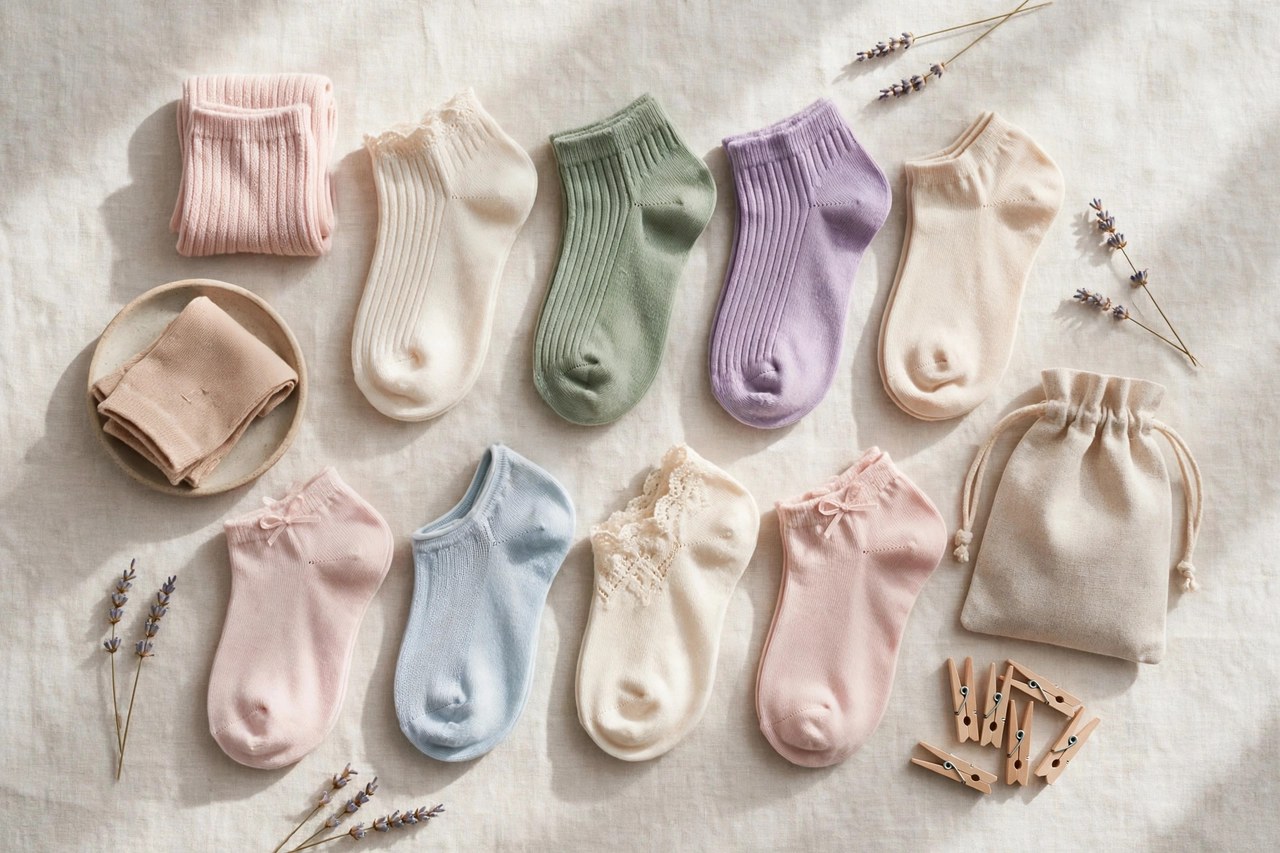
Socks seem like the one garment where size hardly matters, until you wear a sock made for a size 9 foot on a size 4.5 foot. The heel pocket lands halfway up your Achilles, excess fabric bunches in the shoe, and a crew cuff that should end at mid-calf reaches the knee. Petite socks — made for women's shoe sizes roughly 4 to 6, sometimes labeled small or petite — shorten the foot, place the heel where a small foot's heel actually is, and scale cuff lengths to a shorter leg.
Most petite women, 5'4" and under, do not need petite sizing in every sock — a thin ankle sock is forgiving — but the difference is real in crew, knee-high, boot and cushioned athletic socks, where heel placement and leg length decide comfort. This guide explains petite sock sizing, the main lengths and what each becomes on a petite leg, the fibers from cotton to merino wool, and the fit and care habits that stop small socks from slipping, bunching or wearing out at the toe.
Lengths on a Petite Leg: No-Show, Quarter, Crew and Knee-High
No-show and low-cut socks sit below the shoe line for loafers, flats and low trainers; in small sizes the foot is short enough that the sock does not slide forward, and a silicone heel grip actually lands on the heel. Quarter and ankle socks end just above the ankle bone and suit trainers and walking shoes.
Knee-high socks, worn for warmth, with skirts, or as boot socks, are the most length-sensitive of all: a regular knee-high on a petite leg goes over the knee, where it rolls and cuts in, while a petite knee-high ends just below the knee as designed. Boot socks combine a crew or knee length with cushioning; check the stated leg length against your under-knee measurement. Trouser socks are the thin, dressy knee-highs worn with shoes and trousers, and petite versions prevent the common problem of the band landing on the knee itself.
Fibers: Cotton, Wool, Synthetics and Blends
Cotton-rich socks are soft, affordable and fine for everyday dry wear, but pure cotton holds moisture and goes cold and abrasive during exercise or long walks; most good everyday socks blend cotton with nylon for durability and elastane for fit. Merino wool blends are the performance and winter choice: wool regulates temperature, resists odor and cushions well, and modern merino socks are machine washable. For petite feet, wool's natural elasticity also helps a small sock stay shaped rather than bagging at the toe.
Synthetic athletic socks in polyester or nylon wick moisture and dry quickly, with targeted cushioning and arch bands; in small sizes the arch band lands mid-foot as intended rather than under the toes. Bamboo-derived and modal blends feel smooth and suit sensitive skin. Whatever the fiber, construction details matter at small scale: a shaped Y-heel or true heel pocket sized for a short foot, a flat toe seam that does not create a ridge in a small shoe, and a cuff with enough elastane to stay up on a narrower calf without a tight band.
Fit for Small Feet and Narrower Calves
Fit a sock by shoe size range, and be honest about which range your foot starts: if you wear a US 4 to 6 shoe, a sock sized 9 to 11 — the common default — will never fit well, however good the fiber. Correct fit looks like this: the heel pocket cups your heel, the toe seam lies just beyond your toes with no fold of spare fabric, and the cuff sits at its intended point without being stretched to its limit.
Calf fit is the second petite variable. Petite calves are often, though not always, narrower and always shorter, so a cuff designed to grip a longer leg may either slide down a shorter one or land at the widest calf point and bind. If knee-highs roll, try petite lengths before tighter bands. For sport, check that cushioning zones — heel, ball, shin padding in ski socks — align with your anatomy; on a small sock from a petite range they do, which is a genuine performance advantage.
Care and Buying Tips
Wash socks inside out in cool or warm water to protect fibers and elastic, and dry on low heat or air dry: high heat is the main killer of the elastane that keeps a small sock fitted. Wash merino as the label directs, usually gentle with mild detergent. Pair socks straight from drying and store them folded or rolled loosely rather than stretched over a tight ball, which distorts a small heel pocket over time.
When buying, search by your shoe size and the words small or petite, and check the sock's own size chart rather than assuming one-size. Specialty and outdoor brands are the most reliable source of genuinely small, well-shaped socks, including petite-length knee-highs and boot socks. Build a small rotation by job: thin trouser socks for dress shoes, cushioned crews for walking and boots, no-shows for flats and low trainers, and warm wool pairs for winter. In the right size, socks stop being a daily minor irritation and simply disappear, which is exactly their job.
Related Women's Guides
Looking for Women's Clothing Stores?
This guide helps you choose women's petite socks. To browse where to buy, visit our women's clothing store directory, where you can find retailers that carry them.