Women's Stilettos Guide
The stiletto is defined by its heel — a long, very thin spike, usually three inches or higher, that turns a pump, sandal or boot into a statement.
Shop Women's Stilettos Now
Shop Women's Stilettos on Amazon Shop Women's Stilettos on eBayThe Amazon and eBay links on this page are affiliate links. If you make a purchase through them, Apparel Search may earn a commission.
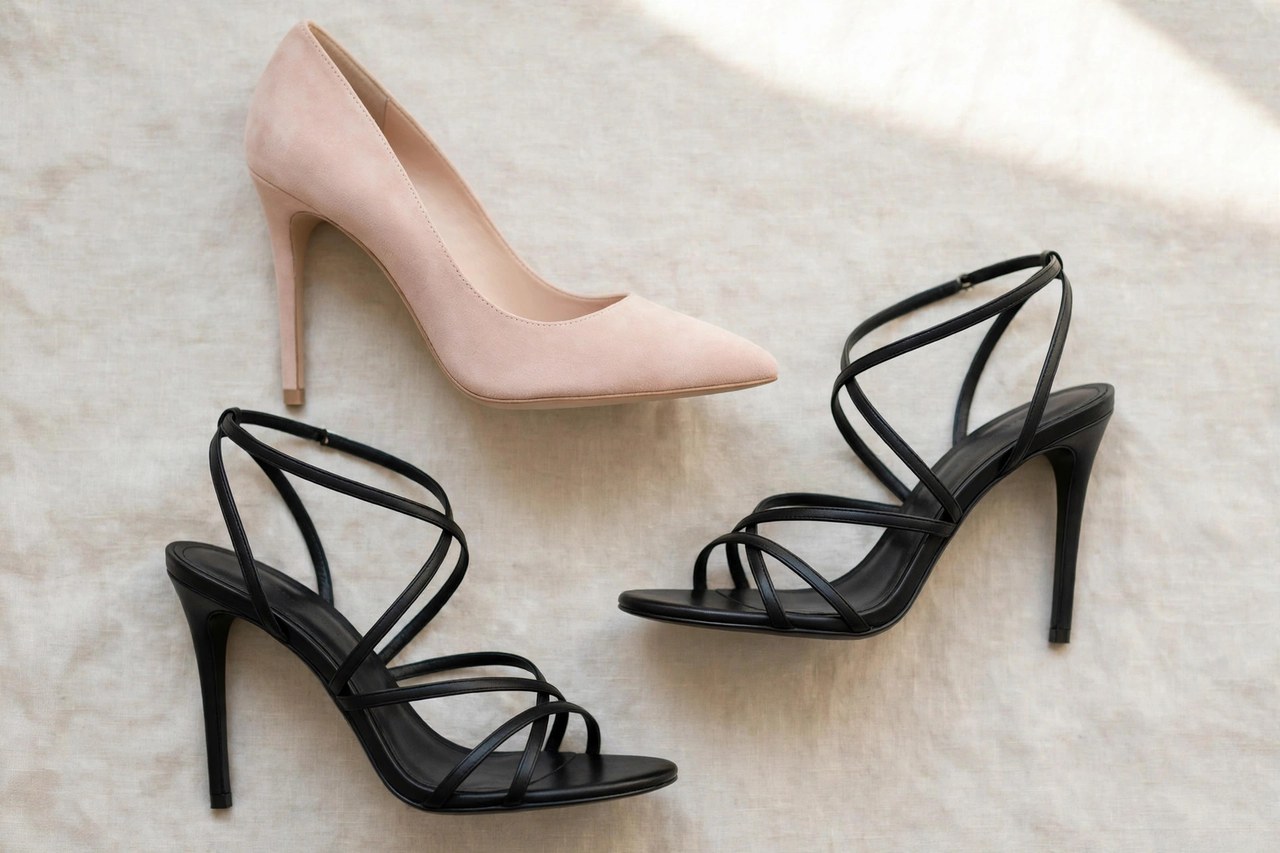
A stiletto is not a shoe style but a heel: a long, slender spike, typically three inches and taller with a tip no wider than about a centimeter, named for the slender Italian dagger it resembles. Put that heel under a pump and you get the classic stiletto pump; under a sandal, a boot or a mule, the same spike changes each one's character entirely. The heel's thinness is the point — it concentrates the shoe's whole attitude into one narrow line.
This guide covers the heel itself: how stiletto construction works and why heel placement matters more than height, the heights from wearable to runway, which shoe styles carry a stiletto and how they differ, and the practical skills — fitting, walking, maintaining replaceable heel tips — that separate a stiletto you enjoy from one you endure. Bought knowingly, the right pair is far more wearable than its reputation suggests.
Construction: Steel Cores and Heel Placement
A heel that thin cannot be solid wood or plastic alone. Most stilettos are built around a steel shank or core running through the heel, which is how a spike a centimeter wide supports a standing, walking person. The visible heel is a covering over that structure, finished with a small replaceable heel tip of rubber or metal at the ground. Quality shows in a tip that sits flush, a heel that does not flex or creak under load, and a covering without seams lifting at the back.
Placement outweighs an inch of height. A well-made stiletto sets the heel under the center of your own heel, so your weight travels straight down the spike; a heel pitched too far back makes even a modest height feel like a backward lean, while one set too far forward pitches you onto the toes. The curve of the arch — the pitch — decides how much pressure lands on the ball of the foot, which is why two shoes of identical height can feel completely different by the end of an hour.
Heights and Styles: Finding Your Working Height
Stilettos run from about three inches, the working height most wearers can manage for an evening or a careful workday, through four inches, to five inches and beyond, where platform soles usually enter to reduce the effective pitch on the foot. A four-inch stiletto with a one-inch platform asks the foot for three inches of rise — the arithmetic that makes very tall shoes survivable. Kitten heels, by contrast, are not short stilettos but a different, slimmer low heel family with its own history.
The styles divide by coverage. Stiletto pumps are the closed, formal classic. Stiletto sandals trade structure for straps, so ankle straps earn their place by holding the foot to a heel it could otherwise slide off. Stiletto boots add shaft support that makes a tall spike noticeably steadier, and mules and slides on stilettos are the least forgiving combination, best kept to short distances and seated evenings. Choose the style by how much of the evening is spent on your feet, honestly counted.
Fit and Walking Well in a Thin Heel
Fit is safety equipment in a stiletto. The shoe must hold the heel without gripping the toes into the point or box; any sliding is magnified by the pitch, ending in toes carrying weight they should not. A slightly padded insole or a ball-of-foot cushion changes the pressure equation more than any other addition. Size in the afternoon, when feet are at their largest, and prefer the pair that feels secure standing still — a stiletto never becomes more stable as the night goes on.
Walking in stilettos is a shorter, more deliberate stride: weight through the heel, step placed under the body rather than reached for, and extra care on the surfaces that defeat a narrow tip — grass, gravel, cobbles, gratings and escalator grooves, where a spike can sink or catch. Heel protectors, the small discs that widen the tip for outdoor events, are worth keeping in a bag for lawn weddings and garden parties. Practice at home on hard floors before a first wearing; confidence is visible, and so is its absence.
Care: Tips, Storage and Repair
The heel tip is a consumable. Once the rubber tip wears through, the exposed core clicks, slips and can damage floors, and the heel itself begins to split — replace tips at the first sign, a cheap cobbler's job that protects the whole shoe. Check tips on a schedule rather than by sound, because by the time a metal core is grinding, the heel covering has usually suffered too. Keep a spare pair of tips for shoes you wear often.
Store stilettos upright or boxed so the thin heels are not bent under the weight of other shoes, and keep leather and patent finishes conditioned and away from heat, which cracks heel coverings at their tightest curve. Examine the heel's join to the sole each season for any wobble; a loose stiletto should be repaired before it is worn again, because a heel that detaches mid-step is the one genuinely dangerous failure this shoe can have. Maintained properly, a good pair lasts for years of evenings.
Related Women's Guides
More to Explore on Apparel Search
Women’s Clothes Guide by Letter: Women's Apparel Directory N · Women's Clothes Directory O · Women's Clothing Directory P · Women's Apparel Directory Q · Women's Fashion Directory R · Women's Clothes Directory T
Looking for Women's Clothing Stores?
This guide helps you choose women's stilettos. To browse where to buy, visit our women's clothing store directory, where you can find retailers that carry them.