Women's Trench Dresses Guide
A trench dress is a dress borrowing the trench coat's vocabulary — belted waist, storm-flap or epaulette details, double-breasted or wrap front — cut as a one-piece garment in dress fabrics.
Shop Women's Trench Dresses Now
Shop Women's Trench Dresses on Amazon Shop Women's Trench Dresses on eBayThe Amazon and eBay links on this page are affiliate links. If you make a purchase through them, Apparel Search may earn a commission.
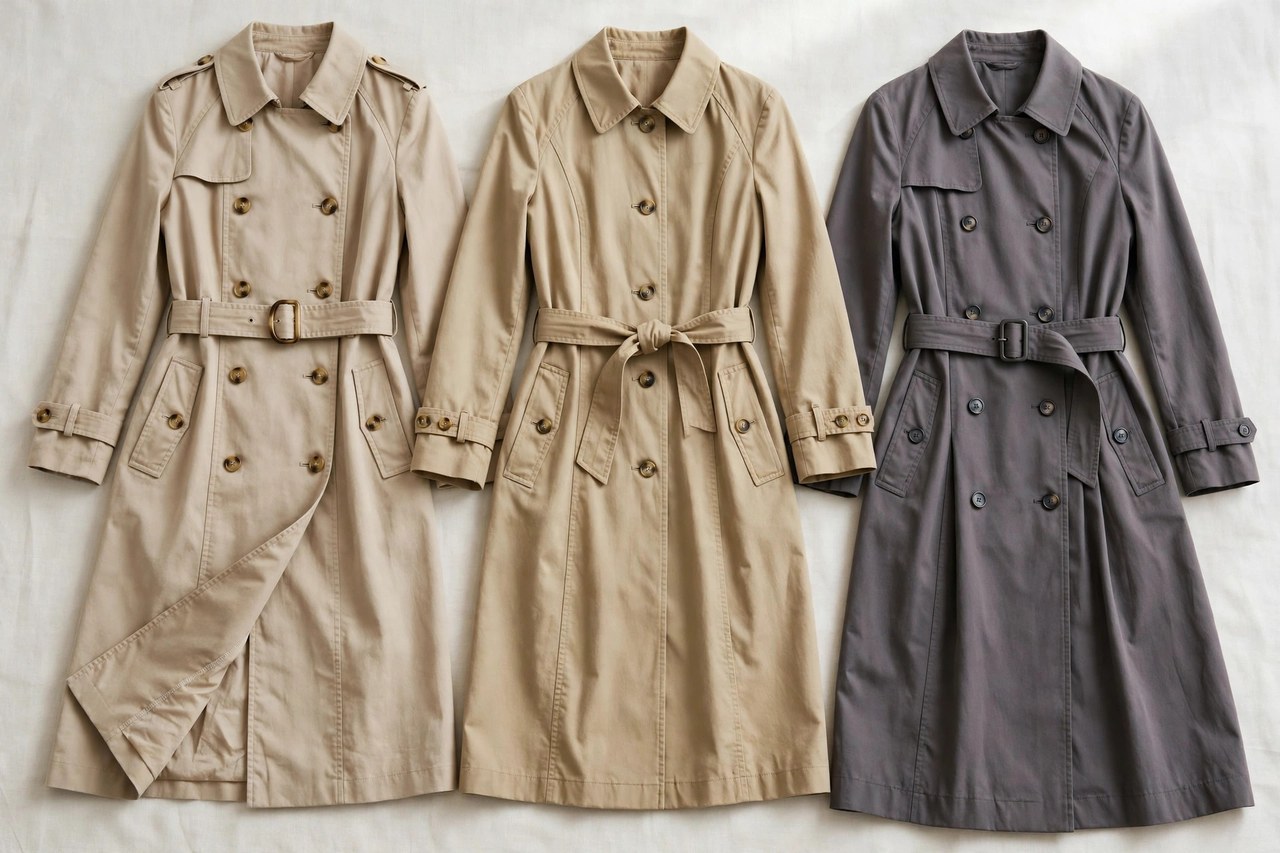
A trench dress is a dress borrowing the trench coat's vocabulary — belted waist, storm-flap or epaulette details, double-breasted or wrap front — cut as a one-piece garment in dress fabrics. This guide covers how much of the coat's structure survives the translation to a dress, the fabrics used, fit at the belted waist, and styling the result as the polished, work-ready dress it is designed to be.
This guide covers trench dresses in the order a careful buyer needs it: what the product is made from, how it is constructed, how it should fit, how to choose it for real use, and how to care for it so it lasts. The focus is on measurable details, named materials and checks you can perform in a shop or on a parcel's arrival, rather than general fashion language.
Fabrics and Construction
Dresses in the trench dresses family are made across the full fabric range — cotton and linen for day, crepe and viscose for fluid drape, ponte and jersey knits for pull-on comfort, silk and satin weaves for occasion versions — and the fabric decides the dress's season, formality and care more than its silhouette does. Woven dresses are shaped with seams, darts and zips; knitted dresses are shaped by the knit itself and by elastic or belted waists.
Judge construction at the openings and the lining. Armholes and necklines should be finished — faced, bound or lined — so they keep their edge in wear; zips should run smoothly and sit flat; hems should be even all round when the dress is hung by its waist. The belt is structural in a trench dress, defining the waist the coat leaves adjustable, so its loops, buckle and placement are worth inspecting as construction, not trim. A lined bodice, and a lined skirt on any dress in a pale or fine fabric, are the marks of a dress built to be worn rather than merely photographed.
Fit and Sizing
A dress fits at more points simultaneously than any other garment — shoulder, bust, waist, hip and length all at once — so fit trench dresses against the brand's chart at your largest of those measurements and expect the rest to be the alteration points. The bodice decides most: darts and seams should rest at the bust without pulling, the waist should sit at the natural waist, and the skirt should clear the hip without strain lines.
Length is a measurement, not a style word: measure from your own waist or shoulder to where the hem should fall and compare it with the garment's stated length, because photography on a model of a different height is not evidence. Sit, walk and climb a step in the dress before deciding — a skirt that is right standing can be wrong on stairs, and a bodice that fits at rest can restrict the moment the arms reach forward.
Choosing and Wearing
Choose trench dresses by the occasions in a real season, counting them honestly. A dress bought for weekly wear earns a durable fabric, a forgiving cut and colours that work with shoes and layers you already own; an occasion dress can justify delicate cloth and dry cleaning because its cost is spread over emotion rather than repetitions. Shoes, hosiery and top layers are part of the purchase decision, since a dress that needs new everything costs more than its ticket.
Check the dress in daylight and in motion before keeping it. In practice, rank these checks in the order your own use demands — frequency of wear first, then weather, washing facilities and budget — because that order differs by wardrobe, and it is the real reason two careful buyers can correctly choose differently from the same rail. Photographs flatten the differences between fabrics — a liquid drape and a stiff one can look identical online — so the parcel test matters: if the cloth's hand-feel, weight and fall disappoint in the first minute, no styling will repair them across a season of wear.
Care and Storage
Care follows the fabric: washable cotton, linen and synthetic dresses wash cool and gentle, with dark colours separated at first; silk, lined and structured dresses are dry-clean or careful hand-wash territory, and the label outranks habit. Never wring a dress; press water out, dry it away from radiators and sun, and let a crepe or bias-cut skirt hang its creases out before reaching for the iron.
Store dresses clean, on padded or shaped hangers that support the shoulders, with knitted and bias-cut styles folded instead so their own weight cannot stretch them longer. Keep occasion dresses in breathable garment bags away from sunlight, fasten zips and buttons before storage so shapes are preserved, and rest dresses between wears — natural fibres recover their shape and shed odour while resting in a way no wash can imitate.
Related Women's Guides
Photos

More to Explore on Apparel Search
Looking for Women's Clothing Stores?
This guide helps you choose women's trench dresses. To browse where to buy, visit our women's clothing store directory, where you can find retailers that carry them.