Women's Vintage Sleepwear Guide
Vintage sleepwear is women's nightwear from earlier eras — nylon nightdresses and peignoir sets, rayon gowns, cotton pyjamas and bed jackets — covered here as a product and history guide.
Shop Women's Vintage Sleepwear Now
Shop Women's Vintage Sleepwear on Amazon Shop Women's Vintage Sleepwear on eBayThe Amazon and eBay links on this page are affiliate links. If you make a purchase through them, Apparel Search may earn a commission.
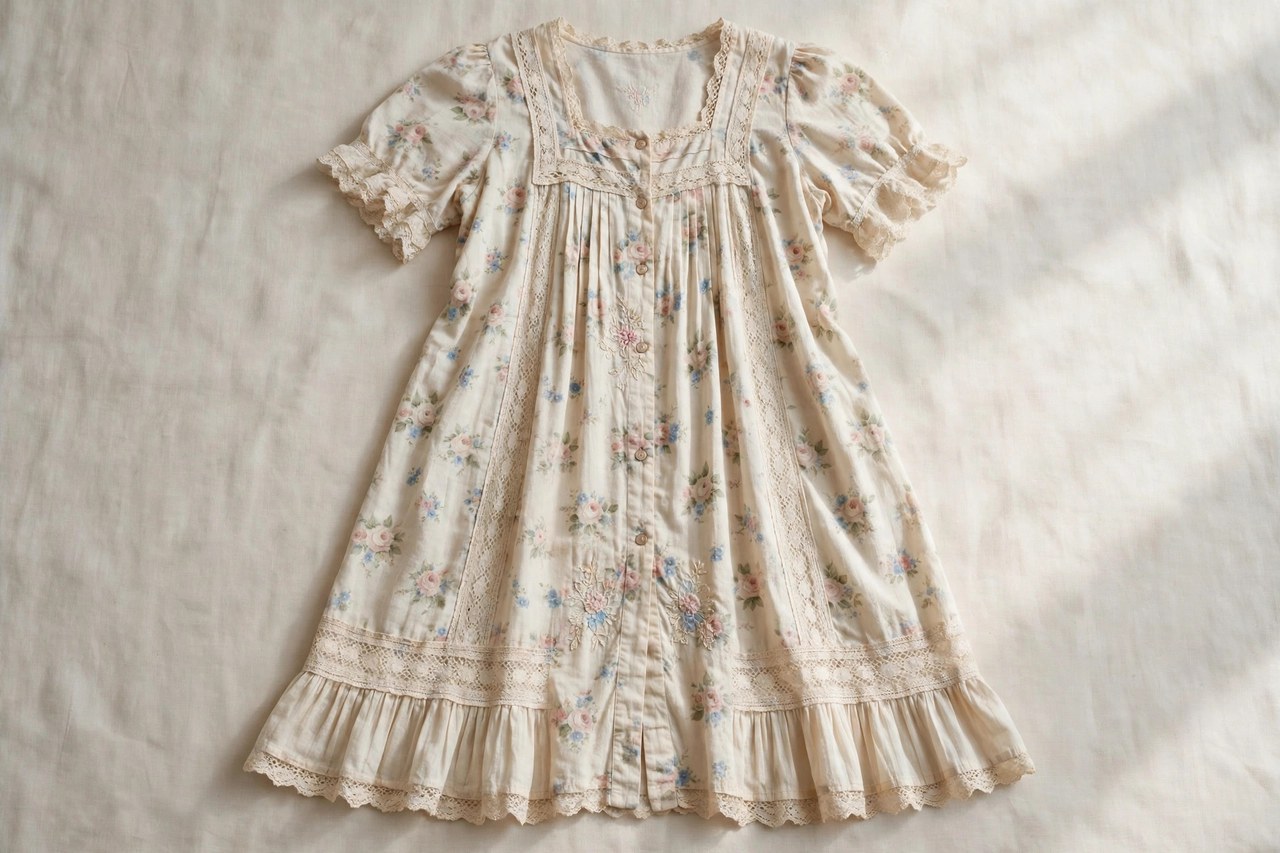
Vintage sleepwear is women's nightwear from earlier eras — nylon nightdresses and peignoir sets, rayon gowns, cotton pyjamas and bed jackets — covered here as a product and history guide. This product guide covers vintage sleepwear by its fabrics and construction: why nylon dominates the surviving stock, how peignoir sets and nightgown styles changed by decade, elastic and lace condition, and gentle care for old nightwear fabrics.
This guide covers vintage sleepwear in the order a careful buyer needs it: what the product is made from, how it is constructed, how it should fit, how to choose it for real use, and how to care for it so it lasts. Apparel Search has published guides to women's clothing for decades, and this rebuilt page keeps the subject focused — measurable details, named materials and checks you can perform in a shop or on a parcel's arrival, rather than general fashion language.
Fabrics and Construction of the Era
Vintage garments were made from the fibres and cloth of their time — rayon and silk in the early decades, nylon and the new synthetics from the 1950s, polyester at its 1970s peak, and quality wool, cotton and linen throughout — and finished with era methods: bound and pinked seams, hand-set zips, lined bodices and generous seam allowances that modern production rarely matches at the same price level.
Construction is a vintage garment's evidence and its value: it dates the piece, and it decides whether the piece can be altered, repaired and worn. Read the inside of any vintage garment before its outside. The peignoir set — a nightdress with a matching sheer robe — is vintage sleepwear's signature production: sold as a set, often separated by history, so a genuine surviving pair in matching colour is worth more than the sum of its parts. Fastenings, labels and seam finishes each narrow the era, and together they are more trustworthy than style alone.
Era Sizing and Modern Fit
Vintage sizing does not map to modern sizing: mid-century labels can run two or more sizes smaller than today's, era cuts assumed era foundation garments, and individual garments have been altered across their lives. The only reliable language is measurement — the garment's own bust, waist, hip, length and any fit-critical dimension, compared with yours.
Fit a vintage garment to its hardest dimension and tailor the rest: bust and shoulder on tops, waist and rise on trousers, waist on dresses and skirts. Era seam allowances often allow letting out an inch or more — more generosity than modern clothes offer — and a tailor who works with old textiles is the vintage wearer's essential tradesperson.
Buying Vintage With Confidence
Choose vintage sleepwear by measurable criteria in a fixed order: condition graded honestly (fibre soundness first, seams, fastenings, odour), measurements against your own, alteration potential, and only then era and style. In practice, rank these checks in the order your own use demands — frequency of wear first, then weather, washing facilities and budget — because that order differs by wardrobe, and it is the real reason two careful buyers can correctly choose differently from the same rail.
Judge price by rarity multiplied by condition, not by age alone: common pieces in poor condition are cheap whatever their decade, and a sound, wearable garment in a sought-after style commands its price honestly. Buy the seller's evidence — measurements, flaw lists, clear photographs — and be wary of romance in place of facts.
Cleaning and Storage
Clean vintage gently and only as much as needed: many pieces need airing and spot care rather than washing, fragile fibres (old silk, early rayon) need specialists, and sturdy cottons, wools and nylons tolerate careful hand washing in cool water. Test colourfastness first, support a wet garment's weight, and never wring old fabric.
Store vintage clean, dry and dark: folded with acid-free tissue for heavy, beaded or fragile pieces, hung on padded hangers only for sound tailored garments, never sealed in plastic. Moths target soiled wool, light fades and weakens, and damp does everything at once — a cool, dark, dry cupboard is a vintage collection's whole preservation policy.
Common Questions
Why is most vintage sleepwear made of nylon?
Nylon suited nightwear perfectly: it washed easily, dried fast, felt smooth, took dye beautifully and cost little. From the 1950s the material swept the category, and its durability is why so much of it survives in wearable condition today.
How do I wash vintage nylon sleepwear safely?
Cool water, gentle detergent, no high heat anywhere — tumble heat and hot irons yellow and weaken nylon. Wash strong colours separately the first time, because mid-century dyes can bleed, and dry in shade to protect both colour and fibre.
What condition problems are common in vintage sleepwear?
Perished elastic at waists and cuffs, lace that has torn where it joins the fabric, and yellowing of white and pastel nylon from age and storage. Elastic can be replaced invisibly; yellowed nylon sometimes responds to specialist soaking, sometimes not — price should reflect which.
Related Women's Guides
More to Explore on Apparel Search
Looking for Women's Clothing Stores?
This guide helps you choose women's vintage sleepwear. To browse where to buy, visit our women's clothing store directory, where you can find retailers that carry them.