Hadaka Apron
Clothing Definitions — definitions of garments and clothing terms from Apparel Search
Search Apparel Search
At a Glance
Definition: Hadaka apron combines the Japanese word hadaka, meaning nude, with the English word apron: a niche term from Japanese popular culture for the motif of an apron worn as the sole garment.
Pronunciation: hah-DAH-kah
Category: Clothing Definitions
Word Origin
A compound of the Japanese word hadaka, meaning nude, and the English word apron — the garment named in the term is an ordinary apron; the compound names the way it is worn, as the sole garment.
Hadaka apron combines the Japanese word hadaka, meaning nude, with the English word apron. It is a niche term from Japanese popular culture for the motif of a person wearing an apron as the sole garment — over a nude or partially underwear-covered body — a standard 'teaser' theme on Japanese illustration websites that aim to suggest without being explicit. The motif was popularised by a segment of the late-night Japanese television show Gilgamesh Night. This page explains the term, its media history, and the related hadaka compound terms.
The Term and the Motif
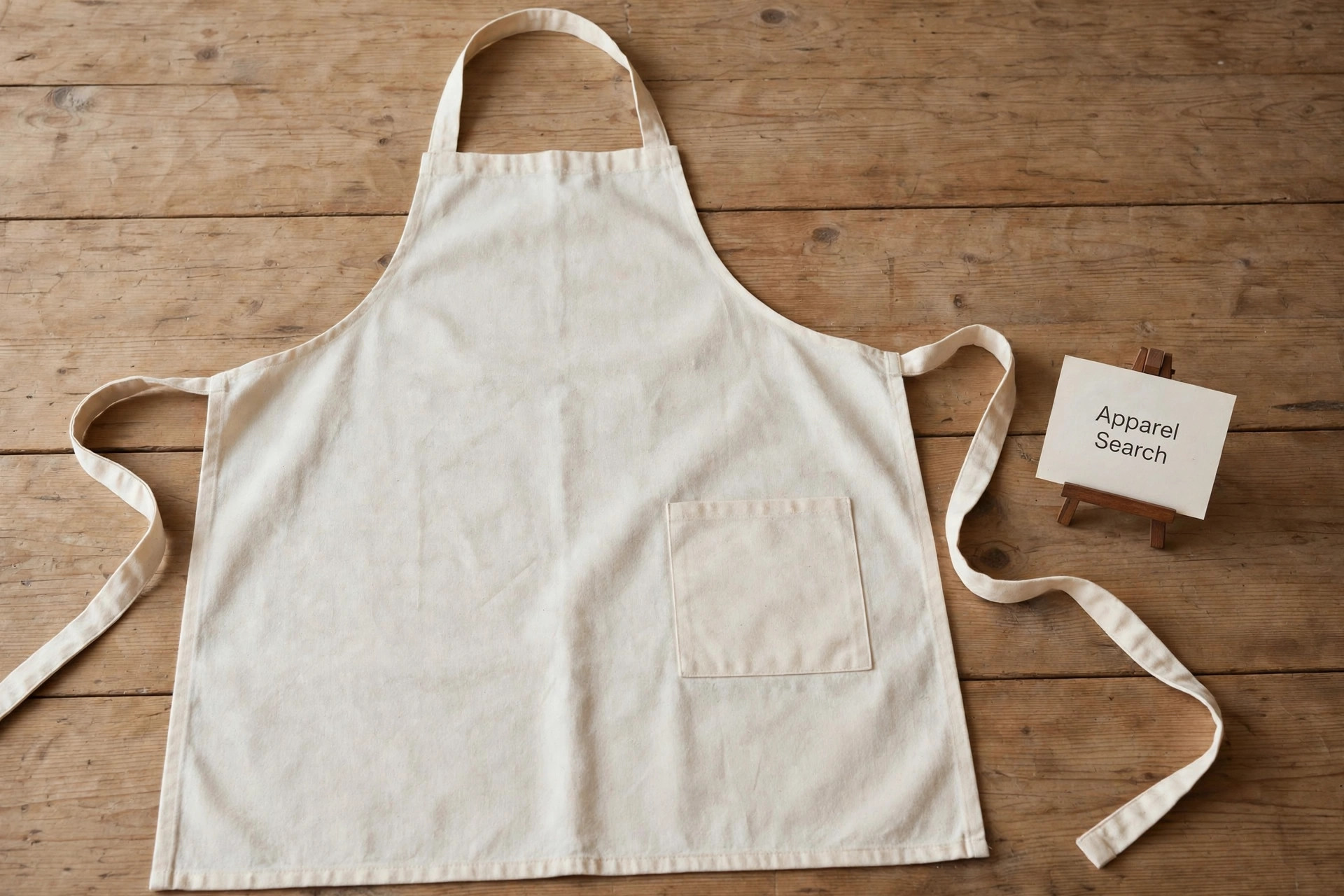
As a clothing term, hadaka apron is unusual in that the garment it names is entirely ordinary: a standard kitchen or work apron, of the kind defined under apron and pinafore apron. Nothing in the apron's cut, fabric or construction changes. The term instead names a styling motif — the apron worn with nothing, or almost nothing, beneath it — and it is catalogued in this section as a fetish clothing term for that reason.
The motif is described in the original definition as the epitome of the 'teaser shot': it is extremely popular on Japanese CG artwork websites as a theme, especially for sites which attempt to titillate without being explicitly adult. It was also the subject of several pin-up images from the United States in the 1950s, and is reported to be popular in Japan among newlyweds. In each case the visual mechanism is the same — a familiar domestic garment, worn alone, does the suggesting.
The apron in the motif is a bib or waist apron of the ordinary domestic kind — a panel of cloth covering the front of the body, held by a neck loop or shoulder straps and ties at the waist. Its ordinariness is essential to the term: a specialised or decorative apron would name a different motif. Japanese illustration and photography using the theme therefore show standard kitchen aprons, often checked or plain, drawn or photographed exactly as they would appear in a cooking context, because the contrast between the mundane garment and its use as sole clothing is the entire effect.
Gilgamesh Night and Television
The popularity of the motif originates from a segment of the late-night Japanese television show Gilgamesh Night, in which performer Yuki Hitomi would cook while wearing only an apron. The segment fixed the association between the apron-alone motif and cooking, and it is that association — rather than any change in the garment — that the term has carried since.
Naked aprons were also featured on the 2003 series Barely Cooking, seen on Citytv: a mostly standard cooking show in which a male and a female host demonstrated simple recipes while wearing large aprons that covered everything except the buttocks. The format underlines the definitional point — the aprons used were large, ordinary, protective aprons; the programme's novelty was entirely in what was not worn with them.
The two television examples also mark the term's two registers. Gilgamesh Night was late-night entertainment, and its apron segment was played as a recurring novelty within a variety format; Barely Cooking took the same device and built a whole programme format on it, with the recipes genuinely demonstrated. In both, the apron is doing double duty — it is both the programme's cooking equipment and its entire visual premise — which is why the term attaches to cooking contexts far more than to any other domestic setting.
Related Hadaka Terms
Hadaka apron is one of a family of compound terms built on the same pattern, in which hadaka is joined to the single item worn. The original definition lists: hadaka socks — wearing only some form of socks; hadaka shoes — wearing only shoes; hadaka tie — wearing only a necktie or bow tie; hadaka ranset — wearing only a specific type of school backpack; and hadaka ribbon — ribbons tied to cover like a bikini.
None of these compounds names a distinct garment, and none has a separate definition in this section; they are recorded here because the apron term is the best known of the set and the pattern explains it. For the garment itself — its bib and waist forms, fabrics and protective uses — see the apron definition.
In English-language use the term survives mainly in definitions and in discussions of Japanese popular culture, where it is cited as an example of a compound that Japanese forms freely and English borrows whole. It has no retail life — no garment is manufactured or sold as a 'hadaka apron', since the garment is any apron — and that distinguishes it from most terms in this section, which name things that are made and bought. It is a term about a way of wearing, recorded here because glossaries of Japanese popular-culture terms and of fetish clothing both list it.
Common Questions
What does hadaka apron mean?
Hadaka apron, from the Japanese hadaka meaning nude and the English word apron, refers to wearing an apron over a nude or partially covered body — an apron as the sole garment — a niche motif in Japanese popular culture.
Where did the hadaka apron motif become popular?
Its popularity originates from a segment of the late night Japanese television show Gilgamesh Night, and it later appeared in the 2003 series Barely Cooking, whose hosts demonstrated recipes wearing large aprons.
What are the related hadaka terms?
Related compounds include hadaka socks, hadaka shoes and hadaka tie — wearing only that item — and hadaka ribbon, in which ribbons are tied to cover like a bikini.