French Maid Outfit
Clothing Definitions — definitions of garments and clothing terms from Apparel Search
Search Apparel Search
At a Glance
Definition: The French maid outfit is a themed costume: a short dress trimmed with white lace, worn with a tiny white apron, a frill in the hair, and black stockings and high-heeled shoes, taking its name from the stereotypical maid characters of risqué burlesque bedroom farces.
Category: Clothing Definitions
The French maid outfit is a themed costume and a form of fantasywear that, depending on design details, can be classified as lingerie. The name derives from the outfits worn by stereotypical characters in risqué burlesque dramas of the bedroom-farce variety. Costumes manufactured under the French maid description today range from comparatively modest dresses to nightgown and lingerie ensembles. This page explains the classic costume's standard components and accessories, piece by piece.
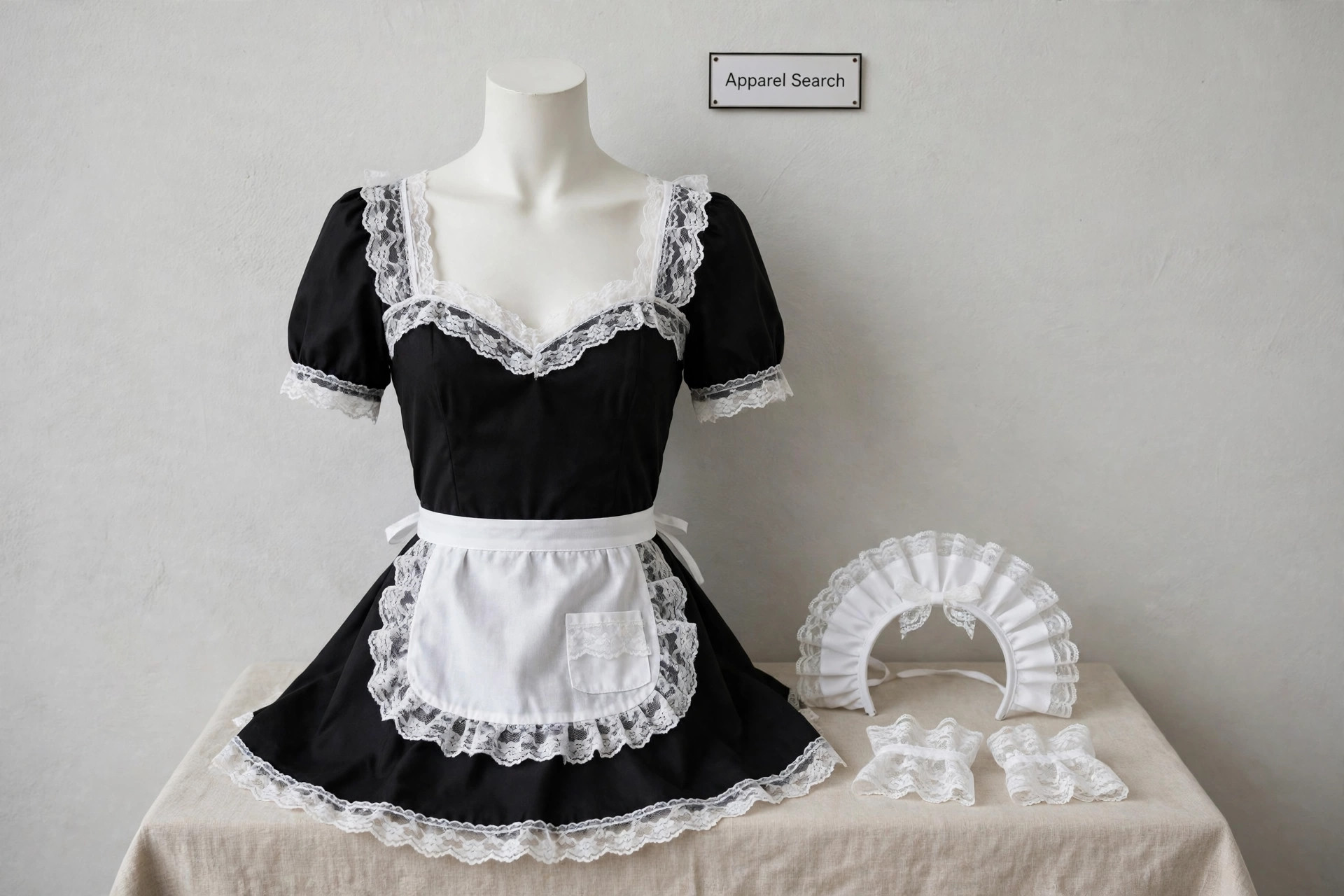
The Classic Costume, Piece by Piece
The classic French maid costume is a very short, close-fitting dress — ideally silk or closely resembling it — trimmed with white lace. A tiny white apron is attached to the dress, and white fringes trim the hems and neckline. If panties are worn with it, they are white and ruffled. Black fishnet stockings and black shoes with high heels complete the ensemble, and a corset may be worn underneath.
The accessories are as standard as the dress. A frill is worn in the hair, a feather duster is carried as a prop, and white lace cuffs and a collar are sometimes added; the cuffs are not attached to the dress, and where the dress has sleeves they are short and puffed. Each element is a recognition cue — remove the apron and the frill and the costume stops reading as a maid — which is why costume makers keep the accessory set constant even when the dress itself varies.
Measured against a real maid's uniform, every element is a reversal. The working apron covers the front of the dress from chest to hem and ties at the waist; the costume apron is a small decorative panel. The working dress is long, plain and washable; the costume dress is short, fitted and trimmed. The working cap covers the hair; the costume frill sits on top of it as an ornament. The costume is therefore best defined as a uniform's signifiers, kept, with a uniform's functions removed.
From Bedroom Farce to the Costume Rail
Like other fantasywear, the French maid outfit is sold and recognised as a set. The black-and-white contrast is the identifier: a black dress with white lace trim and a white apron reads as 'maid' at a glance, in the same way a uniform does, and each accessory reinforces the character. The costume is a theatrical stereotype rather than a copy of real domestic uniform — actual maids' uniforms were practical dresses with full aprons — so its details come from the stage tradition of bedroom farce and burlesque, not from servants' dress history.
That stage origin also explains the costume's exaggerations. A working uniform is designed to protect the dress beneath it through a day of physical work; the costume inverts every proportion — shorter dress, smaller apron, higher heels — because its purpose is recognition in a scene, not service in a house. The apron, the one genuinely functional garment in the set, shrinks to a token panel of white lace-edged cloth that protects nothing.
The name itself does similar work. Nothing in the costume is specifically French in cut or origin; 'French' functions, as it does in the bedroom farces the costume comes from, as a conventional signal of risqué theatricality. The costume's Frenchness is part of the fiction it represents, and retailers keep the word because buyers search for the full name — 'French maid outfit' is the term of the trade, not 'maid costume'.
Versions on the Market
A wide variety of costumes are manufactured and marketed under the French maid description today. They range from comparatively modest dresses extending well down the thigh, suitable as fancy-dress costumes for costume parties, to transparent nightgowns and lingerie ensembles. Between those extremes the standard components — black dress, white lace, white apron, frill, stockings, heels — are held constant, and price and fabric quality are what vary.
The outfit is the best-known single ensemble in the fantasywear category and one of the standard items of fetish clothing, which is where it is grouped in these definitions. As a clothing term it is an outfit in the strict sense: a set of garments and accessories designed to be worn together, meaningless in pieces.
The outfit's durability as a retail line comes from that instant recognition: it needs no label, no packaging image and no explanation, in any country where the stage stereotype circulated. Costume retailers stock it year-round rather than seasonally, in a run of sizes and at several quality levels — from a single-use party set in thin synthetic fabric to a silk dress with real lace — which is a range few other single-character costumes sustain. It is, in effect, the standard example of its category, and it is the ensemble other fantasywear sets are described by comparison with.
Common Questions
What does a classic French maid outfit consist of?
The classic costume is a short, close-fitting dress, ideally silk or resembling it, trimmed with white lace, with a tiny white apron attached, white fringes on the hems and neckline, black fishnet stockings and black high-heeled shoes, plus a frill worn in the hair and sometimes white lace cuffs and collar.
Where does the French maid costume come from?
The name derives from the outfits worn by stereotypical maid characters in risqué burlesque dramas of the bedroom farce variety, and the costume is a form of fantasywear.
What accessories complete the costume?
Common accessories include a frill worn in the hair, a feather duster, and sometimes white lace cuffs and collar, which are not attached to the dress; the dress sleeves, if any, are short and puffed.