Shearing Shed
Miscellaneous Definitions — accessories, trims, tools and general fashion terms from Apparel Search
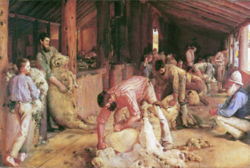
Shearing sheds, or wool sheds, are large sheds located on sheep stations to accommodate large-scale sheep shearing activities, ensuring shearers and crutchers have a ready supply of dry, empty sheep. The shed also provides space where the wool is classed and pressed into approved wool packs and stored to await transport to market, and its site needs to be well drained and reasonably close to most of the flock.
Shearing sheds (or wool sheds) are large sheds located on sheep stations to accommodate large scale sheep shearing activities. In countries where large numbers of sheep are kept for wool, sometimes many thousands in a flock, shearing sheds are vital to house the necessary shearing equipment, and to ensure that the shearers and /or crutchers have a ready supply of dry, empty sheep. The shed also provides space where the wool is classed and pressed into approved wool packs and stored to await transport to market.
 Location of the shed is important as
the site needs to be well drained and in
an area reasonably close to most of the
flock. It is helpful and will save a lot
of money if the shed is located near to
the electricity supply. At least some yards
will be needed to facilitate shedding and
count-outs, too.
Regional variants of sheep-shed architecture throughout Australia and New Zealand have been identified through different uses of building materials and local styles of design.
During recent years OH&S and animal welfare issues in Australia also have to be considered during shed building or renovating. There should be guard rails around raised shearing boards and loading landings should be fenced to prevent falls. Separate facilities are to be provided for workers' meals.
Sheep penning area
It is usually regarded as necessary to be able to shed, and keep dry, sheep for two days of shearing. Wet or damp sheep may cause health problems for the shearers and damp wool should not be pressed. In many instances sheep are held under the shed or in an adjacent area known as a sweating shed. In the shearing shed the woolly sheep will be penned on a slatted wooden or woven mesh floor above ground level. The sheep entry to the shed is via a wide ramp, with good footholds and preferably enclosed sides. After shearing the shearing shed may also provide warm shelter for newly shorn sheep if the weather is likely to be cold and/or wet.
The shearing area
Shearers should not have to cross the shearing board with their sheep or move them excessive lengths. Earlier shed plans often had the catching pen on the opposite side of the release chutes which necessitated shearers crossing the board and paths with the rouse about. Nowadays the shearing board may be of a curved and/or raised style to save the rouse about extra walking and bending. Sheep may be released through the wall or through a chute in the floor, depending on the plan used. A tongued and grooved wooden floor is best for the shearing board and wool processing area (wool room) as it is easier to keep clean, especially with scrapers and to slide butts of wool along.
The wool room
There should be adequate lighting and ventilation for all shedhands who work the shed. Good light is essential for quality shearing, wool classing and grinding etc., and is a very significant factor affecting sheep flow in the penning area. In the southern hemisphere southern walls can have translucent sheeting installed there as a source of natural lighting because direct sunlight is never a problem.
Good ventilation is essential to provide fresh air and improve working conditions during hot weather. Shearing sheds can become extremely hot, even in cooler climates, during the summer. The body heat of the sheep and the insulating qualities of wool contribute to the problem. Ceiling fans are reasonably priced and helpful in this regard.
Shearing should not be confused with Sheer. Two totally different issues. Both of which are relevant to fashion.
Power operated, self pinning wool presses with inbuilt scales have made a major contribution to shearing shed productivity.
The wool producer is responsible for ensuring that the shearing shed is ready for shearing by testing the equipment, cleaning, disinfecting the shed and supplying emery papers, wool packs etc.
Shearing sheds are often inspected during shearing for compliance to various shed standards for the production of quality wool. Basically this means that the shed is clean, free of rubbish, dogs and twine.
See also
Additional References
| The above article is licensed under the GNU Free Documentation License. From Wikipedia, the free encyclopedia (https://en.wikipedia.org/wiki/shearing_shed). Modified by Apparel Search 8/30/08. |
| Fashion Industry |
A Building Planned Around FlowA shearing shed is a workplace laid out as a one-way journey for sheep and wool. Sheep enter by a wide ramp with good footholds and preferably enclosed sides, and are held in the penning area on a slatted wooden or woven mesh floor above ground level, so the flock waiting to be shorn stays dry and off the ground. From the pens a sheep moves through the catching pen to the shearing board, and the details of that short journey are planned carefully: the slats in a catching pen must run in the direction the sheep are to be dragged, modern sheds often slope the catching pen floor towards the board to help shearers move sheep to their stand, and a single sheep is sometimes penned at the front of the forcing lane to coax the others forward. After shearing, sheep are released through the wall or through a chute in the floor, and the shed may also provide warm shelter for newly shorn sheep if cold or wet weather follows. Layout rules protect everyone's time and safety. Shearers should not have to cross the shearing board with their sheep or move them excessive lengths, a fault in earlier shed plans that put the catching pen on the opposite side of the release chutes. Modern boards may be curved or raised to save the rouseabout extra walking and bending. A tongued and grooved wooden floor is best for the shearing board and wool room because it is easier to keep clean and to slide wool along. Around the working areas the building adds guard rails around raised boards, fenced loading landings to prevent falls, separate facilities for workers' meals, and a grinding area for sharpening combs and cutters set away from walkways to reduce the risk of injury. The Wool Room and Working ConditionsThe second half of the building belongs to the fleece. In the wool room the rouseabout casts each shorn fleece onto a wool table for skirting, rolling and classing, and the wool then goes into bins made of solid material so the different lines do not mix, before pressing into packs for storage and transport. Wool tables come in two styles, round revolving tables handy when there is only one wool-roller, and the traditional rectangular type. Power-operated, self-pinning wool presses with inbuilt scales have made a major contribution to productivity in this part of the shed, turning classed wool into uniform, weighed bales ready for market. Light, air and siting complete the design. Good light is essential for quality shearing, wool classing and grinding, and it significantly affects sheep flow in the penning area; in the southern hemisphere, translucent sheeting in southern walls can supply natural light without direct sunlight. Ventilation matters just as much, because shearing sheds can become extremely hot in summer as the body heat of the sheep and the insulating qualities of wool build up inside, and ceiling fans are a reasonably priced help. The site itself should be well drained, reasonably close to most of the flock, and near the electricity supply where possible, with yards to facilitate shedding and count-outs. A well-planned shed is therefore not just a roof over shearing stands but the operating system of the harvest, inspected during shearing for cleanliness and compliance with shed standards for quality wool production. Common QuestionsWhat is a shearing shed?A shearing shed, or wool shed, is a large shed on a sheep station built to accommodate large-scale sheep shearing. It houses the shearing equipment, holds a ready supply of dry sheep, and provides space where wool is classed and pressed into approved wool packs. Why must sheep be kept dry in the shearing shed?It is usually regarded as necessary to be able to shed and keep dry sheep for two days of shearing. Wet or damp sheep may cause health problems for the shearers, and damp wool should not be pressed. What is the wool room in a shearing shed?The wool room is the area where the shorn fleece is cast onto a wool table for skirting, rolling and classing, before being placed in the appropriate wool bin. Its layout should reduce walking distances for all shed hands, with adequate lighting and ventilation. More to ExploreMore from Apparel Search: Miscellaneous Definitions | Clothing Industry Glossary | Fashion Terms | Apparel Search Home
|