How Many Pairs of Shoes Do You Own?
A fashion poll that counts the footwear in the closet
Few poll questions are as easy to answer and as revealing as this one: how many pairs of shoes do you own? A shoe count is a small census of a life — the daily pairs in rotation, athletic shoes for particular sports, formal shoes kept for occasions, boots and seasonal pairs, and the worn favorites that survive every closet cleaning. Footwear multiplies because shoes are task-specific in a way most clothing is not: the pair that suits a working day on concrete floors fails at a wedding, on a trail and in the rain, all for different reasons. The answers also divide by habit — minimalists rotate two or three pairs until they wear out, while collectors treat shoes as the most collectible part of the wardrobe.
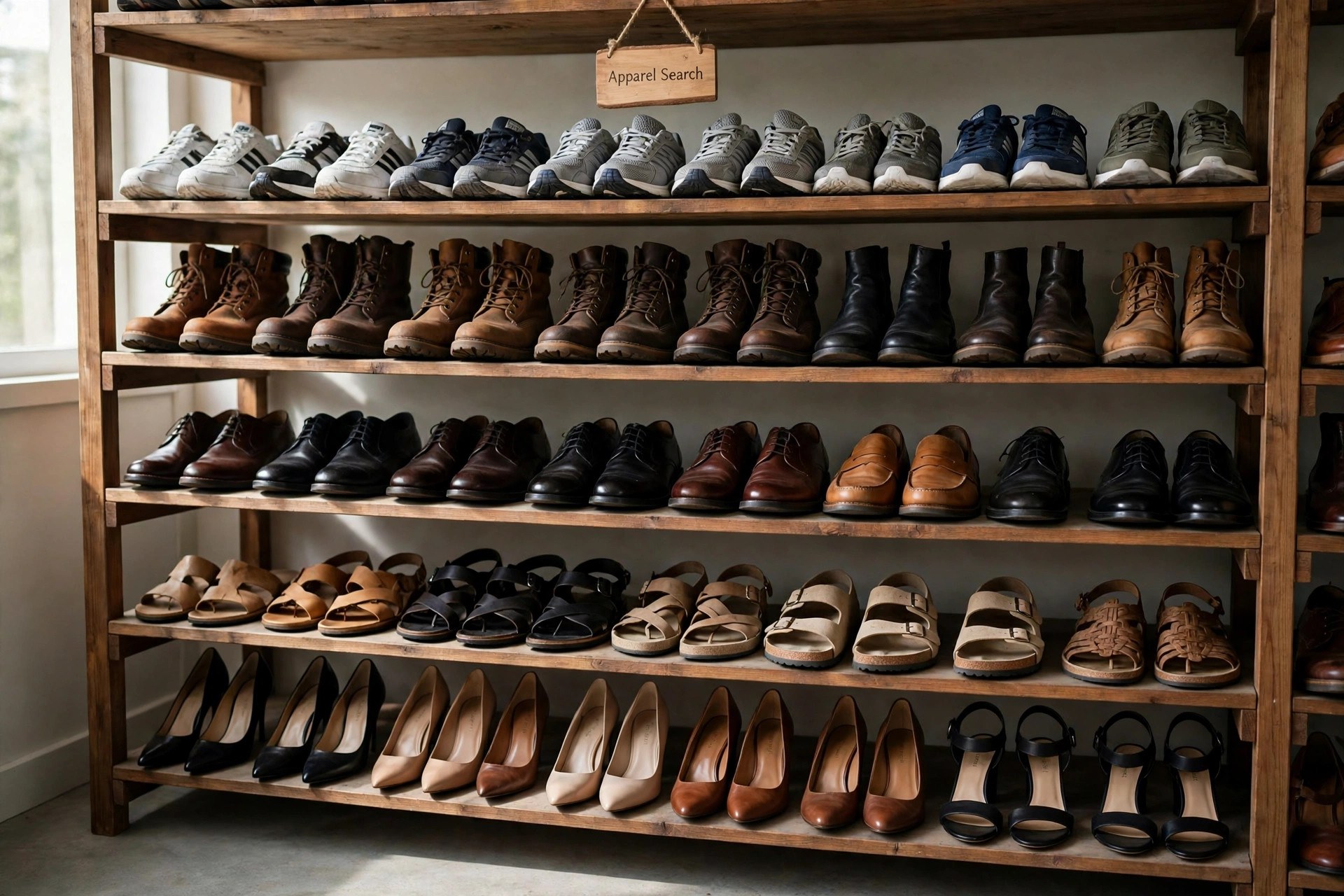
How Many Pairs of
Shoes Do You Own?
Fashion Polls : Research clothing and
style by using a fashion poll.
Fashion Polls Shoe Shopper Women's Shoes Men's Shoes Fashion Industry Polls Fashion Industry Research Fashion Education Fashion Schools
Thank you for visiting the, "How many pairs of shoes do you own?" poll. Try another fashion poll.
You can discuss this issue and any other issue relevant to fashion at the Fashion Industry Network Discussion area.
Have you heard of the new web poll technology?
If you are not thrilled with those stores, you can also check the women's shoe stores directory and men's shoe store directory for additional choices.
A fashion poll is essentially a survey of the public or a sampling of public opinion to acquire information about a particular issue relevant to fashion or the fashion industry. Polls can be taken either online or offline.
Why Shoe Counts Run High
Function is the multiplier. Most people need, at minimum, an everyday pair, an athletic pair and a dress pair, and each real activity tends to add its own: running shoes that should not be worn casually if their cushioning is to last, work shoes or boots built for a job's hazards, winter boots, rain shoes, sandals, and shoes kept for formal occasions that arrive a few times a year. Rotation also extends life — alternating pairs lets shoes dry and recover between wearings, so owning more pairs can be the economical strategy rather than the extravagant one. Climate stacks the count further wherever a year genuinely contains four seasons of weather.
What the Count Says About the Owner
A shoe count is a rough portrait of priorities. Sneaker collectors may own dozens of pairs in one category alone, treating footwear as the wardrobe's collectible and its most expressive item — shoes are sized, durable and displayable in ways other garments are not. At the other end, a deliberately small count reflects either a uniform way of dressing or a buy-less, buy-better discipline. Retailers read the distribution practically: it sizes the replacement market, explains why footwear sells steadily through downturns that hurt other categories, and shows how many pairs in a closet are active rotation versus archive — the number that decides how much new demand a season can create.
Common Questions
Why do people own more shoes than other garments suggest they need?
Because shoes are task-specific — daily wear, athletics, formal occasions, work requirements and different weather each call for different footwear — and rotating pairs extends each pair's life.
Does owning more pairs make economic sense?
It can: alternating pairs lets shoes rest and dry between wearings, which extends their life, so a larger rotation sometimes costs less per wear than wearing one pair daily.
What does a high shoe count usually indicate?
Often a specific enthusiasm — sneaker collecting is the common case — or a life with many distinct activities and climates; a low count usually reflects a uniform style of dressing or a buy-less discipline.