Nike Careers
Working at Nike — product creation, sport marketing and retail at a global scale
NIKE, Inc. is an operating global sport company headquartered near Beaverton, Oregon, and listed on the New York Stock Exchange as NKE. It designs, develops, markets and sells athletic footwear, apparel, equipment and accessories worldwide, and its portfolio holds the Nike brand, Jordan Brand and Converse. Very few apparel employers work at this scale: a single footwear style can be developed in Oregon, produced by contract factories in Asia and sold the same season in company stores, partner shops and the Nike app on several continents.
That structure decides what Nike careers look like. Product creation — design, engineering, development and merchandising organised by sport — is concentrated at the Oregon headquarters campus, while manufacturing is carried out mainly by independent contract factories that Nike staff oversee rather than own. Retail, digital and marketing teams work in cities around the world. This guide maps those role families and the official application route; it does not list current openings, which change constantly across a business of this size. The scale also means unusually narrow specialisation is possible: a career can be built entirely within footwear cushioning, women's training apparel or one sport's athlete relationships, in a way smaller companies cannot support.
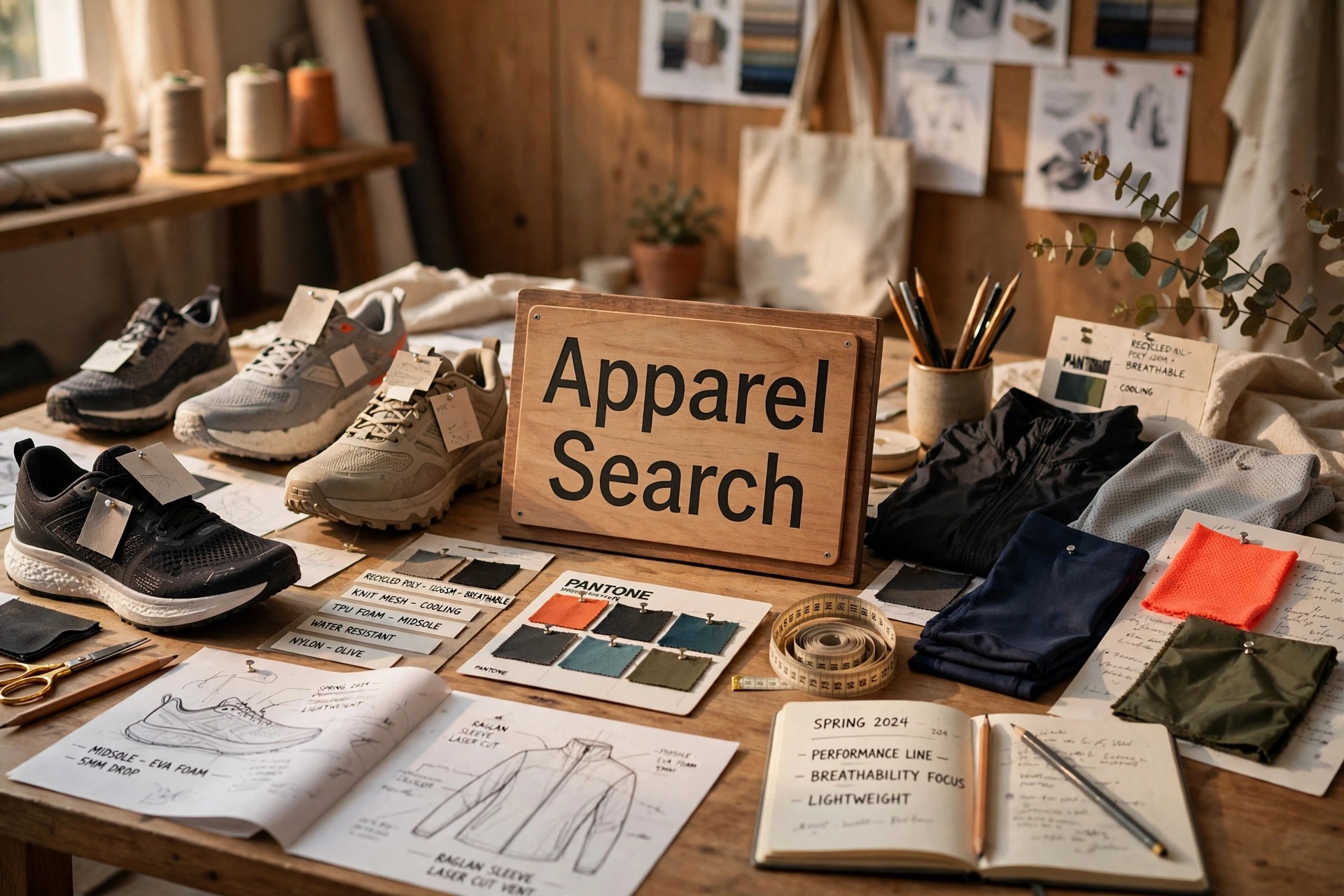
Find Current Nike Job Listings
Current openings at Nike are posted through the company's own careers pages and the job boards — these links lead straight to them:
Product Creation: Design, Development and Engineering
Product creation is Nike's core craft. Footwear and apparel designers work in sport categories — running, basketball, training, sportswear among them — translating athlete insight and trend research into silhouettes, colourways and garments, while colour and materials designers manage the palettes, textiles and graphics that let one design live across price tiers. Product developers and engineers then make the design buildable: patterns, lasts, cushioning systems, cost targets and the dozens of prototypes between a sketch and a production sample.
Technical and innovation roles push the frontier the brand markets on — new foams, plate geometries, knit uppers and sustainable material substitutions tested with athletes before they reach a range. The hiring bar reflects the output: portfolios are read for shipped product and problem-solving, not concepts alone, and developers are valued for factory fluency, costing discipline and calm under seasonal deadlines. Entry routes exist at assistant and associate level, where sample tracking, specification upkeep and line-plan support teach the system from inside. Apparel creation mirrors the footwear process with its own craft base — pattern engineering for movement, seam and fabric technology, and fit work tested in training as well as on fit models — and the two product engines share materials and innovation teams.
Merchandising, Brand and Athlete Marketing
Merchandisers decide which products each market and channel actually receives — the assortment logic that turns a global line into a running offer for one country, a flagship store or the app. Category and geography merchandising teams work from sales data, athlete moments and launch calendars, protecting the balance between performance credibility and the lifestyle product that pays for it. Planning and allocation colleagues forecast demand for styles whose fame can spike overnight around a tournament, a record or a cultural moment.
Brand marketing at Nike is a career family in its own right: campaign and creative staff, sports marketing teams who manage relationships with athletes, teams and federations, retail marketing, social and membership specialists, and the digital product and engineering staff behind Nike's apps and online store. These roles concentrate in Oregon and in major market cities, and they hire for evidence of audience building — launches run, communities grown, stories that moved both culture and sell-through. Consumer insight and data roles have grown alongside them, studying membership behaviour, search and purchase patterns and regional sport participation to decide where the next product and campaign investment belongs.
Supply Chain, Retail and Corporate Roles
Nike's supply chain staff plan production with contract manufacturers, manage quality and compliance in factory countries, and run the logistics network that moves product to distribution centres and stores worldwide. It is one of the largest such operations in apparel and footwear, and it hires planners, sourcing and manufacturing specialists, trade and customs staff, and sustainability professionals working on materials, waste and factory standards. Manufacturing experience transfers in readily; what Nike adds is volume and geographic spread.
On the consumer side, Nike Direct stores employ athletes — the company's name for store staff — coaches and store leaders who sell performance product with genuine sport knowledge, while corporate functions in finance, legal, human resources, data and technology support the whole group, including Converse, which keeps its own brand teams. Retail roles are the most geographically dispersed way into the company, and store leadership is a recognised path into regional and headquarters work. Distribution centre operations form another large employment block, running the receiving, picking and shipping behind launch-day demand, when a single release can move extraordinary volume in hours; supervisors and operations managers there are recruited from logistics generally, not only from apparel.
Applying Through Nike's Official Careers Channels
Apply through the official Nike careers channels carried in the references on this page, searching by function, brand and location — product creation and many corporate roles centre on the Beaverton area, while retail, marketing and supply chain postings span its global markets. Build the application around proof: shipped product for creation roles, assortment or launch results for merchandising and marketing, factory or logistics outcomes for supply chain roles. Converse openings sit within the same NIKE, Inc. hiring system, so a search by brand keeps both doors open in one place. For product roles, expect portfolio and process questions in equal measure — how a design survived costing, sampling and factory feedback matters as much as how it looked. For retail roles, genuine participation in sport is treated as working knowledge, and candidates who coach, run or play competitively should say so plainly rather than treating it as a hobby footnote.
Common Questions
Where is Nike headquartered?
Near Beaverton, Oregon, in the United States, where its world headquarters campus houses product creation and many corporate teams. NIKE, Inc. trades on the New York Stock Exchange under the ticker NKE.
Does Nike own its factories?
Mostly no. Nike footwear and apparel are produced mainly by independent contract manufacturers, chiefly in Asia. Nike employs the designers, developers, planners and supply chain staff who specify, oversee and move that production.
What brands hire through Nike careers?
The Nike brand, Jordan Brand and Converse, all part of NIKE, Inc. Openings across the three are found through the official Nike careers channels in the References on this page, searchable by brand, function and location.
More to Explore
- Nike Profile
- Fashion Careers
- Fashion Jobs
- Apparel Industry Employment Agencies
- Fashion Careers by Company
- Fashion Careers by Category
- Fashion Careers by State
- Fashion Job Description Categories
- Job Search Engines
- Fashion Career Internships
- Message to Employees About Fashion Career
- Message to Employers About Employees
- Fashion Job Search
- Clothing Industry Jobs
- View Fashion Jobs
- fashion business