Department Store Buyer Job Description
Buying for one department inside a large multi-category store, brands and own label together
A department store buyer is responsible for the merchandise of one department — women's dresses, menswear, childrenswear, home-adjacent apparel lines or another defined area — inside a large store group that sells many categories under one roof. The role combines brand buying and own-label selection: the buyer chooses which external brands the department will stock and on what terms, develops or selects the store's own-label offer alongside them, and answers for the department's sales, margin and use of floor space. Working inside a big organisation adds layers a small-store buyer never meets — central promotions, shared floor plans, group-wide vendor negotiations — which makes this a distinctive buying career. This page explains the duties, the organisational skills involved, and the routes through the role.
More Buying Job Descriptions by Letter:
What a Department Store Buyer Does
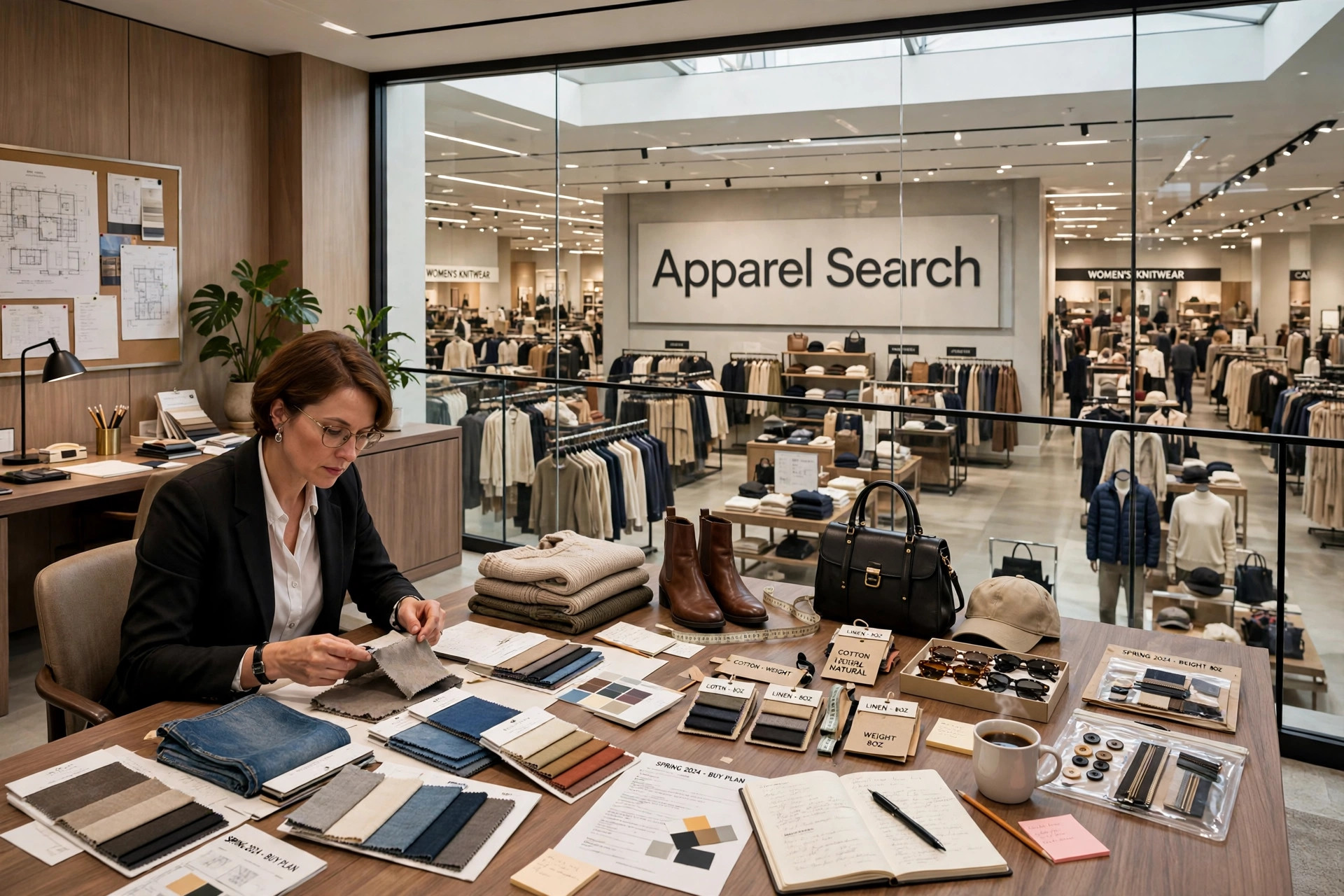
The department store buyer starts from a department plan agreed within the store group's trading structure: sales and margin targets, a floor-space allocation, and a split between branded and own-label merchandise. Within that frame the buyer builds the assortment — selecting brands and the ranges within them, developing own-label product with designers and product technologists where the group produces it, and phasing deliveries so the department renews through the season rather than landing all at once. Vendor relationships run in both directions: the buyer negotiates ranges, terms and promotional support with brands, and represents the department's interests inside the group when space, marketing and markdown money are divided.
In season, the buyer trades the department on the group's reporting rhythm: weekly sales and margin against plan, by brand and by category, with actions agreed alongside merchandising colleagues — additional stock for a brand that is outperforming, an exit plan for one that is not, promotional participation timed to the store's event calendar. Department store buyers also spend real time on the selling floor and with store staff, because in a department store the same range must work across many branches with different local customers, and floor feedback is the earliest evidence of what is actually happening.
Brands, Own Label and Space: The Department Store Balancing Act
The branded and own-label mix is this role's central judgement. Brands bring credibility, loyal followings and vendor-funded marketing; own label usually carries better margin and exclusivity but demands development work and carries more risk. The buyer sets that balance department by department and defends it with numbers. Closely tied to it is space productivity: in a department store, floor space is the scarcest resource, and a department's claim on it must be justified by sales and profit per unit of space against every other department's claim.
Organisation is the other distinguishing feature. Department store buyers work within group buying calendars, centralised distribution, shared promotional plans and layered management — a divisional merchandise manager above them, assistant buyers and merchandisers alongside. Decisions are more documented and more collaborative than in a small retailer, and influence is a real skill: the buyer who can present a department case clearly to senior management gets space, stock investment and event support that a merely good range-picker does not.
Skills and Abilities the Role Requires
The commercial toolkit is the full buying set — range planning, margin and open-to-buy management, negotiation, sales analysis — exercised at the scale of a department rather than a single category. Brand management judgement is specific to the role: evaluating a brand's fit with the department's customer, its price architecture against neighbouring brands on the same floor, and its likely productivity before committing space and stock to it.
Communication and organisational skills carry unusual weight. The department store buyer writes plans and trading papers, presents to senior managers, coordinates with store operations across many branches, and manages vendor relationships that may span several departments of the same group. Analytical confidence is assumed throughout; in a large group, the buyers who progress are those whose numbers are trusted.
Qualifications, Training and Career Path
Department store groups run some of the most structured buying careers in retail. Entry is usually through graduate or trainee schemes, buyer's assistant posts or assistant buyer roles within a department, with fashion buying, business or merchandising qualifications the common background. The groups' scale means training is formal as well as experiential: rotations, buying systems and financial training accompany the seasons spent learning a department's trade.
Progression within the group runs from buyer of a smaller department to senior buyer of a major one, then to divisional merchandise manager overseeing several departments and their buyers, and potentially to general merchandise manager or trading director roles covering the group's whole offer. The experience is also highly transferable: brand-side sales and account management, other large retailers, and consultancy all value buyers trained in department store disciplines of brand management, space productivity and structured trading.
Common Questions
How does department store buying differ from buying for a specialist retailer?
Scale and structure. A department store buyer manages a branded and own-label mix inside one department of a multi-category group, justifies floor space against other departments, and works within group calendars, promotions and layered management.
Do department store buyers choose brands as well as products?
Yes. Selecting which brands the department stocks, negotiating their ranges and terms, and balancing them against own-label product is a central part of the role, judged on sales and profit per unit of floor space.
What is the career path from department store buyer?
Typically senior buyer of a larger department, then divisional merchandise manager over several departments, with later routes to general merchandise management or trading direction — or moves to brand-side account roles.