Dress Buyer Job Description
Buying dresses across day, occasion and evening styles, where silhouette and fabric decide demand
A dress buyer selects the dresses a store will sell, across the full span of how dresses are worn: everyday and work dresses, occasion and wedding-guest styles, evening dresses and seasonal sundresses. Dresses are a statement category — a single garment is the whole outfit — so each style carries more fashion risk and more reward than a separates item, and fit, fabric and silhouette decisions show up directly in sales and returns. The dress buyer plans that risk deliberately, balancing dependable shapes against the season's new silhouettes and making sure price, fabric quality and construction agree at every level of the range. This page covers the role's duties, its product specialisms, and how dress buyers build their careers.
More Buying Job Descriptions by Letter:
What a Dress Buyer Does
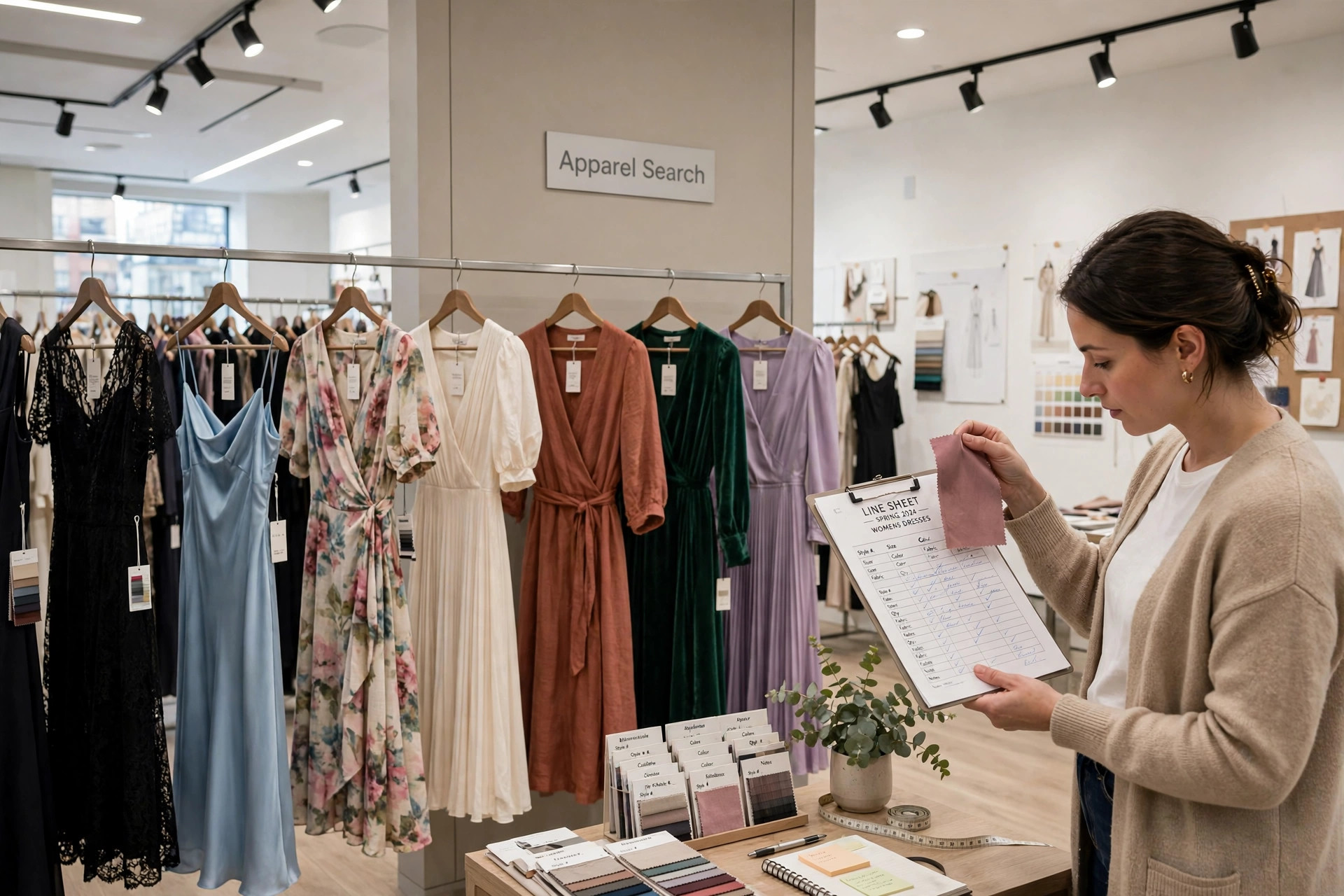
Range planning for dresses starts with the wearing occasions the department serves and the proportions between them, set from sales history: how much of the budget belongs in day dresses, work-appropriate styles, occasionwear and evening, and how those proportions shift between spring, summer and the party season. The buyer then works vendor appointments and own-label development to fill that plan, editing candidate styles against silhouette, fabric, colour and price architecture, and checking that the range offers real choice without duplicating the same dress in slightly different forms.
Fit is assessed with particular care because a dress fits the whole body at once: bodice, waist placement, skirt length and movement, and how the garment behaves in sizes across the range all affect whether customers keep it. The buyer agrees size ratios from the department's data, negotiates costs and deliveries with an eye to occasion deadlines — an occasion dress delivered after the season's main events has missed its market — and trades in season by reading sell-through by style, repeating proven silhouettes in new fabrics or colours, and clearing dated occasion stock decisively rather than carrying it into the next season.
Silhouette, Fabric and Occasion: The Dress Buyer's Judgement
Dress buying runs on silhouette cycles. Waist placement, skirt volume and length, neckline and sleeve treatments rise and fall in recognisable waves, and the buyer's skill is judging how far their customer will follow each wave and at what price. That judgement is exercised on samples on real bodies, not on sketches: how a fabric drapes and moves, whether a lining is needed, whether a print scales correctly on a full skirt, and whether construction at the target price will survive an evening's wear without seam or zip failure.
Occasion structure adds a second layer. Day dresses reward comfort, washability and price; occasion dresses reward impact, fabric quality and fit precision, and they are bought against a calendar of weddings, races, parties and holidays that the buyer plans backwards from. Fabric choice binds the two together — the same silhouette at two fabric qualities becomes two different dresses for two different customers — so the dress buyer, like the blouse buyer, is fundamentally making fabric decisions with commercial consequences on every style.
Skills and Abilities the Role Requires
The dress buyer needs confident fashion judgement joined to full commercial discipline: open-to-buy and margin management, size-ratio planning, and negotiation with a vendor base spanning domestic occasionwear specialists and volume overseas makers. Because dresses are bought in distinct styles rather than continuous programmes, editing discipline matters — every style admitted to the range must earn its place against the occasion plan, and the buyer must be able to explain, with evidence, why it will sell.
Fit literacy is a core skill, including how a style grades across sizes and where returns will come from if it is wrong. The buyer works closely with garment technologists on fit approval, with marketing and visual teams on the dresses chosen to front campaigns, and with the separates and knitwear buyers whose ranges share the same customer and floor. An eye for photography matters more here than in most categories: dresses are disproportionately sold through images, and a style that reads badly in a photograph starts at a disadvantage the buyer should price into the decision.
Qualifications, Training and Career Path
Dress buyers normally arrive from assistant buyer roles in womenswear — dresses, occasionwear or broader women's departments — where they have learned range planning, costing and fit approval on live ranges. Fashion buying and fashion business qualifications are the usual entry credentials into those assistant posts. For the dress desk itself, employers weigh a candidate's demonstrated silhouette and fabric judgement, usually evidenced by the performance of ranges they have worked on.
Progression runs to senior buyer in womenswear, buying responsibility for occasionwear or a broader women's division, and on to divisional merchandise management. Dress expertise also transfers to occasionwear and bridal-adjacent brands on the wholesale side, and to own-label product development, where the same combination of silhouette judgement, fabric knowledge and price architecture is used to create dress ranges for retail customers.
Common Questions
How do dress buyers divide a range between day and occasion dresses?
From sales history and the season's calendar. The buyer sets budget proportions for day, work, occasion and evening dresses, then selects styles to fill each part, shifting the balance toward occasionwear ahead of wedding and party seasons.
Why is fit so important in dress buying?
A dress fits the whole body at once, so bodice fit, waist placement and skirt behaviour all affect whether a customer keeps it. Poorly judged fit is the leading cause of dress returns, which is why buyers fit samples carefully across sizes before ordering.
Do dress buyers work with garment technologists?
Yes. Buyers and technologists approve fit and construction together: the buyer judges whether the style is right for the customer and price, the technologist judges whether it can be made consistently to that standard in production.