Handbag Buyer Job Description
Buying leather and fashion handbags where construction, hardware and season carry the range
A handbag buyer selects the bags a store or brand will sell — totes, shoulder bags, crossbody bags, satchels, clutches and seasonal fashion styles — across leather and non-leather materials and a wide ladder of prices. Handbags are one of retail's most margin-rich and most scrutinised categories: a bag is carried visibly every day, judged on its leather, stitching, hardware and lining before its label, and kept for years, so a buying mistake stays in customers' hands long after the season ends. The handbag buyer therefore combines fashion judgement with an almost technical knowledge of how bags are made. This page covers the role's duties, the construction knowledge it requires, and the routes into it.
More Buying Job Descriptions by Letter:
What a Handbag Buyer Does
The handbag buyer builds each season's range around how bags are used: everyday work bags with laptop and document capacity, smaller crossbody and shoulder styles for hands-free wear, evening clutches, and the fashion shapes that carry the season's story. Range planning starts from last season's results by shape, material, colour and price point, then moves to vendor and brand appointments where the buyer edits far more styles than the department can carry, checking samples in the hand and on the shoulder rather than from photographs.
Commercial work follows selection. The buyer negotiates cost prices against target margins that must absorb the category's high unit costs, agrees delivery dates phased across the season so newness keeps arriving, and places orders with depth concentrated on the shapes and colours the department's history supports. In season, the buyer watches sell-through by style, repeats proven bags in new colours while leather and hardware remain available, and manages the difficult markdown decisions on expensive stock, where a small percentage reduction is a large amount of money.
Construction and Seasons: The Product Knowledge at the Centre of the Job
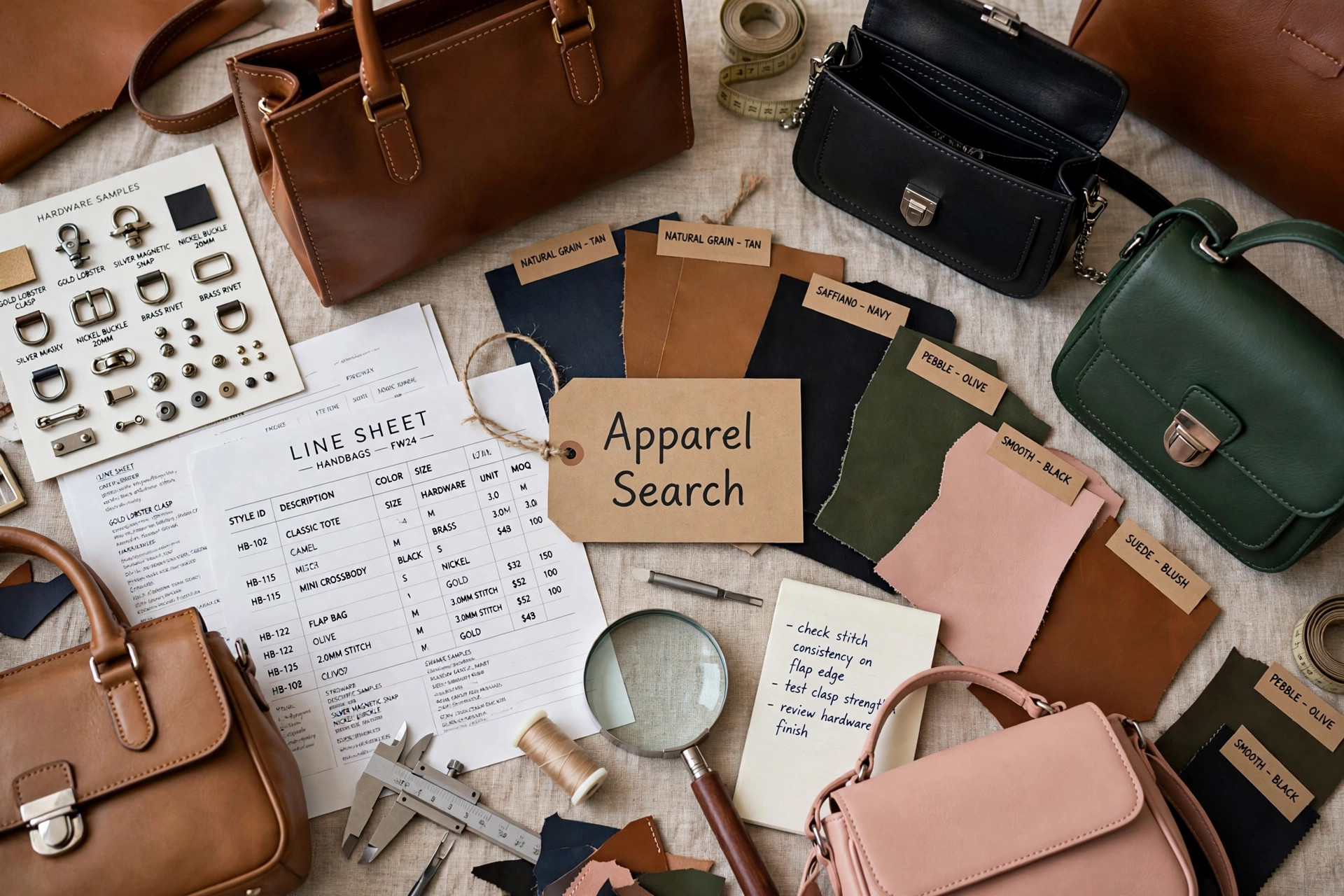
Handbag buying is a construction discipline. The buyer must judge leather grades and finishes — full-grain, corrected, saffiano, suede and patent each behave, wear and price differently — and read a bag's making the way a tailor reads a suit: stitching density and evenness, edge painting, lining quality, zip and clasp hardware, handle attachment and reinforcement at stress points. Weak construction is the main source of returns and repairs in the category, and most of it is visible on the sample if the buyer knows where to look. Hardware deserves special attention because it is both the most handled and the most imitated part of a bag.
Seasonality works differently from clothing. Core shapes — the black tote, the tan shoulder bag — sell all year and are replenished rather than replaced, while colour, material and silhouette fashion moves seasonally: straw and canvas for summer, deeper leathers and larger shapes for autumn, occasion clutches for the party season. The buyer balances a permanent core range against seasonal injections, and times deliveries so the fashion bags land with the clothing stories they were bought to accompany, not after them.
Skills and Abilities the Role Requires
Price architecture is the handbag buyer's sharpest commercial skill. The department must hold credible entry prices — often in non-leather materials — a strong middle where most volume sits, and premium leather pieces that carry margin and reputation, without gaps that push customers to competitors. That requires precise costing: leather is bought by area and wasted in cutting, hardware is priced per piece, and small specification changes move unit costs significantly, so the buyer must understand what drives a bag's price in order to negotiate it intelligently.
Trend judgement matters, but it is disciplined by the category's long product life. The buyer tracks which silhouettes are rising — and which have peaked and will date a range — while remembering that a customer buying a good leather bag expects to carry it for years. Vendor relationships are correspondingly long: handbag suppliers, tanneries and brands are a specialised pool, and the buyer who is known for accurate forecasts and fair dealing gets first sight of the developments that matter.
Qualifications, Training and Career Path
Handbag buyers usually arrive from accessories buying or from assistant buyer roles in accessories or leather goods, where they learned range planning and order management on smaller items before taking on the category's unit values. Fashion buying or business qualifications provide the common entry route into those assistant roles, and retail experience selling handbags or leather goods is highly valued, because it teaches how customers handle, compare and reject bags at the fixture.
From handbag buyer, progression runs to senior buyer in accessories, to buying responsibility for the whole accessories and leather goods area, and on to divisional merchandise management. The construction and costing expertise also transfers into product development and own-label roles with bag brands, where the same knowledge is used to specify and cost ranges rather than to select them.
Common Questions
What should a handbag buyer check on a sample bag?
Leather grade and finish, stitching quality, edge painting, lining, zip and clasp hardware, handle attachment and reinforcement at stress points. Construction faults are the leading cause of handbag returns, and most are visible on the sample before an order is placed.
Do handbag ranges change completely every season?
No. Core shapes in core colours sell all year and are replenished continuously. Seasonal change comes through colour, material and fashion silhouettes layered over that core, with deliveries phased so new styles keep arriving through the season.
How do you become a handbag buyer?
Usually through accessories buying: an assistant buyer role in accessories or leather goods, learning range planning and costing, then promotion to buyer. Retail experience selling bags helps, as does demonstrable knowledge of leather and construction.