Missy Buyer Job Description
Buying for the core women's customer — proven fit, honest value and a disciplined price architecture
'Missy' is the traditional trade name for the mainstream women's clothing category: the core size range and fit from which most women's apparel departments are built, aimed at the adult woman who is the industry's central customer. A missy buyer selects that clothing — dresses, tops, knitwear, trousers, skirts and suits in the standard women's size run — for the customer who buys the largest share of women's apparel and expects proven fit, dependable quality and fair prices in return for her loyalty. Because missy is the core of women's retail rather than a niche, this buyer carries some of the largest budgets in the store. This page explains the term, the role's duties, and the fit and price discipline the job demands.
More Buying Job Descriptions by Letter:
What 'Missy' Means — and What a Missy Buyer Does
In industry usage, missy describes both a size category and the customer it serves. Missy sizes are the standard women's numbered sizes, cut on the industry's core fit block, and the missy customer is the mainstream adult shopper — distinct in trade terms from juniors ranges, which are cut on a younger, straighter fit block in odd-numbered sizes, and from petite and plus ranges, which adapt the missy block for height or extend it in size. The term is old-fashioned, and some retailers now simply say women's or core, but job titles and vendor lines still use missy widely, which is why the role keeps the name.
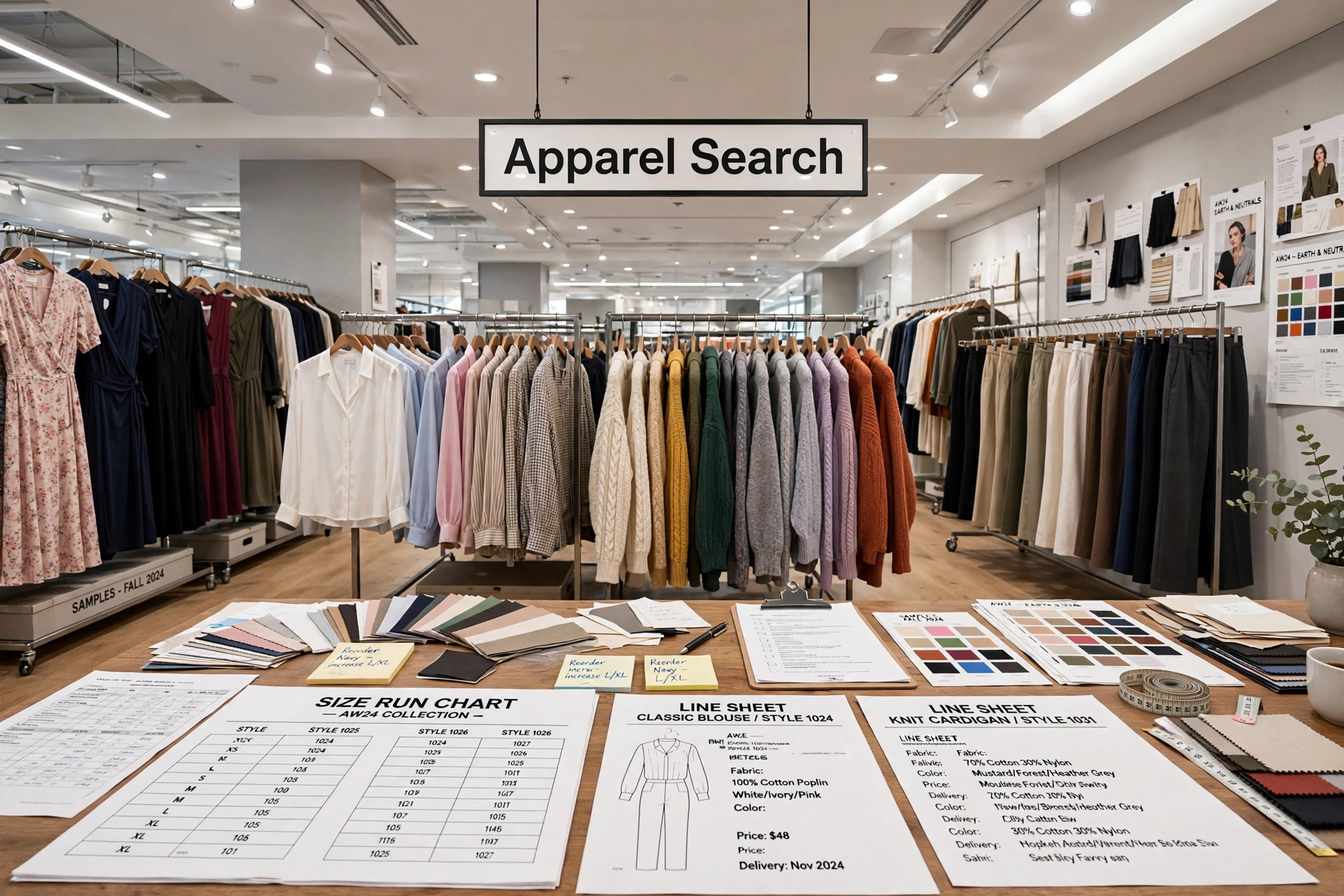
The missy buyer plans and buys the core women's ranges: the dresses, blouses, knitwear, trousers and co-ordinates that form most women's wardrobes. The work follows the full buying cycle — analysing last season by style, size and price point, editing vendor ranges and developing own-label product, fitting samples on the missy fit block, negotiating costs, placing orders with size ratios taken from core-customer demand, and trading in season with repeats and markdowns. What distinguishes the desk is scale and centrality: these are the ranges the store's women's business stands on, so consistency matters more than experimentation, and a fit or quality failure reaches more customers here than anywhere else.
Fit and Price Architecture for the Core Customer
Fit is the missy buyer's first discipline. The core customer buys repeatedly from retailers whose sizing she trusts, and she punishes drift: a trouser block that changes shape between seasons, or a knit that shrinks differently from last year's, costs repeat sales that no fashion story wins back. The buyer therefore protects the fit block through vendor and fabric changes, fits samples rigorously at the core sizes rather than only at the sample size, and treats customer fit feedback as range evidence. Reliability is the product; style is built on top of it, in the colours, prints and updates this customer actually adopts — current, but wearable in her real life.
Price architecture is the second discipline. A missy range is planned as a deliberate ladder: opening price points that recruit and serve value-conscious customers, a strong middle where most volume and margin sit, and a better tier for quality-led purchases — with each tier's fabric and construction honestly matching its price. The buyer defends that ladder against drift in both directions, because the core customer reads value precisely: she knows what a blouse should cost, notices when construction quietly cheapens, and rewards the retailer whose middle tier she can trust. Getting fabric, make quality and price into that alignment, style after style, is the commercial heart of the job.
Skills and Abilities the Role Requires
The missy buyer needs the complete buying skill set applied at core scale: range planning across many categories, open-to-buy and margin management on large budgets, size-curve analysis, and vendor negotiation with both brands and own-label manufacturers. Analytical depth matters especially, because small percentage changes in fit returns, size availability or price realisation move very large numbers on this desk — and because the data is rich enough, over seasons, to show exactly which decisions caused them.
Customer understanding is the other essential. The missy buyer must know how the core women's customer actually dresses — for work, family, occasions and weekends — and resist both errors that surround the desk: chasing a younger fashion customer the range cannot serve, and underestimating the core customer's appetite for well-judged newness. The strongest missy buyers visit stores, read fitting and return evidence, and keep the range recognisably hers while it moves forward. Communication with the petite, plus, juniors and maternity buyers also matters, because those ranges adapt or neighbour the missy block and the customer crosses between them.
Qualifications, Training and Career Path
Missy buyers come from the centre of womenswear buying: assistant buyer roles in core women's departments, where the size systems, fit blocks and vendor base are learned on high-volume ranges. Fashion buying or business qualifications support entry at assistant level, but promotion to the missy desk itself is earned on results — ranges that held their fit promise, hit their price architecture and traded cleanly. Employers look for buyers whose judgement the core customer has already validated through sales, because the desk's budgets leave little room for learning by expensive error.
From missy buyer, the path runs to senior buyer and divisional merchandise management over women's categories — the missy desk is a classic proving ground for divisional roles precisely because it is the business's core. Moves into own-label product development are also common, using the same fit-block and price-ladder expertise to build ranges for brands. Few buying roles teach the fundamentals — fit consistency, honest value, size discipline — as thoroughly as this one, and that grounding is recognised across the whole women's side of the industry.
Common Questions
What does 'missy' mean in women's clothing?
Missy is the trade term for the mainstream women's category: the standard numbered size range cut on the core women's fit block, aimed at the adult core customer. It sits alongside juniors (a younger, straighter fit), petite (adapted for shorter height) and plus (extended sizes).
How is a missy buyer different from a womenswear buyer?
The roles overlap heavily — missy is the core of womenswear. The missy title specifies responsibility for the core size range and customer, as distinct from juniors, petite, plus or maternity buyers. In many stores the same buyer covers missy within a broader womenswear brief.
Why is price architecture so important to a missy buyer?
Because the core customer buys on trusted value. The range is planned as a ladder — opening, middle and better price tiers — and each tier's fabric and construction must honestly match its price. If quality quietly slips at a tier, repeat customers notice and the core business erodes.