Women's Swimwear Buyer Job Description
Buying women's swimsuits and separates — fit, support and mix-and-match ranging
The women's swimwear buyer builds the swimsuit offer: one-piece suits, bikini tops and bottoms sold as separates, tankinis, swim dresses and the shapewear-influenced styles that use construction to support and smooth. Fit is the purchase. A women's swimsuit is the most body-critical garment most retailers sell, tried on in unforgiving light by customers comparing how they look and feel, so this buyer works more like a fit engineer than a fashion editor — while still delivering the colour, print and newness the season demands. This page explains how that balance is struck.
More Buying Job Descriptions by Letter:
What a Women's Swimwear Buyer Does
Ranging begins with body coverage and customer intent. The buyer decides the weight of one-pieces against two-pieces, plans coverage levels from minimal to modest, and assigns each style a job: lap swimming, beach holiday, resort wear, active water sport or confident everyday swimming. Vendor sessions are dominated by fit review — suits are assessed on fit models across the size range, straps and closures are stress-tested, and lining, boning and internal support structures are examined from the inside, where this category is truly made.
Trading the range means reading fit evidence as much as sales figures. The buyer tracks which cup sizes and body lengths sell through, where returns cite support or coverage problems, and which prints repeat across seasons in new colourways. Because confidence drives purchase, a proven fit block is defended fiercely: successful shapes are reissued with updated fabrics and stories rather than replaced, while genuinely new silhouettes are introduced in controlled depth until customers confirm them.
Fit and Support: Engineering the Garment
Support architecture is the technical core of women's swim. Underwired, moulded-cup, shelf-bra and soft-cup constructions serve different bust sizes and activities, and the buyer must specify the right architecture for each style's customer — then grade it properly, since support that works in a small cup can fail completely when scaled. Cup sizing, band sizing and dress sizing intersect on this fixture, and the buyer keeps the logic consistent so customers can find their fit across brands.
Body fit raises parallel questions. Torso length, tummy-control panels, ruching, leg-line height and back coverage all change how a suit fits and flatters, and each variable multiplies the size matrix the buyer must stock. Power mesh and firm elastane fabrics provide shaping, but at the cost of slower drying and a firmer feel that some customers reject. The buyer's craft is choosing, style by style, where support ends and comfort begins — and documenting those decisions so repeat orders reproduce them exactly.
Separates and Mix-and-Match Ranging
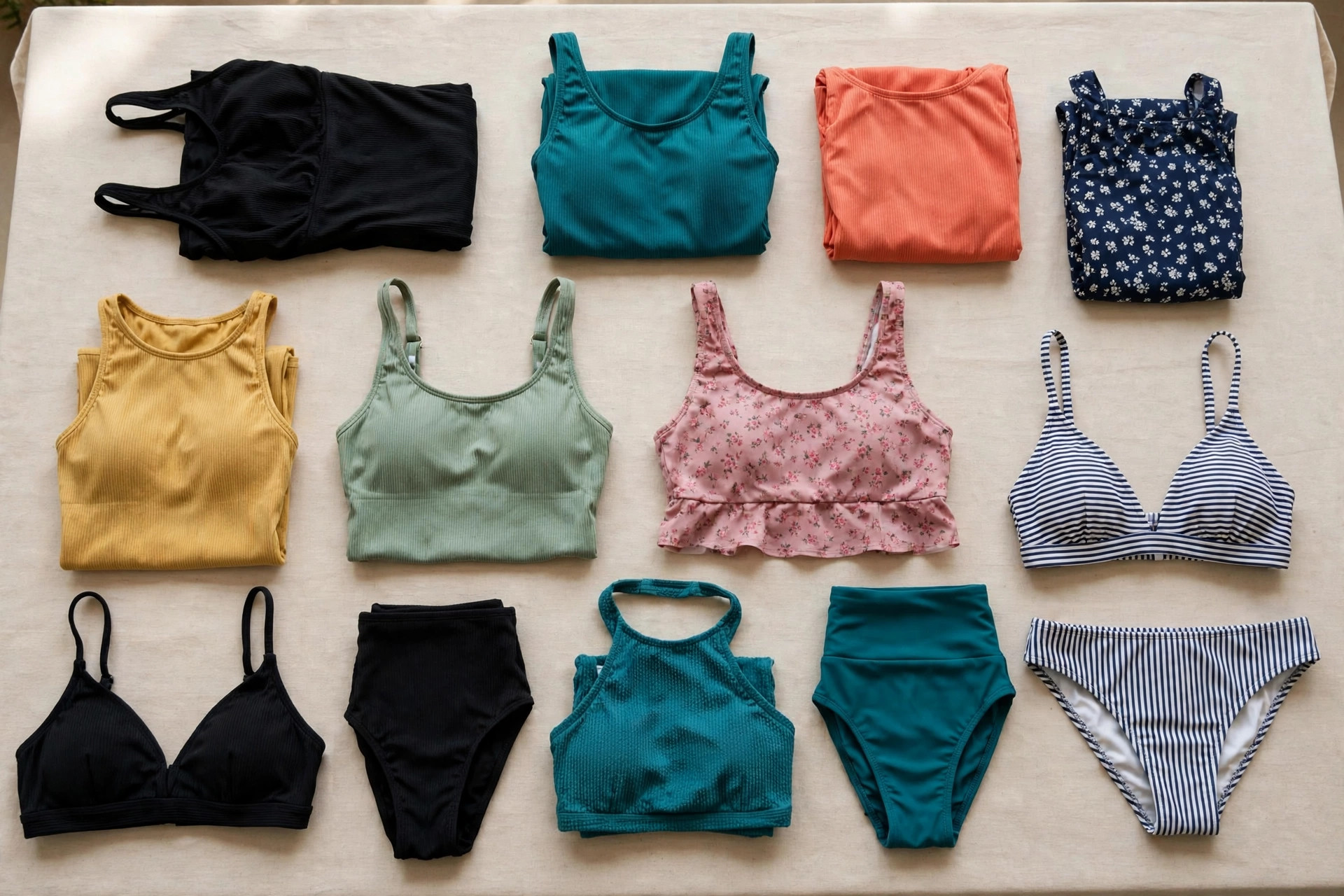
Selling tops and bottoms separately transformed this category, and planning it is a distinct buyer skill. Customers mix sizes — one size above, another below — and combine prints with plains, so the buyer forecasts tops and bottoms on different size curves, coordinates colour stories across dozens of components, and protects availability of the plain black and navy bottoms that pair with everything. A separates wall fails if any single component breaks in a key size, so depth planning is done at component level.
Mix-and-match also changes the fashion maths. A small set of well-coordinated components can generate a large number of customer combinations, letting the buyer offer apparent breadth without committing to hundreds of finished styles. Print direction, trim consistency and hardware finishes must match across suppliers making different pieces, which makes specification discipline — shared colour standards, shared lab dips, shared fit blocks — the invisible work that makes the visible wall of colour function.
Skills, Qualifications and Career Path
This desk demands fit expertise comparable to intimate-apparel buying, colour and print judgement, and matrix planning across the most complex size structures in womenswear. Employers typically seek buyers from womenswear, lingerie or swim backgrounds who have fitted garments on models, graded support constructions and traded a confidence-sensitive category. Sensitivity in handling fit feedback — from models, store teams and returns data — without letting it harden into caution is a recognised strength in successful candidates.
Career paths lead to senior women's swim and beachwear roles, wider womenswear buying management, and own-label development posts where fit blocks and support architectures are created rather than selected. The separates-planning and fit-engineering experience also transfers strongly to lingerie and activewear buying, making this specialism a valuable foundation for a career anywhere fit decides whether a garment sells.
Common Questions
Why are women's swim tops and bottoms sold separately?
Because most customers wear different sizes above and below, and many prefer mixing prints with plains. Separates let each customer build her own combination, but they require the buyer to forecast and stock every component on its own size curve.
What support constructions do swimsuits use?
Underwired and moulded cups for structured support, shelf bras for moderate support, and soft unpadded constructions for comfort and sport. The buyer matches the construction to the style's customer and checks that it still works when graded to larger cup sizes.
How do women's swimwear buyers use fit models?
Candidate styles are fitted across the size range before orders are placed. Strap security, cup coverage, torso length and support are all judged on the body, and only styles that fit consistently across sizes are ranged.