Trims Buyer Job Description
Buying the components garments are finished with — zips, buttons, labels, elastic and thread
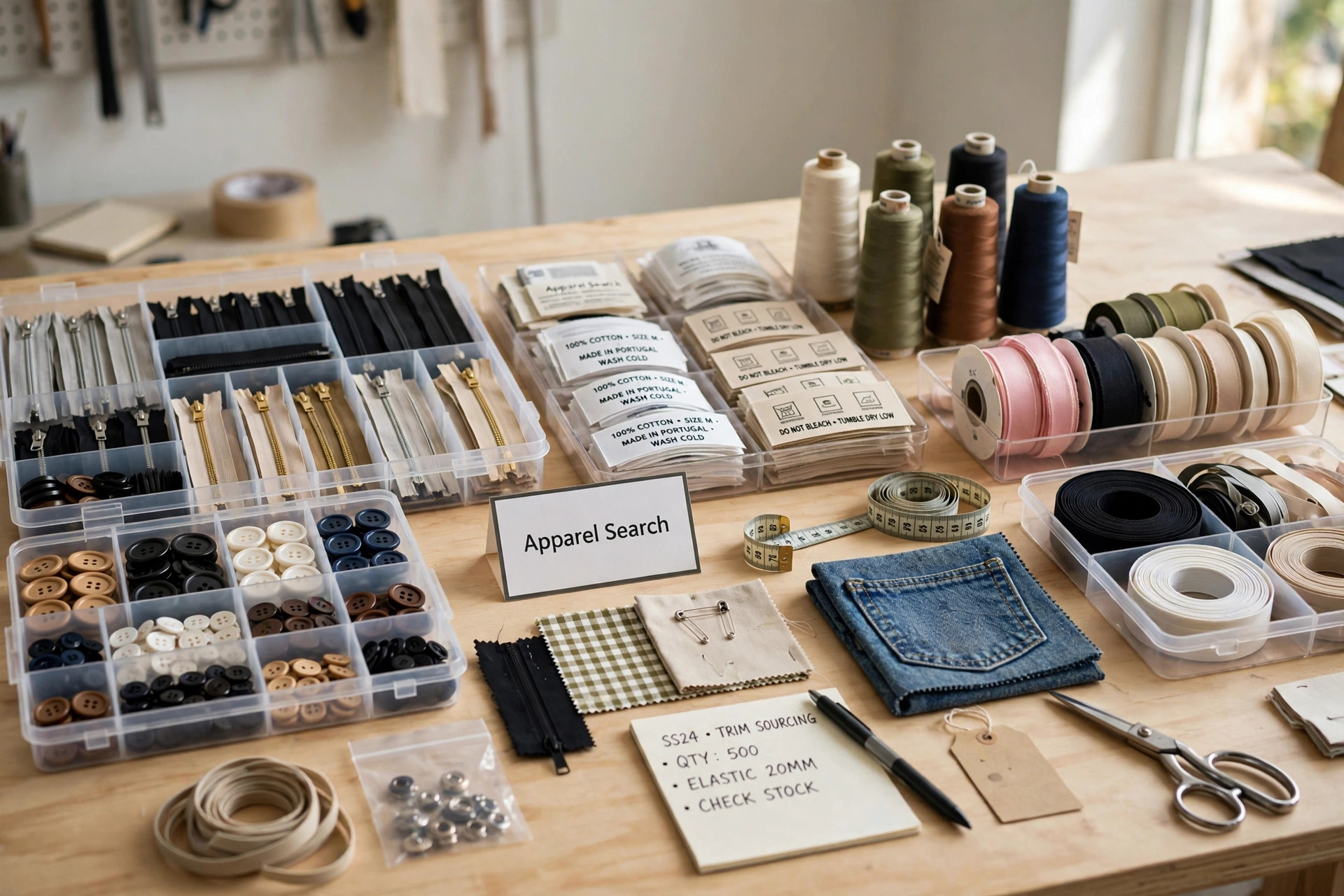
A trims buyer purchases the components a garment cannot be finished without: zips, buttons, snaps, hooks, labels, hangtags, elastic, cords, interlinings, shoulder pads, thread and packaging. This is production buying with a business-to-business character unlike selecting finished clothes for a store. The trims buyer's customers are garment factories and product teams, orders run to tens of thousands of units, and the risk is lopsided — a trim costs pennies, but a missing or failing trim stops a production line or ruins a garment's quality. This page explains the trims buyer's duties, specification and testing work, and how the specialism is entered.
More Buying Job Descriptions by Letter:
What a Trims Buyer Does
The trims buyer's work follows the garment programme. For each style in development, a bill of materials lists every component the garment needs, and the trims buyer sources each one: matching the designer's and garment technician's specification, obtaining samples and lab dips for approval, negotiating price and minimums, and placing bulk orders timed so components reach the factory before cutting and sewing begin. A single season can mean hundreds of styles, each with its own zip lengths, button sizes, label artworks and thread shades, so the role runs on exact records — approved standards, supplier references and delivery schedules that factories in several countries work from.
Alongside style-specific trims, the buyer manages the standing components a business uses continuously: core zips and buttons, care and brand labels, basic elastics and threads. Those are bought under longer agreements with volume pricing, safety stock and agreed lead times, because production cannot pause while a commodity trim is re-sourced. The buyer also handles the problems only this desk sees: a dye lot of buttons drifting off-shade, a zip batch failing pull tests, a label supplier's artwork error discovered at the factory — each needs a fast decision that weighs garment quality, delivery dates and cost, made jointly with technical and production colleagues.
Specifications, Testing and the Bill of Materials
Specification is the trims buyer's core skill. A zip is not a zip: it is a tape material, chain type and size, length, slider and pull, colour matched to a standard, and a performance requirement, all written precisely enough that a factory on another continent orders and receives the identical item. Buttons are specified by material, diameter in lignes, hole or shank construction and shade; labels by weave or print method, artwork version, fold and finish; elastic by width, stretch and recovery. The buyer owns those specifications in the bill of materials, controls artwork and standard approvals, and guards against silent substitutions — the penny-saving component swap that changes how a garment feels, washes or wears.
Testing turns specification into evidence. Trims are tested for the failures garments actually suffer: zip strength and slider fatigue, button pull and impact resistance, colourfastness of tapes, ribbons and threads against the garment fabric, label legibility after washing, elastic recovery after stretch and heat. The buyer agrees test standards with technical teams, commissions or reviews results, and rejects or re-sources components that fail — before bulk production, while there is still time to act. Compliance sits in the same discipline: fibre-content and care label information must be accurate for the markets the garment will be sold in, and the trims buyer is usually the person who makes sure the label order matches the approved legal copy, version by version.
Skills and Abilities the Role Requires
Precision and follow-through define this desk. The trims buyer coordinates more individual items per garment than anyone else in the business, across more suppliers, with lead times that vary from days for stock items to months for custom-dyed or custom-moulded components. Strong planning and expediting skills — knowing which order is on the critical path for which factory delivery, and chasing it before it becomes one — are the difference between a calm season and a production crisis. Commercial skill is exercised at fine grain: unit prices are tiny, but volumes are vast, so a fraction saved per thousand units is real money, and minimum-order and tooling charges for custom items must be negotiated with the same care as headline prices.
The role also demands cross-functional fluency. Designers speak in look and hand-feel; garment technicians in performance and construction; factories in capacity and shipping dates; finance in cost per garment. The trims buyer translates between all four, and keeps the approved-standard library that lets everyone work from the same reference. Supplier relationships are specialist and long-term — zip, button, label and interlining manufacturers each have their own technologies — and good trims buyers know those supplier bases deeply enough to re-source a failing component in days when production depends on it.
Qualifications, Training and Career Path
Trims buyers commonly come from production and product-development environments: garment technology, production coordination, merchandising for manufacturers, or buying assistant roles on the raw-materials side. A fashion production, garment technology or textiles qualification gives useful grounding, but employers weigh practical component knowledge — zips, fastenings, labels, interlinings and their suppliers — and a record of accurate, on-time bulk supply more heavily than general buying credentials, because the role's failures are so visible when they happen.
Progression runs to senior trims or raw materials buyer, and on to sourcing, production and supply-chain management roles with responsibility for fabric as well as trims. The specialism also transfers to the supplier side, where component manufacturers employ product and sales staff with exactly this specification knowledge, and to technical and compliance roles concerned with labelling and testing. Because every garment in a business passes through this desk's components, an experienced trims buyer holds one of the most complete views of a product range anywhere in the company — and one of its most quietly critical jobs.
Common Questions
What does a trims buyer actually buy?
The components garments are finished with: zips, buttons, snaps, labels and hangtags, elastic, cords, interlinings, shoulder pads, thread and packaging. Each is specified, sampled, tested and ordered in bulk against the garment's bill of materials, timed to reach the factory before sewing begins.
How is trims buying different from apparel buying?
It is production buying, not retail buying. The customer is the factory, orders are placed in thousands of units, and the risk is operational: a missing or failing penny component can stop a production line or ruin a garment's quality. Specification, testing and delivery timing matter more than seasonal style selection.
Why are trims tested if they cost so little?
Because trim failures are garment failures: a zip that breaks, a button that pulls off, a label that fades or elastic that loses recovery all reach the customer. Trims buyers agree test standards for strength, colourfastness and wash performance and reject components that fail before bulk production.