Men's Underwear Buyer Job Description
Buying men's underwear by fit — boxers, briefs and trunks, waistbands and pack architecture
A men's underwear buyer selects the boxers, briefs, trunks, boxer briefs, vests and undershirts a store sells to men — a category organised above all by fit preference. Men's underwear customers divide loyally between fits, replace like for like for years, and judge a product by its waistband, its fabric and whether it survives the wash without twisting, riding or slackening. The buyer's craft is therefore fit architecture and replenishment: keeping every fit family complete in every core size, engineering multipacks at honest value, and refreshing fabric and colour without disturbing the fits the department's sales are built on. This page explains the men's underwear buyer's duties and how the role differs from the general underwear desk.
More Buying Job Descriptions by Letter:
What a Men's Underwear Buyer Does
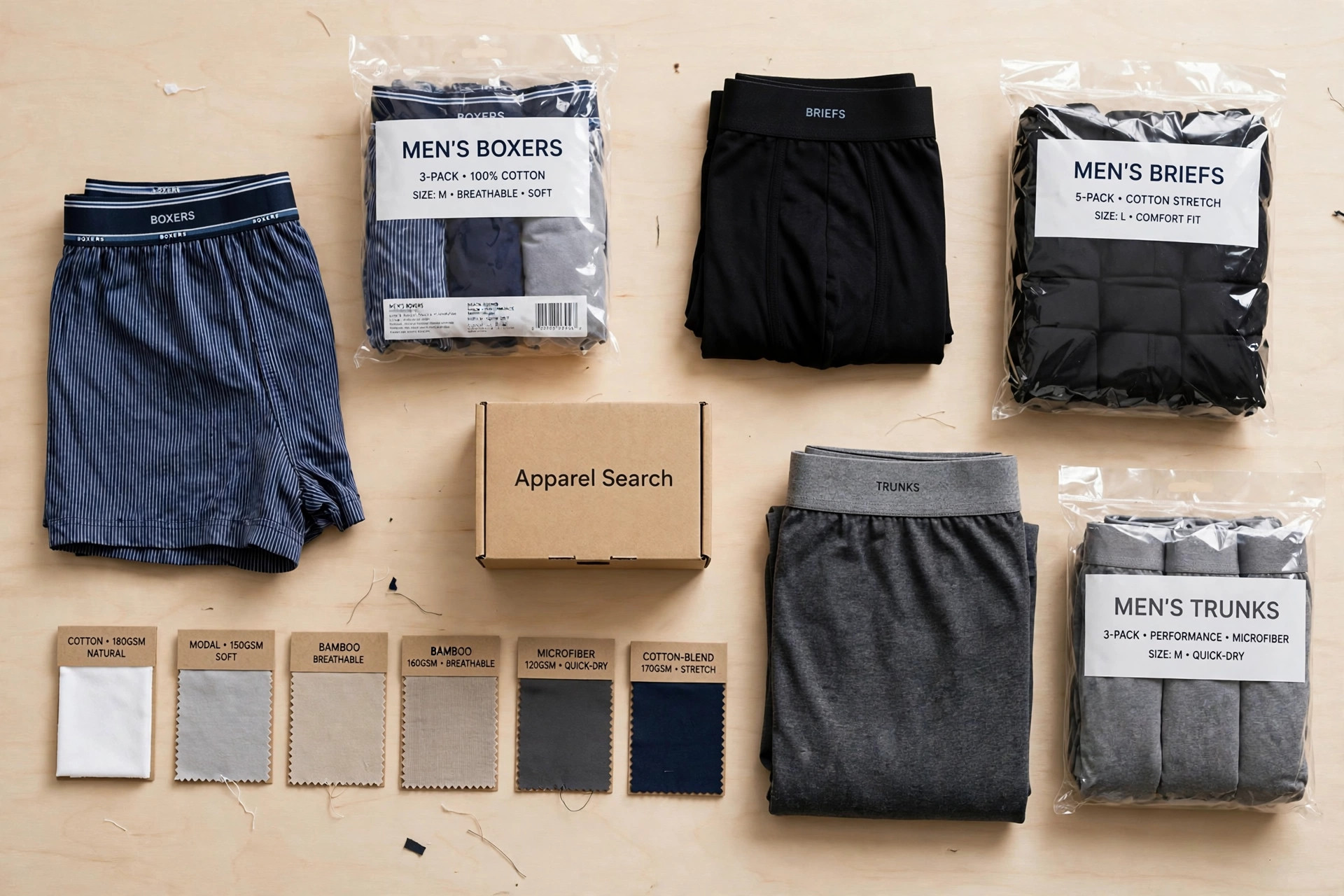
The men's underwear buyer plans the range by fit family first and fashion second: briefs for customers who want minimal coverage and support, trunks with a shorter leg, boxer briefs as the long-legged hybrid that anchors much of the modern market, and woven boxers for the loose fit their wearers will not give up. Each family is ranged in core colours — white, black, navy, grey — with seasonal colour and print bought on top in shallower depth. Underneath sits the undershirt and vest range, planned as a companion replenishment line with the same continuity logic.
Day to day, the buyer runs replenishment: forecasting replacement demand by fit, style and size, setting reorder quantities, and protecting availability in the middle sizes where volume concentrates. Samples are assessed worn and washed — waistband recovery, leg elastic grip, fabric pilling and shrinkage, seam placement — because men's underwear is bought on accumulated wearing experience, and one poor production run of a trusted style costs more repeat business than a missed fashion colour ever could. Promotions are planned at pack level, timed to the category's stocking-up moments, and coordinated so promotional depth never strips the core sizes everyday replacement buying depends on.
Boxer, Brief and Trunk: Planning by Fit
Fit families are this category's architecture, and each has its own construction logic the buyer must specify fluently. Briefs turn on pouch shaping, leg elastic tension and rise. Trunks and boxer briefs turn on leg length, fabric stretch and recovery — too little elastane and the leg rides and bags; too much and the garment feels restrictive. Woven boxers turn on cotton quality, seat construction and fly design. The buyer holds those specifications per family, tests new suppliers against the proven incumbent garment rather than a paper spec, and resists consolidating fits for tidiness: a customer whose fit disappears from the range does not switch fits, he switches stores.
The waistband is the second specification battleground. Branded jacquard elastic, plush-backed bands for comfort, width and tension standards, and recovery after repeated washing are all set by the buyer, because the waistband is the visible brand carrier above a trouser line and the component whose failure customers notice first. Pack architecture completes the system: three- and five-packs engineered by fit family, single premium styles for fabric-led purchases, and price spacing that lets a customer move from basic cotton to modal or performance fabrics without leaving his fit. Performance and sport underwear — moisture-managing synthetics for training — is planned as a distinct sub-range with its own fabric standards, not as a colour variant of the core.
Skills and Abilities the Role Requires
The men's underwear buyer needs replenishment-grade analytical skill: size- and fit-level forecasting, reorder discipline, and the patience to manage a range whose wins are measured in availability percentages and repeat rates rather than seasonal excitement. Costing is exercised at pack level with fine margins — fabric blend upgrades, waistband quality and pack counts are traded against each other to hold a price point — and negotiation with the category's specialist manufacturers is correspondingly detailed, covering elastic and fabric standards as much as headline price.
Product judgement is wear-based. Good men's underwear buyers build wearer trials into sample approval, read return reasons at fit level — a brief returned for leg elastic and a trunk returned for riding up are different specification failures — and keep a personal reference set of proven garments to judge new samples against. Communication is practical and unembarrassed: vendor technical meetings, fitting feedback and store colleague reports are handled as ordinary product business, and coordination with the wider underwear, hosiery and menswear basics teams keeps size systems and pack logic consistent across the men's floor.
Qualifications, Training and Career Path
Men's underwear buyers typically progress from assistant buyer roles in men's underwear, hosiery or menswear basics, where fit families, waistband standards and replenishment cycles are learned on live ranges. Menswear retail experience helps, particularly on basics departments where replacement buying patterns are visible daily. Fashion buying or business qualifications support the assistant stages; promotion to this desk is decided on availability results and specification judgement demonstrated over seasons.
From men's underwear buyer, the path runs to senior buyer for men's basics and intimates, divisional menswear responsibility, or specialist roles with underwear brands, where fit-family and pack expertise is used to build ranges sold across many retailers. The replenishment and pack skills also transfer to the general underwear buyer role and to other men's basics such as socks and plain tees. Few desks teach fit loyalty as concretely as this one: the buyer learns, in weekly numbers, exactly what it costs when a trusted fit changes — and what it earns when it never does.
Common Questions
What fits does a men's underwear buyer plan?
Four main families: briefs, trunks, boxer briefs and woven boxers, each with its own construction and loyal customers. The buyer ranges every family in core colours and sizes, because a customer whose fit disappears usually changes stores rather than fits.
Why is the waistband so important in men's underwear?
It is the component customers feel most, the visible brand carrier, and the first part to fail when elastic quality or recovery is poor. Buyers specify waistband width, tension, backing comfort and wash recovery as formal standards for every style.
How is men's underwear buying different from general underwear buying?
The general desk covers the shared foundations — replenishment, packs, fabrics, sizing. The men's desk specialises in fit-family architecture: briefs, trunks, boxer briefs and boxers, each with distinct construction, waistband standards and loyal replacement buyers.