Underwear Buyer Job Description
Buying underwear as a replenishment business — core styles, fabrics and sizes that never leave stock
An underwear buyer selects the briefs, boxers, trunks, vests and everyday undergarments a store sells, and runs the category as what it fundamentally is: a replenishment business. Underwear is bought on replacement cycles, in multipacks, in the same trusted styles for years at a time — which makes this desk closer to a supply operation than to seasonal fashion buying. Core lines are never meant to go out of stock, price and pack architecture decide value perception, and fabric comfort is judged against skin every single day by every customer. This page explains the underwear buyer's duties, the replenishment discipline at the centre of the role, and how the specialism divides into children's, men's and women's desks covered separately in this directory.
More Buying Job Descriptions by Letter:
What an Underwear Buyer Does
The underwear buyer maintains a core range built for continuity: proven brief, boxer and trunk styles, basic vests and undershirts, and the multipacks most customers actually buy, all planned by size-level sales history and reordered on regular cycles. Around that core sits a smaller seasonal layer — new colours, fabric updates, promotional packs and gift-oriented presentations — refreshed without disturbing the styles customers replace like for like. The buyer's week is therefore weighted toward availability: reviewing size-level stock, forecasting replacement demand, setting reorder quantities, and checking that no core size in no core style is quietly drifting toward a gap.
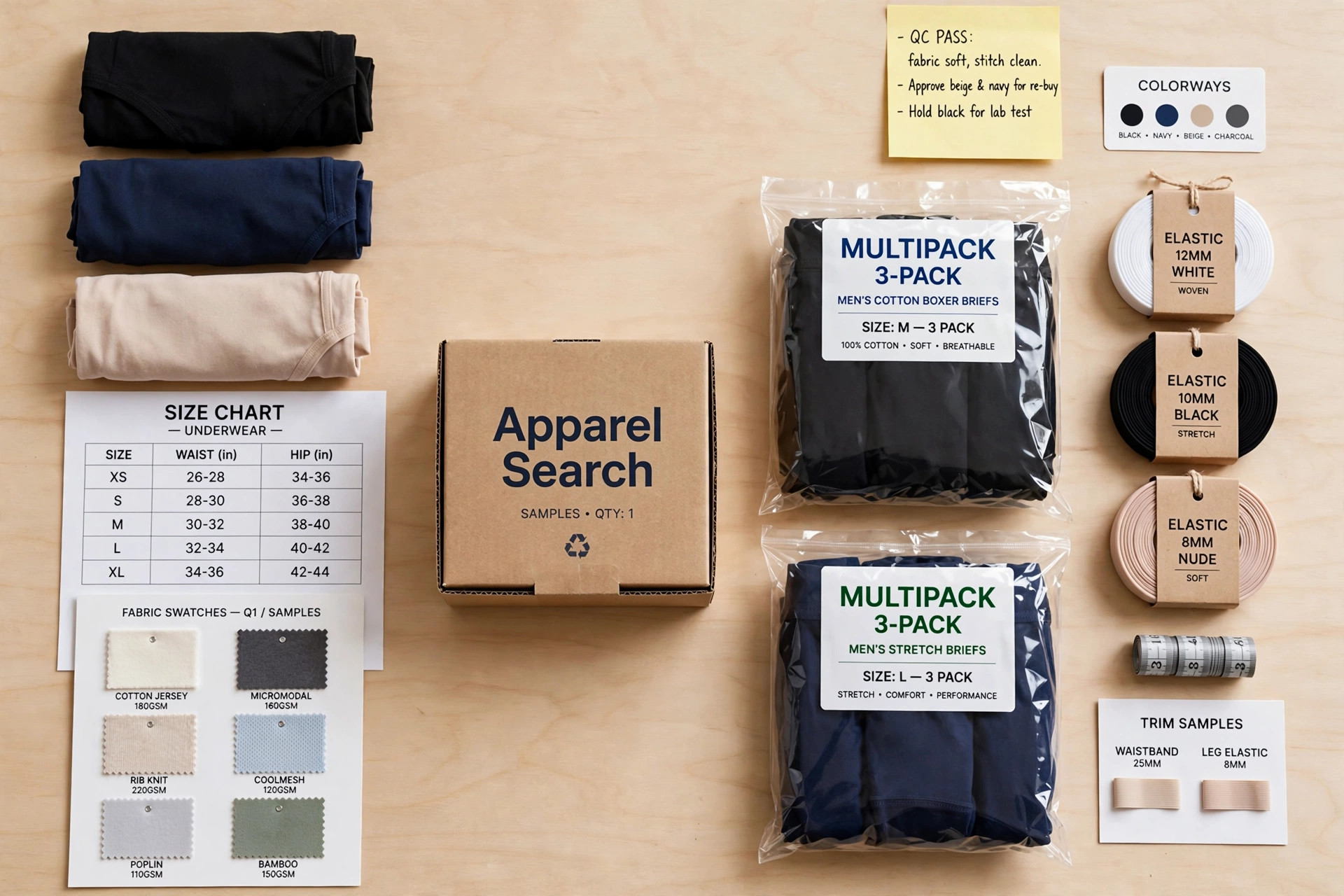
Vendor work is specification-led. Samples are assessed on fabric composition and weight, elastic quality and waistband construction, seam placement and finish, and how garments survive repeated washing — the test every underwear product must pass weekly in customers' homes. The buyer negotiates cost at pack level, since the multipack is the category's real selling unit, agrees replenishment lead times and minimums, and monitors supplier service levels with the same seriousness a grocer would: in a continuity category, a late delivery is a broken promise on the shelf. Promotional planning — multi-buy offers, seasonal pack events — is built on top of core availability, never at its expense.
Replenishment, Packs and Fabric Comfort
Replenishment planning is the desk's defining discipline. Demand for core underwear is steady, measurable and size-specific, so the buyer forecasts by style and size, sets reorder points and safety stock, and keeps the best-selling sizes deepest. The size range itself is a commercial decision: where it starts, where it ends, and how depth is distributed across it determines both availability and how much money sleeps in slow extremes. Buyers who manage that distribution well produce the category's signature result — a department that is simply always there, in the customer's size, when the customer needs it.
Pack architecture is the second discipline. Single garments, three-packs, five-packs and promotional bundles each serve different shopping missions and price perceptions, and the buyer designs the ladder so a customer can trade up in fabric or count without leaving the brand of fit they trust. Fabric judgement underpins both: cotton for breathability and familiarity, cotton-elastane blends for shape retention, modal and microfibre for softness and smoothness, each weighed against cost and wash performance. Waistband elastic — its width, branding, stretch and recovery — is specified with unusual care, because it is the component customers feel most and the first to fail in poor product.
Skills and Abilities the Role Requires
Analytical discipline comes first. Continuity buying runs on size-level data, reorder cycles and service levels, so the underwear buyer must be the kind of buyer who notices a single size trending toward a gap and acts before it arrives. Numeracy covers pack-level costing and margin, promotional mechanics, and the stock-turn mathematics of a category where overbuying the wrong size is as damaging as underbuying the right one. Fashion instinct matters, but in its place: colour and fabric refreshment that respects the core, not novelty that destabilises it.
The buyer also needs a practical, matter-of-fact product manner. Underwear buying involves detailed vendor discussions about fabrics, elastics, seams and sizing, fitting and wearer-trial feedback handled as straightforward product business, and close coordination with the children's, men's and women's underwear desks where a store splits the category, so that size systems and pack logic stay consistent for customers who shop across them. Relationships with core suppliers are long and operational; the buyer values a vendor who never misses a replenishment date over one offering a novelty line, and negotiates accordingly.
Qualifications, Training and Career Path
Underwear buyers typically progress from assistant buyer roles in underwear, hosiery, lingerie or basics departments, where replenishment routines and size systems are learned on live ranges. There is no category-specific qualification employers require; fashion buying or business qualifications support entry at assistant level, while promotion to this desk is earned on availability and trading results — the cleanest evidence in buying, since core-size stock cover and sales are both measured weekly.
From underwear buyer, careers run to senior buyer for intimates and basics, divisional responsibility spanning underwear with hosiery, sleepwear and lingerie, and specialist roles with underwear brands and manufacturers, where the same pack, fabric and replenishment knowledge is used to build ranges for many retailers. The continuity expertise also transfers to any basics-driven category — plain tees, socks, core denim — where availability is the product. It is a desk where quiet excellence compounds: every month a core range stays complete, its customers' trust, and its numbers, grow a little stronger.
Common Questions
Why is underwear buying called a replenishment business?
Because most underwear is bought to replace worn-out garments, in the same styles and sizes, continuously through the year. The buyer's core job is forecasting that steady demand size by size and reordering so proven styles never leave stock, rather than betting on seasonal fashion.
What does pack architecture mean in underwear buying?
It is the deliberate ladder of single garments, three-packs, five-packs and promotional bundles the buyer plans. Packs are the category's real selling unit, so their counts, fabrics and price spacing decide how customers judge value and trade up.
How does the general underwear buyer relate to the children's, men's and women's roles?
They are the same discipline split by customer. This page covers the shared foundations — replenishment, packs, fabrics and sizing — while the separate children's, men's and women's underwear buyer descriptions in this directory cover each customer group's specific sizing, styles and shopping patterns.