Children's Underwear Buyer Job Description
Buying children's underwear as a product range — sizing by age, multipacks, fabrics and value
A children's underwear buyer selects the underwear a store sells for children: briefs, undershirts and vests, training underwear for toddlers moving out of nappies, and everyday multipacks bought by parents and carers. The work is strictly product-focused. The customer buying is an adult purchasing a practical essential, the sizing is organised by age, the selling unit is the multipack, and success is measured in value, fabric durability and never running out of the popular sizes during the back-to-school peak. This page explains the children's underwear buyer's duties in those practical terms — age sizing, pack planning, fabrics and seasonal replenishment.
More Buying Job Descriptions by Letter:
What a Children's Underwear Buyer Does
The children's underwear buyer builds a clear, practical range: underwear sets and separates organised by age band, training underwear with absorbent or easy-pull designs for the toddler stage, plain undershirts and vests for layering and school wear, and multipacks at the price points families budget around. Range planning starts from how parents actually shop — stocking up in bundles, replacing whole sizes as a child grows, and buying ahead at promotional events — so assortment depth sits in the middle age bands where most children are, with the youngest and oldest sizes covered reliably but shallower.
Through the year, the buyer manages a strongly seasonal stock pattern. Back-to-school is the category's peak: families equip children for the new school year in a few concentrated weeks, and the buyer builds stock for it months ahead, size by size, because a missing popular age size in late summer cannot be recovered in season. The rest of the year runs on steady replenishment of the core packs, promotional multi-buy events, and periodic range reviews that check fabric performance against wash results and parent feedback — garments in this category are washed constantly, at high temperatures, and must keep shape, elastic and colour through it.
Sizing by Age, Multipacks and First Underwear
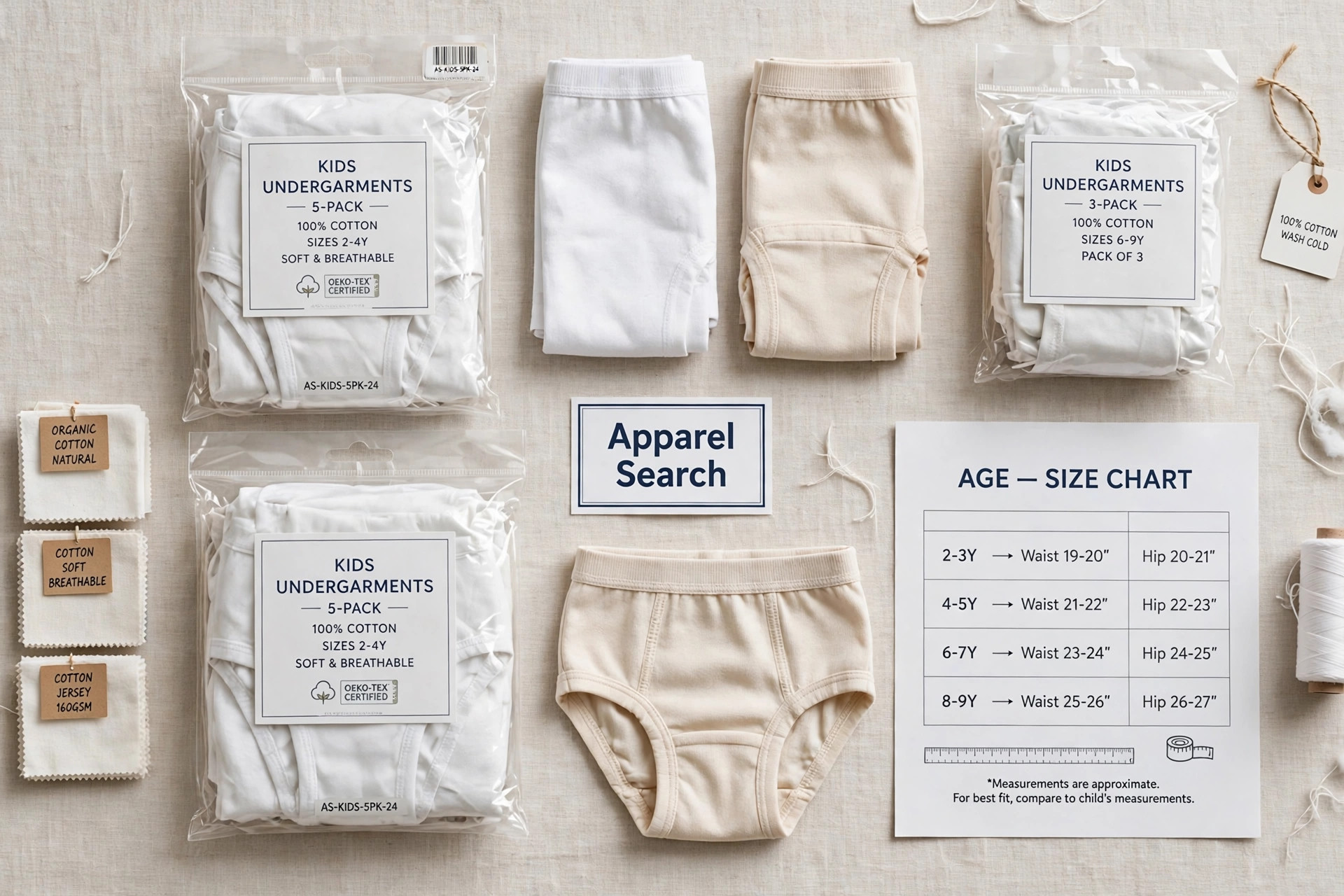
Age sizing is the category's organising system. Children's underwear is sold by age bands — such as 2-3, 4-5, 6-7 years and upward — rather than by adult waist measures, and the buyer's job is to keep those bands consistent across every supplier in the range, so a parent can buy any brand in the department in the same age size with confidence. Size architecture decisions are concrete: which age bands each style carries, how height and fit guidance is presented on packaging, and how the range handles the overlap where older children move toward teen and adult sizing. Clear packaging information — age, count, fabric, fit notes — is part of the product the buyer specifies, because parents choose between packs by reading them.
Multipacks are the selling unit, and pack design is a buying skill in itself: how many garments per pack, whether packs mix colours or stay plain white and pastel, how training underwear is packed separately from everyday styles, and what price per garment each pack count delivers. Training and first underwear deserve their own planning — easy-pull briefs, absorbent trainer pants for the transition stage, and first undershirts are bought by first-time parents who need the range explained by its packaging and shelf organisation. The buyer sequences those products clearly from toddler training styles through to older children's everyday packs, so the department reads as a single, logical system a busy parent can shop in minutes.
Fabrics, Value and Buying Skills
Fabric selection is judged on durability and comfort in equal measure. Cotton and cotton-rich blends dominate because they wash well, breathe, and hold up to the frequent hot washing children's garments receive; elastane content is specified for fit retention, elastic quality for waistbands that survive repeated stretching, and prints and dyes for colourfastness through many cycles. The buyer reads wash-test results and return reasons closely — a waistband that slackens or a seam that irritates shows up quickly in feedback from parents, and specification changes follow from that evidence, style by style.
Commercially, the role demands sharp value engineering. Children's underwear is a price-sensitive essential bought in volume, so the buyer negotiates pack costs garment by garment, plans promotional price points that still hold margin at multipack quantities, and protects quality where it matters — elastic, seams, fabric weight — while simplifying where it does not. The wider buying toolkit applies throughout: range planning, size-band forecasting, open-to-buy control, and supplier management with the manufacturers who produce high-volume children's basics, often under long-standing core agreements the buyer maintains and periodically re-tenders.
Qualifications, Training and Career Path
Children's underwear buyers generally come from assistant buyer roles in childrenswear or basics departments, where age sizing systems, multipack planning and the back-to-school calendar are learned on live ranges. Childrenswear retail experience is valuable preparation for the same reason: it teaches how parents shop — quickly, by age size, in bundles, at predictable peaks. Fashion buying or business qualifications support entry at assistant level; employers filling this desk look for evidence of value-focused range planning and size-band stock results.
Progression runs to senior buyer roles across childrenswear basics, and on to divisional childrenswear responsibility, or sideways into the wider underwear and basics specialism covered by the general underwear buyer role. The skills transfer well: age-band forecasting, pack architecture and durability-led specification are used across children's essentials from socks to school uniform basics. It is a quietly demanding desk — the products are simple, but the combination of seasonal peaks, strict value expectations and constant washing performance leaves little room for careless specification.
Common Questions
How is children's underwear sized?
By age bands — for example 2-3, 4-5 and 6-7 years — rather than adult waist measurements. The buyer's job is to keep those age bands consistent across all suppliers in the range, and to present height and fit guidance clearly on packaging so parents can choose confidently.
What is training underwear, and who buys it?
Training underwear — easy-pull briefs and absorbent trainer pants — helps toddlers transition out of nappies. Children's underwear buyers plan it as its own part of the range, packed and explained separately from everyday underwear, because first-time parents shop for it differently.
When does children's underwear sell most?
At back-to-school, when families stock up for the new school year in a few concentrated weeks. Buyers build stock for that peak months ahead, age size by age size, because the most popular sizes cannot be replenished fast enough once the peak begins.