Accessories Designer Job Description
Designing handbags, belts, scarves, hats and jewellery — from first sketch to approved sample
An accessories designer creates the products an accessories buyer later selects: handbags, belts, scarves, hats, gloves, sunglasses and fashion jewellery, designed as physical objects rather than bought as finished ranges. The job begins with a sketch and ends with an approved sample that a factory can reproduce exactly — shape, materials, hardware, stitching and finish all specified. Because accessories are engineered in miniature, with clasps, hinges, straps and edge finishes doing structural work, this is one of the most technically detailed design roles in fashion. This page explains how accessories designers work, the materials and sampling knowledge they need, and how the role differs from both apparel design and art direction.
More Design Job Descriptions by Letter:
What an Accessories Designer Does
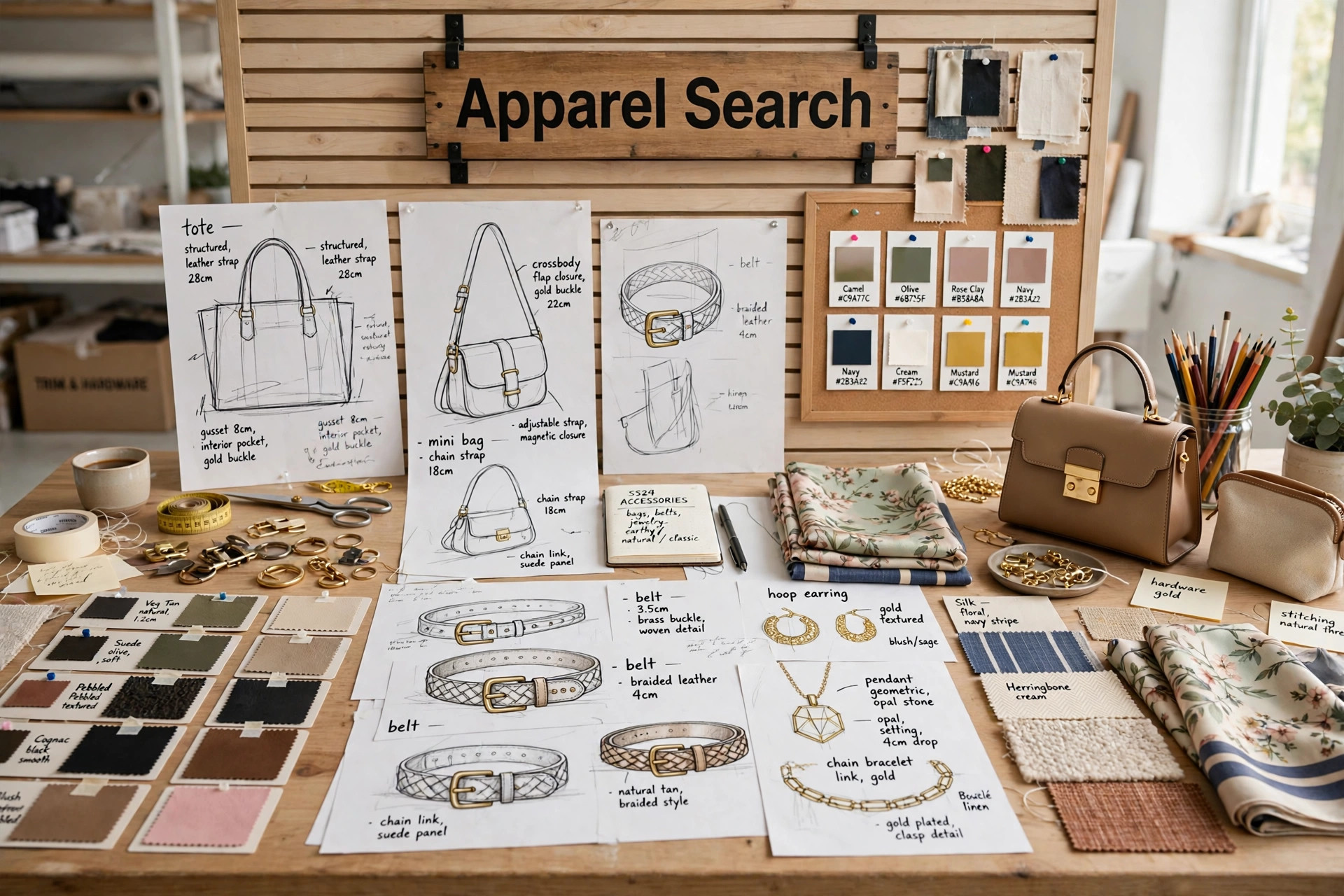
The season starts with direction: trend and market research, mood boards, colour and material stories, and a range plan agreed with merchandising colleagues — how many bag shapes, at which price levels, in which materials, to sit alongside the season's clothing. The designer then sketches, first freely to explore silhouettes and proportions, then precisely, producing the detailed drawings and specification sheets (tech packs) from which samples are made: dimensions, materials inside and out, hardware type and finish, stitching, edging, lining, pockets and closures, each decision drawn and written so a maker can follow it without guessing.
Sampling is where the design is proven. First prototypes come back wrong in instructive ways — a bag that slumps, a strap that twists, a clasp that will not bear weight — and the designer reviews each sample against the drawing, marks corrections, chooses between material options on cost and performance, and re-samples until the product matches the intention at the agreed price. Approved samples go forward to production with their specifications locked, and the designer stays involved through pre-production checks, because an accessory approved in one leather and made in a stiffer substitute is a different, worse product.
Materials, Hardware and Construction Knowledge
Accessories design is materials design. Leather grades and finishes, coated and woven fabrics, straw, felt, metal alloys, resin, wood and stone-effect components all behave differently in making and in use, and the designer must know how each cuts, stitches, moulds, polishes and ages. Hardware is a discipline of its own: zips, frames, locks, rings, chains and buckles carry load and movement, their plating must survive wear and contact, and a beautiful lock that fails in customers' hands ends a product line. Jewellery adds findings, settings and skin-contact considerations; scarves and hats add print scale, repeat and shaping.
That knowledge is what separates designing accessories from drawing them. A handbag silhouette has to stand, hang and open in three dimensions; a belt's hole spacing and keeper loop are functional decisions; a hat's brim needs the stiffness its shape promises. Experienced accessories designers handle samples constantly, visit makers and component suppliers, and build a personal library of materials and trims they can specify with confidence. They also design to a cost from the first sketch — material yield, component prices and making time are estimated early, so the range's price architecture survives contact with the factory.
Skills and Abilities the Role Requires
Drawing remains the core communication skill, by hand for speed of thought and in digital tools for specifications, print repeats and colourways that factories and colleagues can act on. Three-dimensional judgement matters as much as two-dimensional flair: the designer must picture how a flat pattern becomes a structured object, where strain falls, and how the product feels carried, worn and used. Attention to detail is not a cliché in this role — a mis-specified lining, zip length or edge paint colour is reproduced thousands of times once production starts.
Commercial awareness completes the skill set. Accessories designers work inside range plans and price targets set with buyers and merchandisers, present their collections persuasively at range reviews, take on board sales evidence about which shapes and materials customers rewarded, and redesign accordingly without losing the handwriting that makes the range recognisable. Organisation across many small products — each with its own materials, components and sample rounds — is the quiet skill underneath, usually supported by assistant designers and product developers on larger teams.
Qualifications, Training and Career Path
Most accessories designers train in fashion design, accessories design, jewellery design or a related craft discipline, building a portfolio that shows both creativity and makeable, specified product — employers read portfolios for exactly that combination. Some arrive through craft routes such as leatherwork, millinery or bench jewellery, where construction knowledge is learned at the bench, and strengthen their range and commercial skills in studio roles. Junior and assistant designer posts, and product-development roles working between designers and factories, are the usual first steps, with sampling and specification work teaching the production realities quickly.
Progression runs to accessories designer with ownership of a category — bags, or jewellery, or soft accessories — then to senior designer and design management across the whole accessories offer, or into head-of-design roles at specialist accessories brands where the category is the business. The skills also transfer into product development leadership and, for some designers, into founding their own labels, since accessories can be produced in smaller runs than clothing. It is a role where craft knowledge compounds: every material mastered and every construction solved widens what the designer can credibly create.
Common Questions
How is an accessories designer different from an accessories buyer?
The designer creates the product: sketching bags, belts, scarves, hats and jewellery, specifying materials and hardware, and approving samples factories can reproduce. The buyer selects finished products for a store's range and manages their budget and sales. Designers make; buyers choose and trade — and the two work closely at range reviews.
What materials knowledge does an accessories designer need?
Working knowledge of leathers and fabrics, metals and hardware — zips, locks, chains, buckles — and how each material cuts, stitches, moulds and wears, plus jewellery findings and print and shaping for scarves and hats. Hardware must be specified for strength and finish, because clasps and closures do structural work.
How do you become an accessories designer?
Usually through fashion, accessories or jewellery design training and a portfolio showing specified, makeable product, or through craft routes such as leatherwork or millinery. Assistant designer and product-development roles are the common first posts, where sampling and factory work teach production realities.