Art Director Job Description
Directing the visual voice of fashion brands — campaigns, photo shoots, catalogues and layouts
An art director decides how a fashion brand looks when it speaks. In the classic definition carried by the original Apparel Search page, the role formulates design concepts and presentation approaches for visual communications media — print, broadcasting and advertising — and directs the workers engaged in art work and layout design. In a fashion business that means campaigns, lookbooks, catalogues, e-commerce imagery, packaging, store graphics and social content all carrying one recognisable visual voice, season after season, whoever photographs or lays them out. This is a direction role, not a product-design role: nothing here is sewn, and everything here is seen. This page explains what art directors actually direct, and how the career is built.
More Design Job Descriptions by Letter:
What an Art Director Does
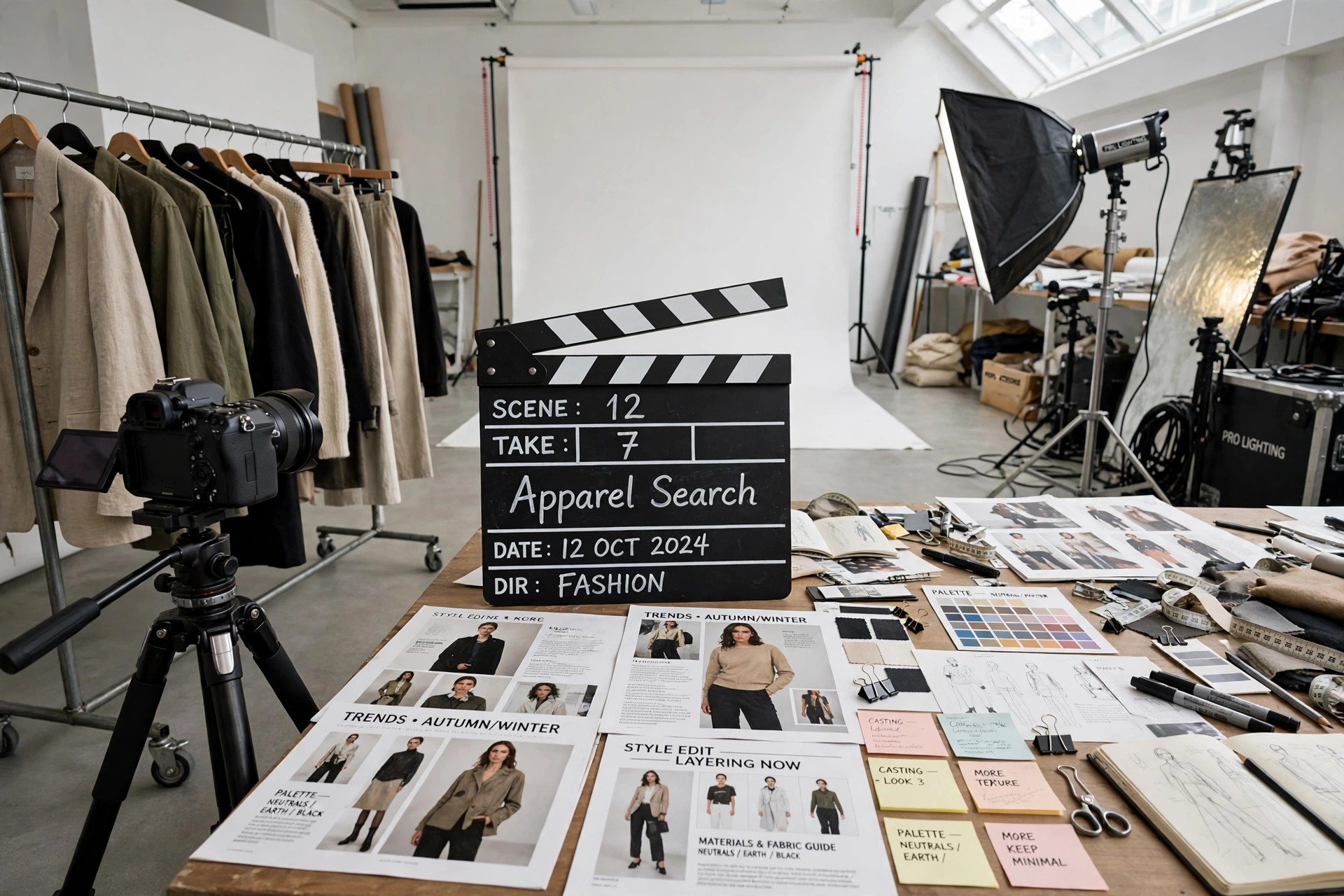
Each project starts with a concept. Working from the brand's strategy and the season's story, the art director develops the visual idea — the mood, casting direction, locations, lighting and photographic style, typography and layout system — and presents it as mood boards and mock layouts that stakeholders can judge before money is spent. Approved concepts become productions: the art director books and briefs photographers, stylists, models, hair and make-up artists and set designers, attends and directs the shoot itself, selects the frames that carry the idea, and supervises retouching and layout through to the finished page, screen or billboard.
Between campaigns, the art director guards consistency. Brands publish constantly — weekly e-commerce drops, social content, emails, in-store material — and the art director sets the templates, photographic standards and design rules that let many hands produce work that still looks like one brand. That includes directing graphic designers and layout artists day to day, reviewing their work, managing the department's budgets and schedules, and commissioning illustrators, filmmakers and other specialists when a project needs them. The output is judged commercially as well as aesthetically: imagery that does not sell the product has failed, however beautiful it is.
Shoots, Layouts and the Teams Being Directed
The photo shoot is the role's most visible arena, and its most managerial. A campaign shoot concentrates a large budget into a few days, so the art director plans it like a production: shot lists matched to every channel the images must serve, casting that fits the brand's customer, locations and sets prepared, and a running order that protects the hero images first. On the day, direction is continuous decision-making — reviewing frames as they are captured, adjusting styling, light and composition, and knowing when a planned shot should be abandoned for a better one the set has offered. Judgement under that time pressure is the skill junior creatives most visibly learn from senior art directors.
Layout and design direction is the quieter half. In print and digital alike, the art director sets the grid, type hierarchy and image treatment a publication or site will use, then directs designers executing within it — choosing crops, sequences and juxtapositions that make clothing look desirable and information effortless. Fashion experience matters specifically here: an art director who understands garments directs how they are lit, worn and cropped, briefs stylists in the language of fit and fabric, and spots the visual clichés of the category before they reach the page.
Skills and Abilities the Role Requires
Visual judgement is the entry requirement: a trained eye for photography, typography, colour and composition, usually evidenced by a portfolio of directed work. Conceptual thinking sits on top of it — the ability to turn a brief about a customer and a season into an image idea a whole team can execute — followed by communication skill of a particular kind: briefing specialists precisely enough that their talent serves the concept, and giving feedback that improves work without flattening it. Taste without that communication produces concepts that die in production.
Practical command of the production toolkit is expected: photography and lighting vocabulary, image editing and layout software at a reviewing and directing level, print and digital production processes, and the budgeting and scheduling of shoots and design work. Fashion art directors add category fluency — the photographers, stylists, agencies and publications of the industry, and how quickly visual trends in fashion rise and date. Because the role directs other creatives, credibility is itself a skill: teams follow direction from someone whose past work they respect.
Qualifications, Training and Career Path
Art directors typically come up through graphic design, photography or fashion communication: degrees in graphic design, visual communication, photography or fashion promotion are common foundations, followed by years as a graphic designer, layout artist or junior creative on magazines, studios, agencies or brand teams, building the portfolio of real, produced work that art direction appointments are actually decided on. Fashion-specific routes run through magazine art departments and fashion studios, where the category's imagery conventions are learned on live deadlines.
From art director, the path leads to senior art director and creative director, where responsibility widens from projects to the brand's whole visual identity across every channel, and to equivalent roles in agencies serving fashion clients. Some art directors specialise — campaign and advertising work, e-commerce imagery at scale, or editorial and publishing — while others move into brand direction, where visual identity joins product and retail under one hand. It is among the most portfolio-driven careers in fashion: advancement follows the work the industry has seen, credited to the person who directed it.
Common Questions
How is an art director different from a designer?
Designers create the work itself — garments, accessories, graphics or layouts. An art director creates the concept those works follow and directs the people making them: setting the visual idea for a campaign or publication, directing its photo shoots, and approving the finished imagery and layouts for consistency with the brand.
What does a fashion art director direct on a photo shoot?
The whole visual outcome: casting direction, styling and set briefs, lighting and photographic style, the shot list matched to every channel the images must serve, frame selection as the shoot proceeds, and retouching and layout afterwards. The aim is imagery that carries one clear idea and sells the product.
How do you become an art director in fashion?
Through graphic design, photography or fashion communication training, followed by years as a designer or layout artist in magazines, studios, agencies or brand teams. Appointments are decided mainly on a portfolio of produced, directed work, so assisting and junior creative roles on real shoots and publications are the proving ground.