Bridge Fashion Designer Job Description
Designing the bridge lines — designer fashion translated to prices between contemporary and the designer floor
A bridge fashion designer designs for the bridge lines: the collections department stores built to bridge the gap between high-priced designer clothing and the cheaper contemporary ranges beside them. Bridge lines carry a designer's name and codes at prices a broader customer can reach, achieved not by dressing down the design but by engineering it — simpler constructions, carefully chosen fabrics, disciplined detailing — until designer character survives at a bridge price. The role is a specialist balancing act between two floors of the store, and this page explains what bridge designers design, how the price zone shapes their decisions, and where the career leads.
More Design Job Descriptions by Letter:
What a Bridge Fashion Designer Does
The bridge designer develops seasonal collections for the bridge department's customer: established, quality-conscious, wanting the authority of a designer name without designer-floor prices. The range typically spans tailored separates, dresses, knitwear and outerwear with a polished, wearable handwriting rather than runway extremity. Working from the parent brand's direction where the bridge line carries a designer name — or from the store's own bridge label brief — the designer sketches the collection, selects fabrics and trims, builds tech packs, and follows styles through fittings and samples exactly as a designer-floor colleague would, but against a far tighter cost architecture.
That cost architecture is the desk's defining constraint, and it is designed to, not discovered later. Every style carries a target retail price, from which fabric cost per garment, making cost and trim allowances are derived before sketching hardens into sampling. The bridge designer therefore spends unusual time on value engineering with pattern cutters and factories: achieving the designer's shoulder line with a simpler construction, choosing the fabric quality the customer will actually feel, placing the expensive detail where it shows and simplifying where it does not. A bridge collection succeeds when the customer perceives the saving nowhere in the wearing of it.
The Bridge Zone: Between Designer and Contemporary
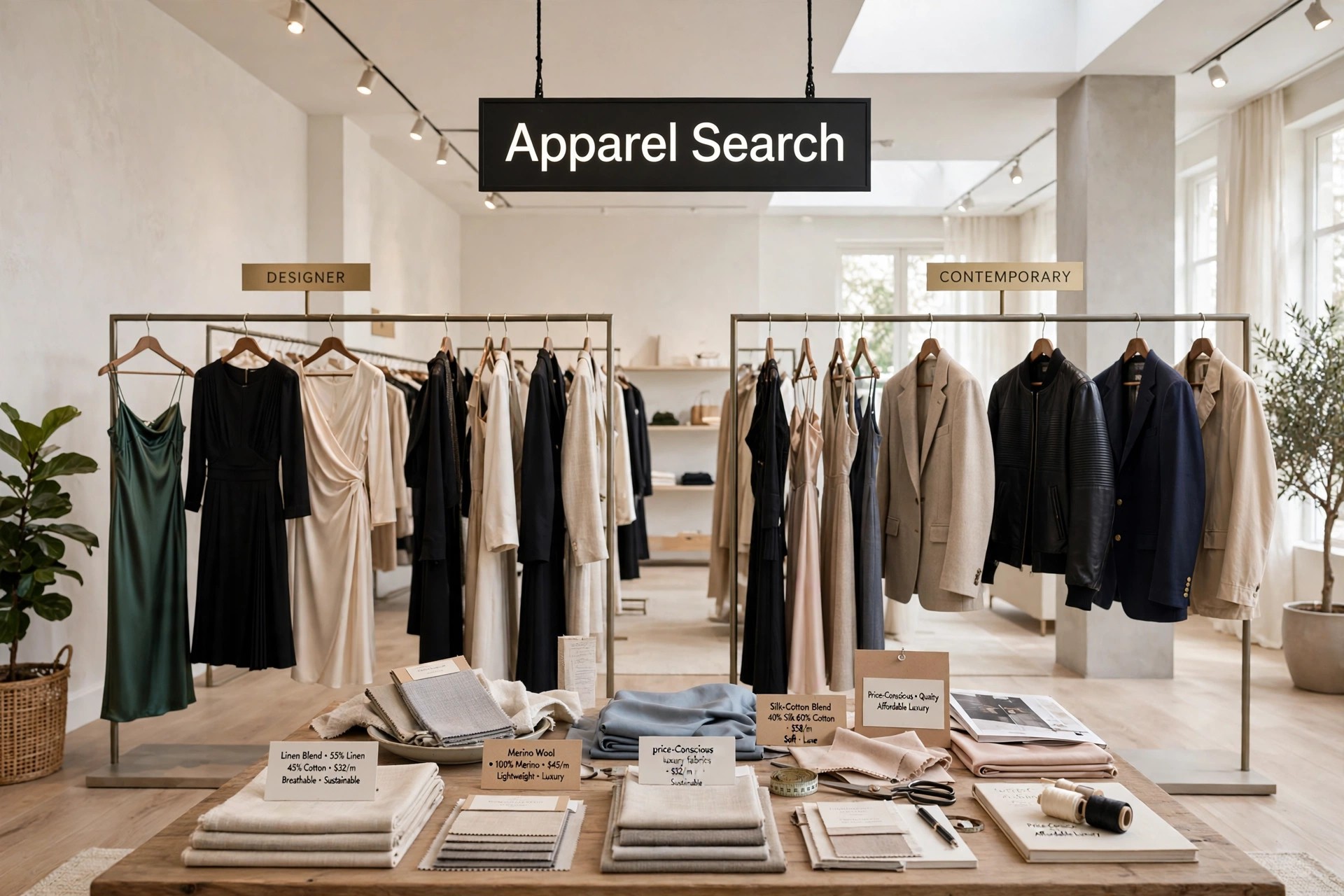
Price zones are fashion's geography, and the bridge occupies surveyed ground. Above it, designer collections sell originality, luxury fabrics and fashion authority at the highest prices; below it, contemporary lines sell trend and youth at accessible prices with lighter construction. Bridge customers sit deliberately between: often more mature than the contemporary shopper, dressing for work and occasion, loyal to fit and quality cues, and reading a designer name as a promise of both. The bridge designer must know both neighbouring floors intimately — what the designer line is showing, what contemporary is doing faster and cheaper — to keep the bridge offer clearly worth its middle price.
In practice that means translating rather than copying. A designer-floor silhouette is re-cut in the bridge line's proven fit blocks; a luxury fabric story becomes a carefully sourced equivalent with the same hand and drape at a workable price; runway detailing is edited to the one or two gestures that carry the idea. Bridge lines attached to designer names work under licence or diffusion arrangements, so the designer also protects the parent brand: bridge product must never look like a cheap version of the main line, because that damages both floors at once. The Apparel Search bridge collection definition, linked below, sets out the category's place in the market in full.
Skills and Abilities the Role Requires
Cost-conscious design intelligence is the signature skill: an instinct for where money shows in a garment and where it hides, exercised at sketch stage. Alongside it, fit and fabric judgement for the bridge customer — who notices quality failures precisely because she paid for quality — must be exact; bridge garments are compared in the fitting room against years of the customer's own wardrobe. Pattern and construction knowledge runs deeper here than on many design desks, because the saving is usually found in construction, and a designer who cannot discuss make with a pattern cutter cannot find it.
Commercial and presentational skills complete the role. Bridge collections are sold to department-store buyers who know the zone's economics cold, so the designer presents ranges in commercial language — price ladder, fabric story, fit continuity — as confidently as in fashion language. Knowledge of the store groups, their bridge departments and their customer profiles is part of the expertise employers pay for, and it is why bridge designers are often hired from within the zone rather than from the designer floor above it.
Qualifications, Training and Career Path
Bridge designers arrive through the normal design ladder — fashion design training, assistant and associate posts — but employers weight commercial range experience, costing fluency and better-womenswear category knowledge over runway credentials. Tailoring, dresses and separates experience transfers particularly well, as does time in better or moderate womenswear where quality-at-a-price is already the discipline. A portfolio for bridge roles should show developed, priced, production-realistic collections, with evidence of translating strong design ideas into makeable garments at target costs.
From the bridge desk, designers move to senior and design-director roles within bridge and better collections, across to designer diffusion lines, or upward to designer-floor teams where the same translation skills run in reverse. The zone also prepares designers unusually well for own-label leadership at department stores, where every range is a balancing act between identity and price. It is a connoisseur's corner of the industry: less visible than the designer floor, and unforgiving of anyone who cannot count.
Common Questions
What is a bridge line in fashion?
A bridge line is a collection priced between designer clothing and contemporary ranges, created to bridge that gap in department stores. It offers designer names, codes and quality cues at more accessible prices, achieved through engineered construction and disciplined fabric and trim choices — see the bridge collection definition linked from this page.
How does a bridge designer keep quality at a lower price?
By designing to a cost architecture from the first sketch: deriving fabric, making and trim allowances from the target retail price, simplifying construction where the customer cannot feel it, and spending the budget on the fit, fabric hand and visible details she can feel.
What experience do bridge fashion designer roles require?
The standard design ladder plus commercial range experience: costing fluency, strong pattern and construction knowledge, and category experience in better womenswear such as tailoring, dresses and separates. Employers value knowledge of the department-store bridge zone and its customers highly.