General Merchandise Manager (GMM) Job Description
Leading all of a retailer's merchandising — every division, the whole assortment, and the merchants who build it
A general merchandise manager — GMM — is the senior merchant of a clothing retailer: the executive who leads the entire merchandising organisation and answers for the assortment as a whole. Every division's buyers work, through their divisional merchandise managers, up to the GMM, who sets the merchandise strategy for the business — what the company will stand for in product, how its money is divided between divisions, and what sales, margin and stock results the whole assortment must deliver. It is the top of the buying ladder, and the GMM's judgement about product, exercised across an entire company, is one of the strongest single influences on whether that company trades well.
More Miscellaneous Job Descriptions by Letter:
What a GMM Is Responsible For
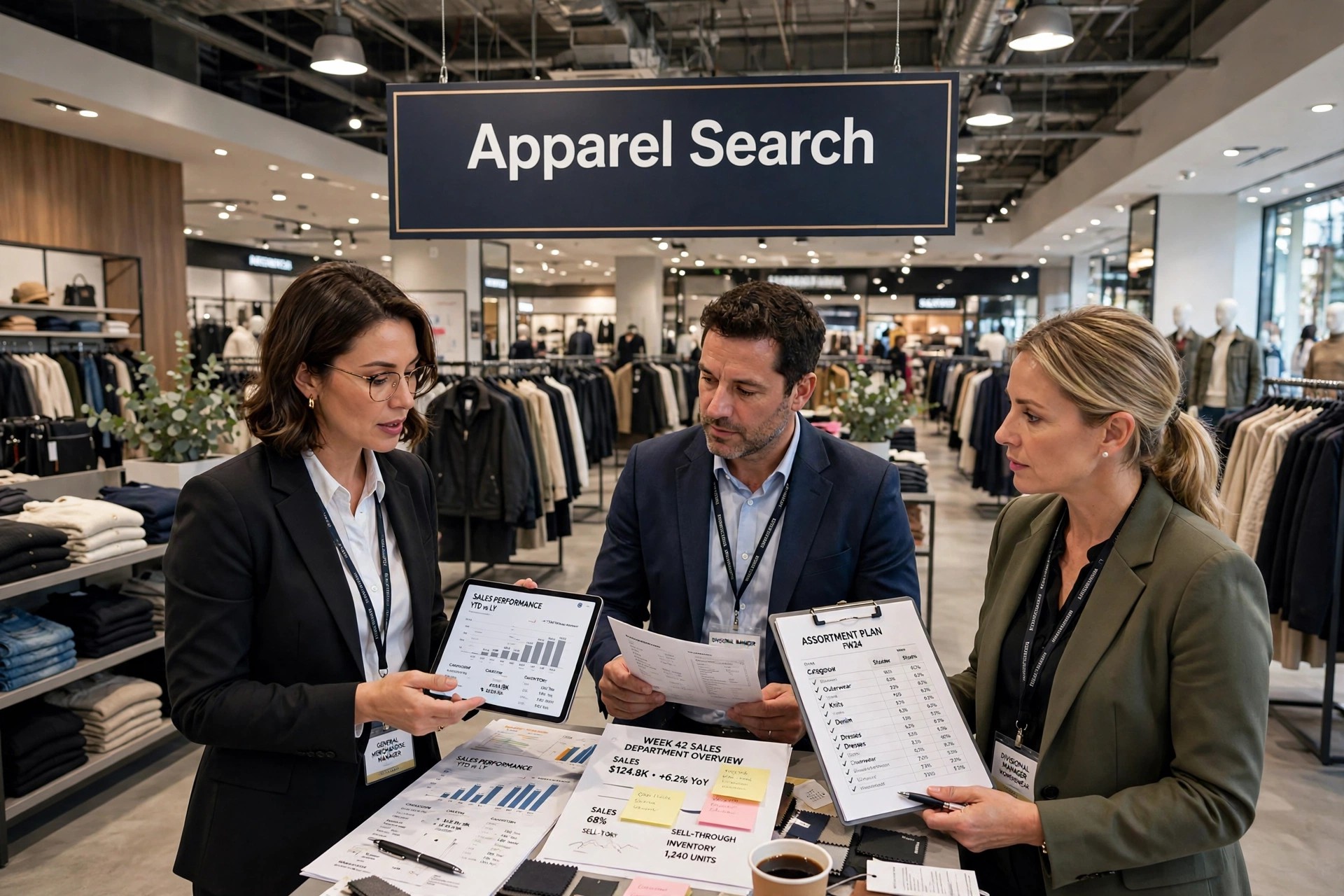
The GMM owns total merchandise performance. Divisional plans — each DMM's sales, margin, markdown and stock commitments — are reviewed, challenged and consolidated by the GMM into one assortment plan that fits the company's profit targets and open-to-buy, and the GMM arbitrates when divisions compete for the same investment: a surging category against a declining one, a new brand against an established department's space. Seasonal strategy originates here too — the GMM decides the company's posture on the major trends, price architecture and own-brand development that every division then interprets.
Vendor strategy at the highest level belongs to the GMM. The retailer's most consequential supplier relationships — the major brands, the largest manufacturers, group-level terms and exclusives — are negotiated or approved by the GMM personally, because their conditions shape several divisions at once and bind the company beyond a single season. The GMM also represents merchandising in the executive team, presenting the assortment's results and plans to the chief executive and board, and carrying merchandising's voice into decisions about stores, marketing spend and expansion that will later land on the buyers' tables.
How the GMM Differs From the DMM
The divisional merchandise manager leads the buyers of one division and creates continuity across its departments; the general merchandise manager leads the DMMs themselves and creates continuity across the whole company. A DMM's customer is the shopper of one floor or category; the GMM's customer is the shopper of the entire store or site, who should feel one coherent offer — consistent quality, price logic and taste — whether they buy a coat, a dress or a pair of shoes. Problems that cross divisions, and opportunities no single division can fund alone, exist precisely at the GMM's level.
That altitude changes the work's texture. DMMs are inside range reviews and market appointments constantly; the GMM attends selectively — the largest commitments, the newest categories, the divisions in trouble — and spends proportionally more time on strategy, succession and the executive table. The GMM's product judgements are fewer and larger: approving a new private-label programme, exiting a category, backing an unproven designer across the whole business. Each such call commits other people's detailed work for seasons ahead, which is why the role is filled only by merchants whose divisional records already proved their judgement at smaller scale.
Skills and Abilities the Role Requires
Merchandise judgement at company breadth is the defining skill: the ability to read any division's range and results, sense where the assortment as a whole is over- or under-committed, and connect fashion direction to financial consequence faster than the market corrects you. Financial mastery matches it — margin architecture, stock investment, markdown strategy and the return on space and capital — because the GMM's arguments in the executive team are won with numbers that survive the finance director's scrutiny.
Leadership completes the profile at its most demanding level. The GMM develops DMMs who are themselves senior merchants, sets the standard for how the whole buying organisation prepares, negotiates and follows through, and builds the succession bench for the company's merchant leadership. Communication runs upward to boards, outward to the industry's most senior suppliers, and downward in a voice several hundred merchants take their standard from. In a business where confidence in product is contagious, the GMM's visible conviction — and visible honesty about mistakes — sets the trading culture.
Qualifications, Training and Career Path
GMMs are the end of a full merchandising career: assistant buyer, associate buyer, buyer, divisional merchandise manager, and then — after divisional results that demonstrably grew sales and margin — appointment to lead the whole. Most have bought in more than one division and survived more than one difficult season in charge; there is no examination or separate qualification, and none could substitute for that record. Retail operations exposure is commonly valued alongside buying, because the assortment the GMM approves is sold through stores and sites whose realities the role must understand.
Beyond the GMM desk, the recognised routes are chief merchant or chief merchandising officer titles in larger groups, general management and chief executive posts — the GMM, like the chief operating officer on the operations side, is one of the two classic proving grounds for running a retailer — and senior supply-side or advisory roles. For buyers earlier in the ladder, the GMM's career carries the encouraging arithmetic of the profession: every step is a promotion earned on trading results, and the top merchant job in the company is held by someone who once started by assisting one.
Common Questions
What does GMM stand for and what does a GMM do?
GMM stands for general merchandise manager — the senior merchant who leads a retailer's entire merchandising organisation, setting assortment strategy, dividing investment between divisions, directing the divisional merchandise managers, and answering for total sales, margin and stock.
How is a GMM different from a DMM?
A DMM leads the buyers of one division. The GMM leads the DMMs and owns the assortment as a whole company offer — cross-division strategy, the largest vendor relationships, and the consolidated merchandise plan.
How do you become a general merchandise manager?
By completing the buying ladder — buyer, then divisional merchandise manager with a strong record across divisions and seasons — and being appointed on that evidence. There is no separate qualification; the trading record is the credential.