Makeup Artist Job Description
Product and artistry at shoots, shows and counters — makeup that serves the garment, the photograph and the customer
A makeup artist in fashion applies cosmetics to the people who present clothing — models at photo shoots and runway shows, presenters and performers, and customers at retail beauty counters. The work is always in service of something else: a photograph that must sell a garment, a collection that must read as one idea on a runway, or a customer who must leave a counter able to repeat the look herself. Makeup artists interpret a brief from a photographer, designer, stylist or brand, choose products and techniques to match it, and deliver the result on skin, under lights, usually against a clock.
More Miscellaneous Job Descriptions by Letter:
What a Makeup Artist Does on Shoots and Shows
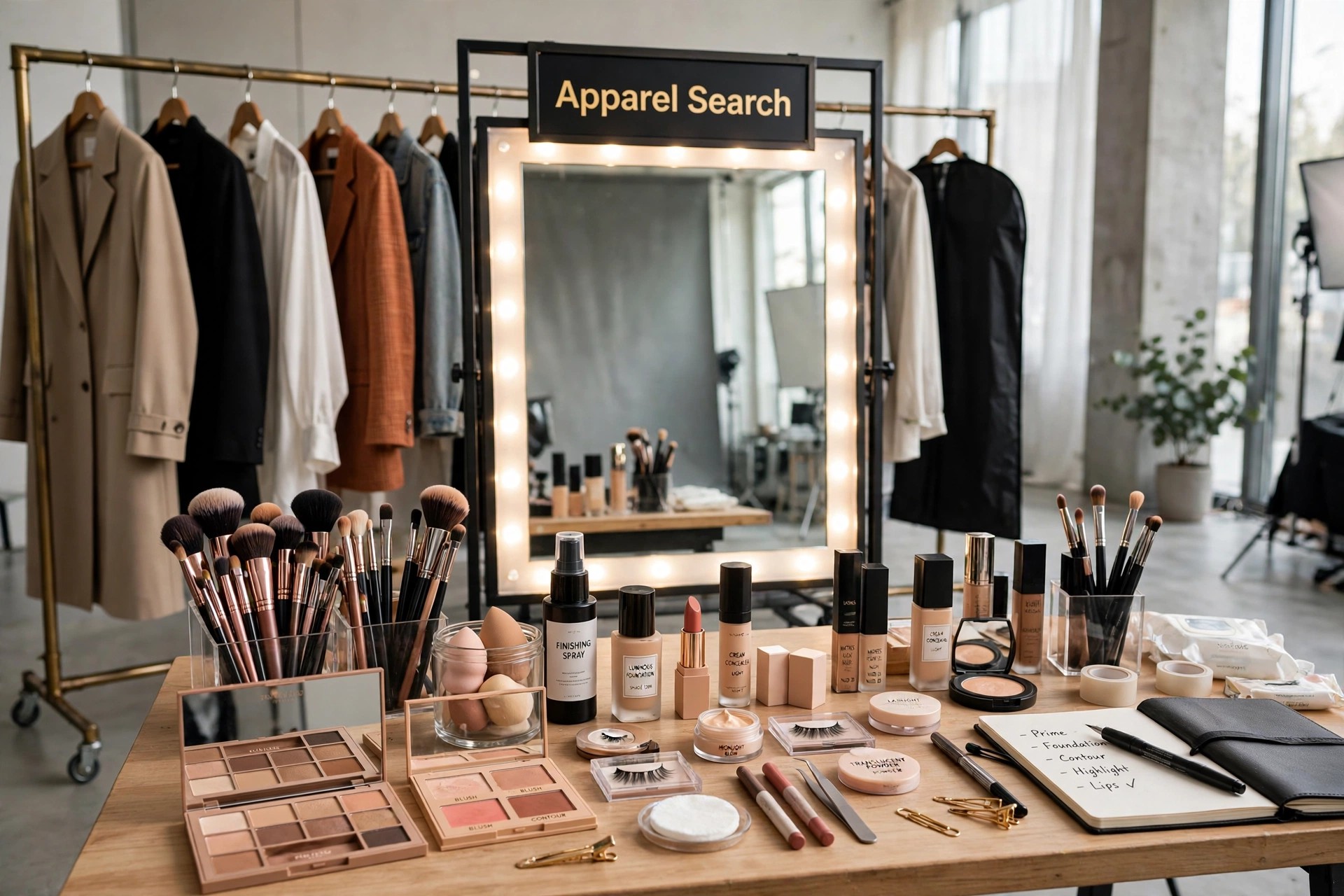
Photo shoots are the classic fashion setting. Before the shoot, the artist studies the creative brief — mood boards, the garments, the lighting plan — and prepares a face chart or product plan. On the day, makeup is applied in the studio's work area before the model steps on set, then monitored through the shoot: shine controlled under lights, edges checked on the monitor at photographic magnification, and touch-ups or full look changes made between set-ups as the clothing changes. E-commerce shoots add volume and consistency — the same clean, repeatable look across many models and many garments in a day.
Runway work is makeup at speed. A designer's show has one look, or a small family of looks, applied to a full cast of models in the hours before the show, by a key artist and a team working to a tested face chart. Backstage is crowded, hot and timed to the minute; the artist's station, kit order and brush discipline decide whether the last model is finished as the first one walks. Touch-ups continue in the line-up as models change outfits between exits.
Retail Counters and Client Work
The other major work scene is the beauty counter and the private client appointment. Counter artists demonstrate and sell cosmetics: analysing a customer's skin type, tone and features, applying a look that suits her, teaching her the technique and products to reproduce it, and keeping testers hygienic and the counter's standards exact. Bridal, event and private client work follows the same pattern with higher stakes — a trial session first, then the look delivered on a day when it must last and photograph well.
Across all settings the artist manages the unglamorous foundations: a kit kept clean, stocked and in date; brushes washed and tools sanitised between faces; skin prepared properly before product; and allergies and sensitivities checked before application. Hygiene is not administration in this trade — it is the professional standard clients and models judge first, and the one that protects skin, eyes and reputation.
Skills and Abilities the Role Requires
Technique is the visible skill: colour theory applied to real skin tones, foundation matching and blending, corrective and contour work, eye and brow shaping, and looks from near-invisible natural makeup to full editorial and creative work. Product knowledge runs beside it — formulas, finishes, wear under heat and light, and which products survive a runway's quick changes or a photograph's scrutiny. A fashion artist also reads a brief: translating a designer's references and a stylist's garments into a face that belongs with them.
The working skills are speed, steadiness and collaboration. Shoots and shows are team productions; the artist takes direction from the key artist, photographer or designer, communicates timing honestly, and stays calm when the schedule compresses. For client and counter work, consultation skill matters as much as application — listening to what a customer actually wants, and being honest about what makeup can and cannot do for her.
Qualifications, Training and Career Path
Training routes include cosmetology and makeup programmes at beauty and fashion schools, brand-run counter training, and assisting established artists — the route by which many fashion artists learn set and show discipline. Licensing requirements for makeup work vary by place and by setting, with cosmetology licences required for some salon and counter services; artists check the rules where they work. A portfolio of photographed work is the industry's real credential, built through test shoots with photographers and models.
Careers progress by reputation and specialisation: from assistant to working artist, to key artist leading show and shoot teams, with representation by an agency for established names. Others build counter and brand careers — senior artist, brand trainer, education roles — or a private client and bridal practice. Many combine scenes: shows and shoots in season, clients and counters between them, teaching the kit and craft they have built.
Common Questions
What does a makeup artist do in the fashion industry?
They apply makeup to models and clients for photo shoots, runway shows, editorial and e-commerce work, and at retail beauty counters — interpreting the creative brief, choosing products, applying and maintaining the look, and keeping kit and hygiene standards exact.
Do makeup artists need a licence?
It depends on the place and the setting. Some salon and counter services require a cosmetology licence, while freelance shoot and show work is usually judged on training and portfolio. Artists should check the rules that apply where they work.
How do makeup artists build a career in fashion?
Through training, assisting established artists on shoots and shows, and building a portfolio from test shoots. Reputation leads to key artist roles, agency representation, brand education work, or a private client practice.