Import Production Manager Job Description
Bringing garments made overseas safely home — orders, factories, inspections, freight and customs, managed end to end
An import production manager is the person inside a fashion brand or retailer who is responsible for clothing made in other countries, from the day an order is placed with an overseas factory until the finished garments clear customs and reach the warehouse. Where a global sourcing team decides where production should be placed, and a factory's own export team manages the making from the other side, the import production manager owns the order itself: its specification, its timetable, its quality, its documents and its journey. A late vessel, a missing certificate or a failed inspection lands on this desk first.
More Production Job Descriptions by Letter:
Placing Orders and Running the Critical Path
The work begins when buying and design hand over a confirmed style. The import production manager issues the purchase order and the technical package to the chosen factory — sizes, materials, construction, labelling, packing and testing requirements — confirms the price and delivery date in writing, and builds the critical path: the dated chain of approvals and events (lab dips, strike-offs, pre-production samples, fabric arrival, cutting, sewing, inspection, booking, sailing) that must each happen on time if the goods are to arrive on time. That path, reviewed week by week, is the manager's main instrument.
Daily work is communication across time zones: chasing approvals out of the factory and samples out of the head office with equal energy, because import production stalls at both ends. When a mill delivers fabric late or a sample comes back wrong, the manager re-plans the path — compressing a later stage, splitting the order, moving part of it to air freight — and tells buying and planning early what the new delivery reality is. Import production managers are judged less on whether problems occur, which they always do, than on how early the business hears about them.
Quality, Compliance and the Factory Relationship
Imported garments must meet the importing company's standards and the destination country's law, and the import production manager is accountable for both. The role arranges and reviews inspections — inline checks during sewing and final random inspections before shipment — agrees corrective action when faults appear, and makes the hard call on whether goods may ship, ship with corrections, or not ship at all. Testing requirements for fibre content, colourfastness, flammability and restricted substances are specified in the order and verified before the goods leave the factory, not after they land.
Compliance paperwork is woven through the role: certificates of origin, fibre and care labelling that matches the destination market's rules, and the factory audit status — social and technical — that the brand requires before an order may be placed. Good import managers build durable factory relationships inside that discipline. A factory that trusts the manager warns about problems while they are still fixable; one that fears the manager hides them until the inspection fails, when every remedy costs more.
Shipping, Customs and Delivery
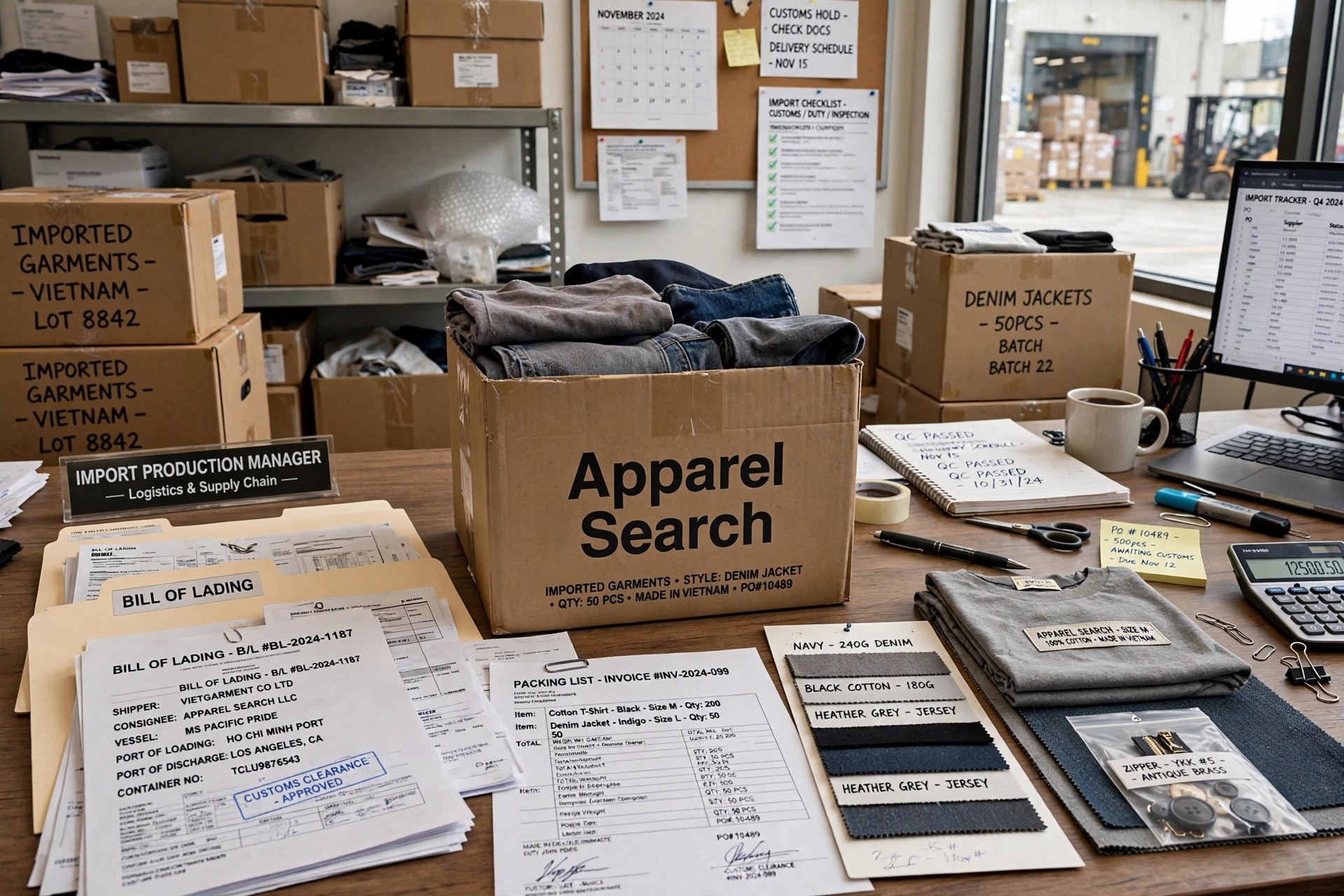
The final third of the job is logistics. The import production manager books freight with the company's forwarders, chooses sea or air shipment by shipment against the delivery plan and the margin, and assembles the document set every import needs: commercial invoice, packing list, bill of lading and origin documents, accurate down to quantities and values, because customs examines paperwork as closely as goods. Errors here do not merely delay a container; they can hold an entire season's bestseller at the port while storage charges accumulate.
On arrival, the manager tracks clearance and warehouse delivery, reconciles what landed against what was ordered, and closes the order with claims where quantity, quality or timing failed. The season review that follows — which factories delivered, which documents failed, which routes were slow — feeds the next season's placements. Few roles in fashion touch product, money, law and geography at once; import production management is one of them, and its practitioners develop an unusually complete view of how clothing actually reaches a shop.
Skills, Qualifications and Career Path
The role requires production literacy first: garment construction, fabric behaviour and factory processes understood well enough to argue a specification with a factory's own technicians. On top sit commercial and logistical skills — costing and landed-cost awareness, Incoterms and customs basics, inspection methods and testing standards — and relentless organisational ability, because one manager may run hundreds of styles across several countries, each at a different point on its critical path. Clear, patient written communication matters more than in almost any other production role: most of it happens by message, across languages, with people the manager may meet once a year.
Import production managers typically arrive from production coordination, merchandising, buying support or factory-side export merchandising, often with textiles, business or supply-chain education behind them; employers screen for order-management experience and evidence of problems solved across borders. Progression leads to senior import production manager and head of production or supply-chain roles overseeing whole import programmes, or toward sourcing leadership, where the same factory and costing knowledge decides where future orders are placed.
Common Questions
What does an import production manager do?
They own garment orders made overseas from placement to warehouse delivery: issuing orders and technical packages, running the critical path of approvals and production stages, arranging quality inspections and compliance documents, and booking freight and customs clearance.
How is an import production manager different from a sourcing manager?
Sourcing decides where production is placed — countries, factories, prices. The import production manager takes the placed order and delivers it: specification, timetable, quality, documents and shipment. Sourcing chooses the factory; import production makes the factory's order arrive.
What skills matter most in import production?
Garment and fabric knowledge, critical-path organisation across many styles at once, costing and shipping literacy — Incoterms, freight and customs documents — and clear written communication across time zones and languages.
More to Explore
Production Resources
References & Further Reading
More Job Description Categories
- Buying Job Descriptions
- Design Job Descriptions
- Marketing & PR Job Descriptions
- Miscellaneous Job Descriptions
- Planning & Allocation Job Descriptions
- Production & Sourcing Job Descriptions (current)
- Sales & Selling Job Descriptions
- Transportation & Warehouse Job Descriptions