Manufacturing Manager (Clothing) Job Description
Planning, staffing and delivering garment production — the manager who runs the clothing factory floor
A manufacturing manager in a clothing factory is the person responsible for turning orders into finished garments, on time and at the agreed cost and quality. Where a production manager may follow one brand or one order book, the manufacturing manager runs the physical plant itself: the cutting room, the sewing lines, the finishing and packing departments, the mechanics and supervisors who keep them moving, and the daily decisions that decide whether the factory makes money on the work passing through it.
More Production Job Descriptions by Letter:
Planning Production and Running the Floor
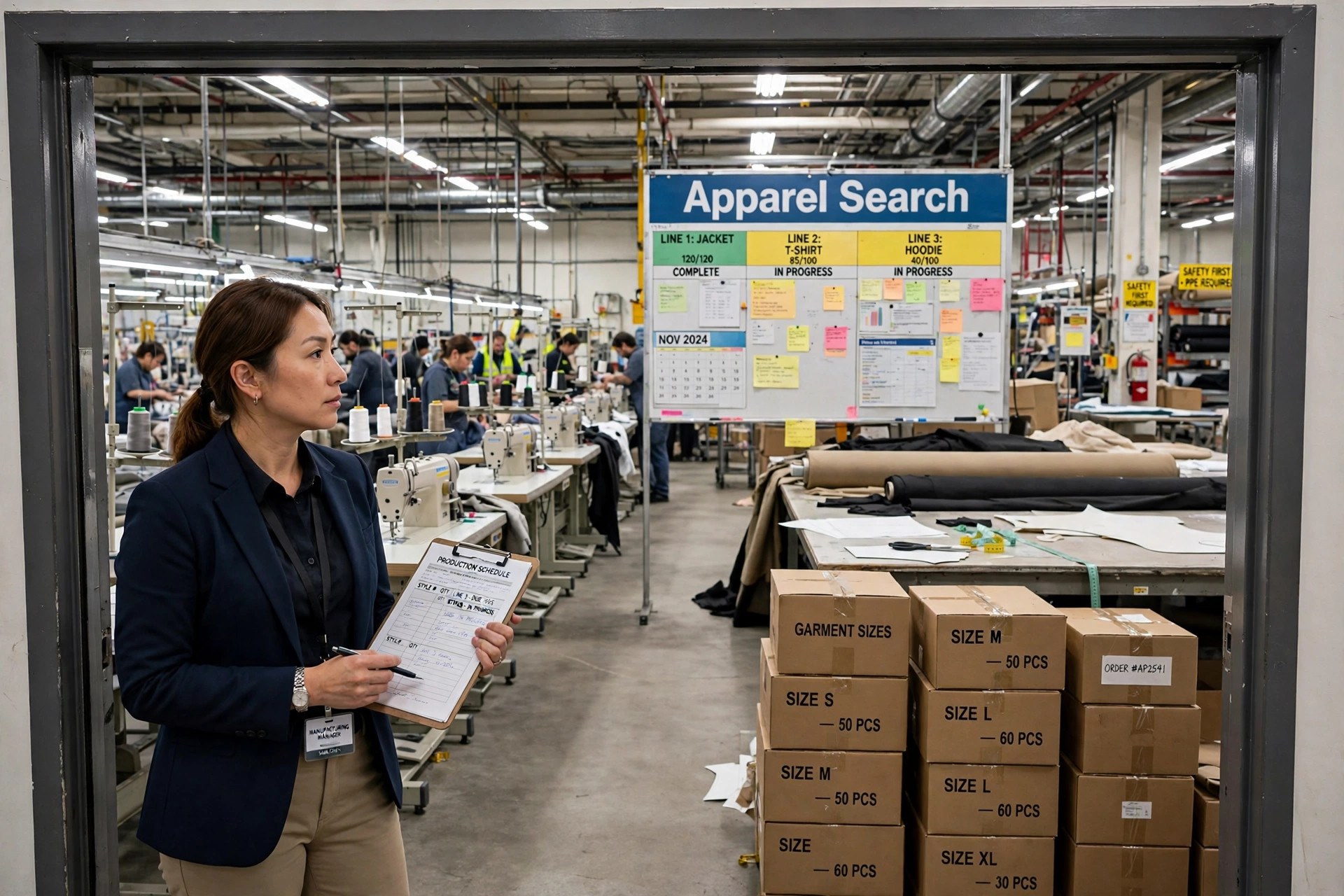
The working week starts with the order book. The manager breaks each order into its operations and quantities, works out how many lines and how many machinists each style needs, and builds a production plan that loads the factory evenly: cutting must start early enough to feed sewing, sewing must finish early enough for finishing, inspection and packing to meet the ex-factory date. When orders compete for the same lines, the manager sequences them by delivery date, fabric arrival and changeover cost, because every style change on a line costs setting time and early-piece inefficiency.
On the floor, the manager walks the departments daily, reads the hourly and daily output figures, and acts on the gaps. A line falling behind is diagnosed, not just pushed: the cause may be a bottleneck operation that needs a second machine or a floater, a bundle shortage from cutting, a mechanic’s repair queue, or a quality problem sending work back for repair. The manager balances lines, moves people between operations, authorises overtime when the dates require it, and escalates fabric or trim shortages before they idle a room full of machinists.
Quality, Cost and Delivery Control
Three numbers define the job: quality, cost and delivery. On quality, the manager owns the factory’s inspection system — inline checks during sewing, end-of-line inspection, final audit before packing — and the discipline that faults are found where they are made, not where garments are packed. Recurring defects are traced to their operation, machine or method and fixed at source, because repair work is the most expensive sewing a factory does. Buyers’ quality standards, measurement tolerances and packing requirements are translated into instructions every supervisor can enforce.
On cost, the manager watches efficiency and minutes. Garments are costed in standard minutes of work, and the manager compares the minutes a line actually takes against the minutes allowed, investigates the difference, and protects the margin through better methods, work aids, attachments and training rather than speed alone. Fabric consumption, thread and trim usage, rework rates and overtime hours are all tracked against the order costing. Delivery performance is reported honestly to merchandisers and buyers: a manager who flags a slipping date early, with a recovery plan, keeps orders that a silent factory loses.
People, Machinery, Safety and Compliance
A clothing factory is a people system before it is a machine system. The manufacturing manager hires and develops supervisors, line chiefs, mechanics and quality staff, sets the training that turns new machinists into reliable operators, and handles the floor’s difficult conversations — absence, discipline, piece-rate disputes and safety refusals. The tone the manager sets on fairness and safety decides whether skilled staff stay, and experienced sewing labour is the scarcest resource most factories have.
The manager is also accountable for the plant’s machinery and its legal duties: preventive maintenance schedules for sewing machines, cutting equipment, boilers and pressing plant; guarding, needle safety and electrical checks; fire exits, evacuation drills and first aid; and the social and safety compliance audits that brands require of their factories. Audit findings are closed out with real changes, documented and verified, and production is planned so that compliance limits on working hours are respected even in peak season.
Skills, Qualifications and Career Path
The role demands a rare combination: deep practical knowledge of garment construction and factory methods, the numeracy to plan capacity and read costings, and the authority to lead several hundred people through a pressured day. Manufacturing managers are almost always grown inside the industry — rising from machinist, supervisor or production roles, or entering as industrial engineers and production graduates who then earn floor credibility. Formal study in apparel manufacturing, industrial engineering, textiles or business strengthens a candidacy and speeds promotion, but no qualification substitutes for having run lines and met dates.
Work is factory-based and early-starting, with peak-season pressure when order books collide, and it is usually salaried with responsibility for the whole plant’s results. Career paths run upward to plant manager, general manager and operations or manufacturing director roles covering several factories, sideways into technical, quality or compliance leadership, or outward into consultancy and sourcing offices that value a manager who has genuinely run production. Some experienced managers go on to set up factories of their own, taking the full commercial risk their employers once carried.
Common Questions
What is the difference between a manufacturing manager and a production manager in clothing?
A production manager typically follows orders — planning, materials and progress for a brand, customer or order book. A manufacturing manager runs the factory itself: departments, people, machinery, quality systems and cost, delivering every order the plant has accepted. In small factories one person does both jobs.
What qualifications do clothing manufacturing managers need?
Most rise through the factory — machinist, supervisor, production roles — or enter with apparel manufacturing, industrial engineering or textiles qualifications plus floor experience. Proven line management, costing and quality results matter more than certificates alone.
Which numbers does a manufacturing manager watch?
Line efficiency against standard minutes, daily output against plan, defect and repair rates, fabric consumption against the marker allowance, overtime hours, and delivery dates met. Together they show whether the factory is making garments profitably and on time.
More to Explore
Manufacturing Resources
References & Further Reading
More Job Description Categories
- Buying Job Descriptions
- Design Job Descriptions
- Marketing & PR Job Descriptions
- Miscellaneous Job Descriptions
- Planning & Allocation Job Descriptions
- Production & Sourcing Job Descriptions (current)
- Sales & Selling Job Descriptions
- Transportation & Warehouse Job Descriptions