Presser / Press Operator Job Description
Steam, heat and a practised hand — pressing garments during making and at final finish so they leave the factory looking right
Pressing is the finishing touch that decides how a garment looks when a customer first lifts it from the rail — and, done during making, how well it was able to be sewn at all. The presser, also listed as press operator, works with steam irons, form presses and steam cabinets to shape garments, set creases, flatten seams and remove the creases of manufacture, handling every fabric at the heat, steam and pressure it can safely take. It is skilled handwork at production speed, and poor pressing can undo a factory full of good sewing in seconds.
More Production Job Descriptions by Letter:
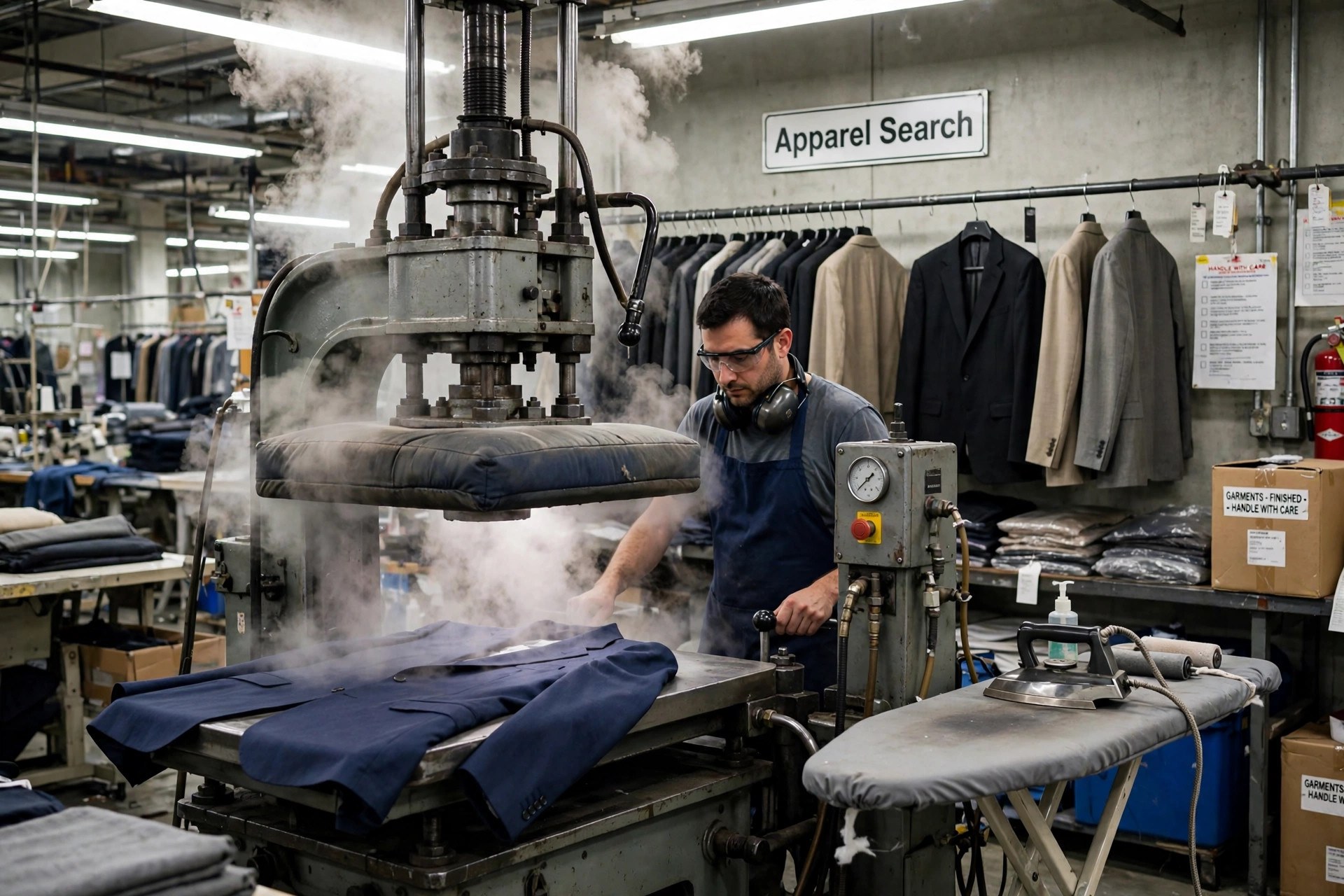
Underpressing and Final Pressing
Pressing in a garment factory happens in two acts. Underpressing — also called Hoffman or in-process pressing — takes place during sewing: seams are pressed open or to one side as the garment is built, darts are shaped, collars, cuffs and fronts are formed with the help of interlinings and fusing presses, so each next operation sits flat and true. A garment that is underpressed well sews faster, measures more accurately and fits as the pattern intended; machinists depend on the presser’s work as surely as on their own.
Final pressing is the garment’s preparation for the world. After inspection and any repairs, the presser passes over the complete garment on a buck or form press, or by hand iron on a vacuum table: setting trouser creases and jacket fronts, shaping shoulders and sleeves, steaming out handling creases, and giving knitwear and delicate pieces a gentle steam-and-shape finish rather than pressure. The finished garment is checked as it is pressed — the presser is often the last skilled eye before folding, bagging and packing — and anything not right goes back, not forward.
Equipment and Fabric Judgement
The presser’s tools range from the boiler-fed hand iron and vacuum pressing table to shaped form presses for jackets and trousers, steam cabinets and tunnels that relax garments on hangers, and fusing presses that bond interlinings under controlled heat and pressure. Each machine has its settings, and the presser’s craft is matching heat, steam, pressure and time to the cloth in hand. Wool shapes beautifully under steam and pressure; synthetics glaze, shine or melt a few degrees too high; silk water-spots; velvet and cord crush if pressed flat and must be steamed on needle boards or by hand in the air.
That judgement is learned fabric by fabric and checked constantly: test-pressing an offcut or an inside seam before committing to a new cloth, reading care and fibre content labels, watching for shine on dark fabrics and using press cloths where the iron must never touch the face. The presser also guards the garment’s measurements — over-stretching a knit or shrinking a wool piece at the press moves it out of tolerance as surely as a cutting error — and keeps irons, bucks and covers clean, because a dirty press face marks every garment that follows.
Pace, Safety and the Finishing Department
Finishing is the factory’s last department, and it feels every delay upstream: when sewing finishes an order late, pressing, inspection and packing absorb the pressure against the same delivery date. Pressers work standing, at a steady high pace, handling hot equipment all shift. Burns and scalds are the standing risks, managed with guards, rests, correct handling of steam controls, and the discipline never to reach across a closing press or leave an iron face-down on cloth or board.
The environment is warm and humid from steam, with the rhythm of presses and the movement of rails and trolleys around each station. Pressers work as a team in the finishing department alongside inspectors, repair machinists, folders and packers, and the department’s output — garments pressed, passed and packed — is the number the factory’s day is finally counted by. In laundries and dry-cleaning plants the same occupation presses garments after cleaning rather than after making, with identical skills aimed at restoring shape and finish.
Skills, Training and Career Path
Pressers are trained on the job, starting on simple garments and flat work under experienced pressers and progressing to shaped, tailored and delicate pieces as their hands learn. Employers look for stamina, pace, a careful eye for finish, and respect for heat — the operator who checks a setting before the expensive garment, every time. Experience in garment sewing or in laundry and dry-cleaning pressing transfers directly, and a working knowledge of fibres and fabrics, usually picked up in training, is what separates a presser from a machine minder.
Senior pressers own the difficult work — tailored jackets, wedding and occasion dresses, problem fabrics — train new pressers, and set the standard the department is judged by. From there, paths lead to finishing department supervision and quality roles, to sample-room pressing for design studios where finish standards are set, and into the laundry and dry-cleaning trade’s specialist pressing and management roles. In every branch of the industry, a genuinely skilled presser is employable at sight: the work is visible in the first garment they finish.
Common Questions
What does a presser do in a clothing factory?
Presses garments during making (underpressing seams, darts and parts so sewing sits true) and at the finish (shaping, setting creases and removing manufacture creases with steam irons, form presses and steam cabinets), checking each garment as the last skilled eye before packing.
What is the difference between underpressing and final pressing?
Underpressing happens during construction: seams and garment parts are pressed as they are made, so later operations fit accurately. Final pressing is the complete garment’s finishing pass after inspection, giving it its final shape, creases and shelf-ready appearance.
How are pressers trained?
On the job, beginning with simple flat work under experienced pressers and advancing to tailored and delicate garments. Fibre and fabric knowledge, safe heat handling and a practised eye for finish are built through supervised production work.
More to Explore
Finishing Resources
References & Further Reading
More Job Description Categories
- Buying Job Descriptions
- Design Job Descriptions
- Marketing & PR Job Descriptions
- Miscellaneous Job Descriptions
- Planning & Allocation Job Descriptions
- Production & Sourcing Job Descriptions (current)
- Sales & Selling Job Descriptions
- Transportation & Warehouse Job Descriptions