Sourcing Vice President Job Description
Leading a division’s sourcing — setting vendor strategy, owning regional budgets and turning strategy into factory performance
A sourcing vice president leads sourcing for a division, brand or region: a team of sourcing managers and their portfolios, a vendor base spread across several countries, and a budget and margin target that the whole business watches. Where a sourcing manager owns a category or country, the vice president owns the strategy that ties those portfolios together — which countries to buy from, which factories to grow, what standards to require — and is accountable for delivering it through other people.
More Production Job Descriptions by Letter:
Setting Vendor and Country Strategy
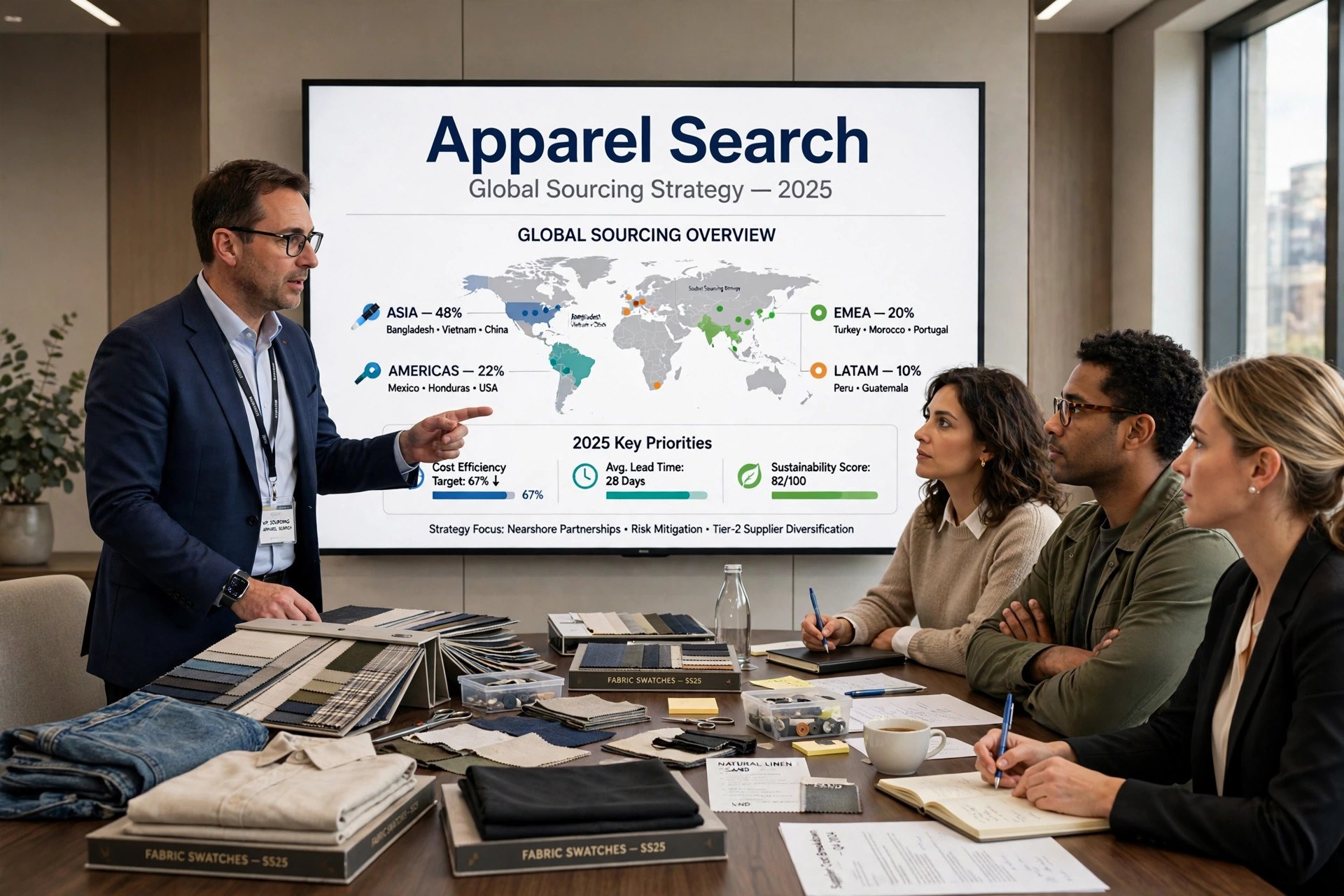
Strategy work starts with the map. The vice president decides the sourcing footprint for the division: how volume is divided between nearshore and offshore countries, which countries hold which products, where dual sourcing protects against disruption, and when a new country or a new capability is worth qualifying. Tariffs, trade agreements, freight routes and political risk are standing inputs, not annual surprises, and the footprint is adjusted as those inputs move.
Vendor strategy is the other half: how many factories the division genuinely needs, which are strategic partners invested in over years, which are transactional, and where consolidation buys leverage or diversification buys resilience. The vice president approves new vendor onboarding and the exit of failing suppliers, balancing the human cost of moving volume against the business cost of keeping it where it cannot perform.
Budgets, Margin and Executive Accountability
The vice president owns the sourcing budget and the margin plan for the division, translating the company’s product and price strategy into landed-cost targets that managers must hit. Performance is reviewed against cost, delivery, quality and compliance dashboards, and the vice president explains the variances to merchandising and finance leadership — why costs moved, which orders are at risk, what recovery is planned — in terms the wider business can act on.
Cross-functional leadership is constant: the vice president works with design on what can be made where, with technical teams on specifications factories can hit, with logistics on shipping and duty, and with finance on currency and payment exposure. When a crisis hits — a factory closure, a port disruption, a compliance finding — the vice president is the executive who decides the response and carries it to the chief executive.
Risk management is a standing discipline at this level rather than a reaction: the vice president keeps qualified backup capacity for critical products, watches concentration risk where too much volume sits with one factory or one country, and stress-tests the season’s plan against the disruptions experience says are coming — then briefs leadership on exposure honestly, before events force the conversation.
Compliance, Sustainability and People Leadership
At this level, compliance and sustainability become policy, not casework. The vice president sets the division’s standards for factory audits, working conditions, environmental performance and materials, approves the programmes that enforce them, and answers for the division’s record to customers, auditors and the board. Sustainability targets — certified materials, reduced waste, lower-carbon transport — are owned as sourcing commitments with measurable progress, not as aspirations.
People leadership is the multiplier. Vice presidents build and develop teams of managers and coordinators, set succession so no portfolio depends on one person, and create the culture — honest reporting of bad news, respect for factory partners, commercial discipline — that decides whether the sourcing organisation performs. The role’s leverage is entirely through its people: the vice president personally negotiates only the largest deals.
Skills, Qualifications and Career Path
The role requires strategic judgement, financial literacy, deep sourcing-country and factory knowledge, executive communication and the temperament to make large, irreversible decisions with incomplete information. Vice presidents almost always arrive from senior sourcing manager roles, often after running a major category or country, and commonly hold fashion, business or supply-chain qualifications alongside a long record of delivered results.
Work is split between head office, factories and buying offices worldwide, with heavy travel. The path upward is to senior vice president, owning sourcing across the whole company, or to chief sourcing or supply-chain officer roles; some vice presidents move into general management of a brand or into consultancy and advisory work for companies rebuilding their sourcing organisations.
Common Questions
What does a sourcing vice president do that a sourcing manager does not?
The vice president sets strategy for a division or region — the country footprint, the vendor base, budgets and margin targets, compliance and sustainability policy — and leads the managers who run individual portfolios. The manager executes within that strategy for one category or country.
How large is a sourcing vice president’s responsibility?
Typically a division, brand or region: several sourcing managers and their coordinators, factories across multiple countries, and a budget and margin target reported to executive leadership. The senior vice president above them owns sourcing company-wide.
How do you become a sourcing vice president?
By progressing through coordinator and sourcing manager roles, then senior manager responsibility for a major category or country, building a record of margin, delivery and compliance results plus the strategic and people-leadership skills the executive level demands.
More to Explore
Sourcing Resources
References & Further Reading
More Job Description Categories
- Buying Job Descriptions
- Design Job Descriptions
- Marketing & PR Job Descriptions
- Miscellaneous Job Descriptions
- Planning & Allocation Job Descriptions
- Production & Sourcing Job Descriptions (current)
- Sales & Selling Job Descriptions
- Transportation & Warehouse Job Descriptions