Jil Sander Profiles
The life behind the pure line — Hamburg, Milan, and the discipline of less.
Jil Sander (born November 27, 1943, in Hamburg) is the designer who made less into a luxury. For five decades, through her own house's rises, sales and her three departures from it, she held one position: that cut and cloth, perfected, are enough — that a white shirt, a tailored coat and a perfect trouser need no decoration to be the most expensive-looking clothes in the room. This profiles page tells the career in order: the Hamburg boutique, the Milan years, the Prada sale, and the returns. Of all the pages in this series, this is the one the others depend on.
The biography searches in the references gather the wider career coverage, and the house's official website is linked there as well. The collections, runway and news pages in this series file the fashion work the life produced.
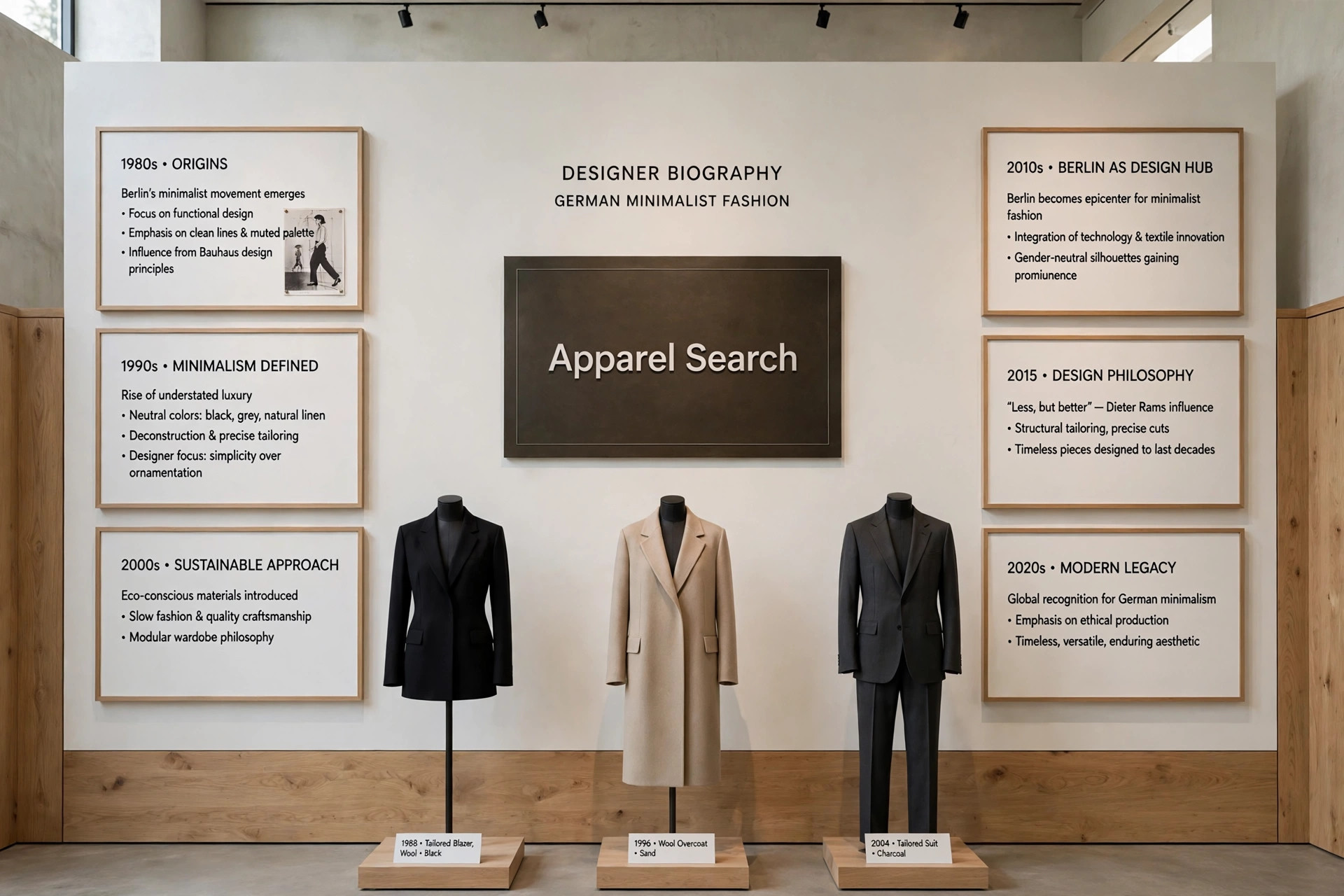
Illustrative image created for this guide — an artistic impression, not this designer's own garments.
News, Photos & VideoCollectionsFall FashionsFashion WeekNewsProfilesRunwaySpring Fashions
Hamburg, Textile Engineering and the First Collection
Sander studied textile engineering in Krefeld — a technical grounding in cloth itself that marks her work to this day — and worked as a fashion journalist in New York and Germany before opening her first boutique in Hamburg in 1967, initially selling other designers alongside a few pieces of her own. Clients asked for more of hers; in 1973 she presented her first collection under her own name, and in 1978 founded her company. The clothes were a deliberate refusal of the era's fuss: no frills, no prints courting attention, only proportion, fabric and finish.
Germany gave her a loyal clientele but not a fashion capital, and in 1988 she took the decisive step of showing in Milan. The timing was perfect. As the 1980s' ornamented excess collapsed, the industry was ready for her discipline, and through the 1990s Jil Sander became the defining minimalist house: the label executives and editors wore when they wanted clothes that signaled judgment rather than wealth.
Prada, the Departures and +J
In 1999 she sold a majority stake in her company to the Prada Group, and within a year had left after clashing over the house's direction. Her return in 2003 was greeted as a restoration; she left again in 2004. The house continued under Raf Simons, whose tenure critics ranked among the finest readings of her code, and in 2012 Sander herself returned for a third tenure before departing finally in 2013. Each episode restated the same truth: the name on the door was a philosophy, and the philosophy had one author.
Her widest audience came from an unexpected direction: +J, the line she designed for Uniqlo from 2009, which carried her discipline — the perfected coat, shirt and knit at chain-store prices — to millions of wearers, and was revived to similar acclaim a decade later. Read with the collections page, the profile completes its arc: a designer whose entire career is one argument, that luxury is what remains when everything unnecessary has been removed.
Common Questions
Who is Jil Sander?
Jil Sander, born in Hamburg on November 27, 1943, is the German fashion designer who founded her label in Hamburg, took her shows to Milan in 1988, and became the defining minimalist of the 1990s — famous for pure line, luxury fabric and the refusal of decoration.
What is Jil Sander's design philosophy?
Subtraction: a garment is finished when nothing more can be removed. Her clothes rely on perfected cut, exceptional fabric and exact proportion — above all in tailoring, coats and white shirts — rather than ornament, print or embellishment.
Why did Jil Sander leave her own label more than once?
She sold a majority stake to the Prada Group in 1999 and left in 2000 after disagreements over direction; she returned in 2003, left again in 2004, returned once more in 2012 and departed finally in 2013. The house continued under other designers.
More to Explore
References & Further Reading
- Fashion Week Photos
- Jil Sander Fashion Designer Profile Search
- Jil Sander Fashion Designer Profile News
- Jil Sander Fashion Designer Profile Photos
- Jil Sander Fashion Designer Profile Videos
- Jil Sander Profiles
- Jil Sander Designer Profile News
- Jil Sander Designer Profile Images
- Jil Sander Designer Profile Video
- official Jil Sander website
- Fashion Models