Jil Sander Spring Fashions
Spring at its lightest — the signatures with their layers shed.
Spring is where a designer's philosophy breathes easiest, and the spring collections of Jil Sander show the signatures with their layers shed: radical minimalism — immaculate tailoring, pure line and luxury fabrics in white, black and grey, with ornament refused on principle, in lighter cloth and brighter color. The construction shows plainly in spring — there is less fabric to hide behind — and these collections have always treated that exposure as an opportunity rather than a risk. This page files the spring strand of the record in this guide.
The Photos section gathers spring looks across the collections, and the search routes in the references run Jil Sander spring fashion news, photo and video searches. Pair this page with the fall fashions page for the signatures at autumn weight, and with the collections page for both seasons filed together. The designer's official website is linked in the references.
Illustrative image created for this guide — an artistic impression, not this designer's own garments.
News, Photos & VideoCollectionsFall FashionsFashion WeekNewsProfilesRunwaySpring Fashions
The Spring Register
Every house has a season that flatters it, and spring flatters a designer of ease and movement. The signatures hold — the garments the designer is known for reappear in lighter fabrics — but the register changes: less structure visible, more movement, the palette of white, black, grey and navy — color used sparingly and never as decoration brightened by the season. Spring is also where the wider world of the house shows most naturally: the accessories that complete a look sit at hand and neck height, unwrapped from coats, and the season's dressing is finished in the open air rather than under layers.
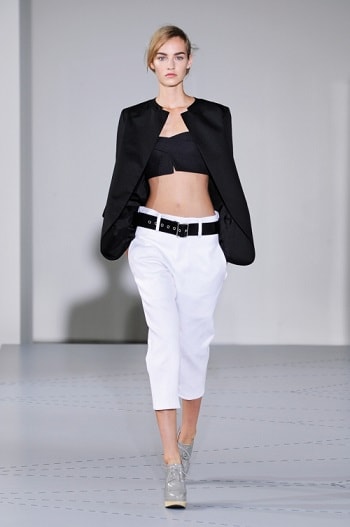
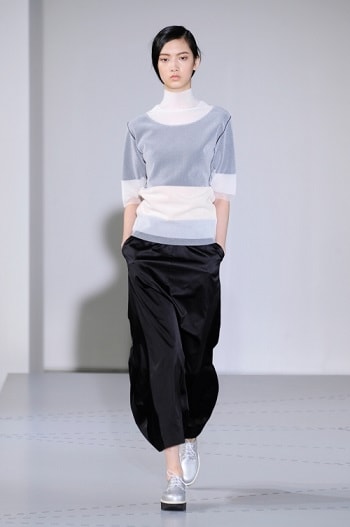
Construction is the spring story's quiet half. Light garments leave nowhere for careless detail to hide: a soft shoulder, a hem, a closure chosen without thought shows immediately. Spring collections that finish every look completely are demonstrating discipline — subtraction as luxury — every seam, fabric and proportion perfected until nothing can be removed — and the imagery gathered here, spanning the spring collections across the years, lets a reader watch that discipline hold season after season.
Spring on the Calendar
The spring collections arrive through the calendar the fashion week page in this series covers: presented in Milan, reviewed on the news page, photographed on the runway page, and filed here. Filed against the fall strand, the spring pages complete the proof of the designer's central claim — that the signatures are a philosophy, not a fabric weight, and that they hold in any season. Read with the runway page for the spring shows in sequence.
The profiles page supplies the life behind the lightness: Born in Hamburg on November 27, 1943, Jil Sander studied textile engineering, worked as a fashion journalist, and opened a boutique in Hamburg in 1967, presenting her first collection under her own name in 1973. She took her shows to Milan in 1988 and through the 1990s became the defining minimalist of the decade, proving that cut and cloth, perfected, need no decoration. She sold a majority stake in her company to the Prada Group in 1999 and left the house in 2000, returned in 2003 and left again in 2004, then returned once more in 2012 before departing in 2013; her +J line for Uniqlo, launched in 2009, carried the same discipline to a mass audience. With this page the seasonal record in this series is complete — the two registers of one achievement, each filed in its own place.
Photos
Common Questions
What characterizes Jil Sander spring fashions?
The designer's signatures at their lightest: radical minimalism — immaculate tailoring, pure line and luxury fabrics in white, black and grey, with ornament refused on principle, carried into lighter cloth, brighter color and simpler layering.
How does spring differ from fall in this record?
Spring lightens everything — fabric, layering and mood. The fall fashions page in this series shows the same signatures at full weight; the collections page holds the shared view of both seasons.
When are the Jil Sander spring collections presented?
On the Milan calendar covered by the fashion week page in this series, months ahead of the spring they dress — and filed here once the coverage settles.