Manish Malhotra Profiles
From Bollywood costume design to bridal couture — and the ombré saree he took to the skies with Air India.
Manish Malhotra is an Indian fashion designer and couturier based in Mumbai, and one of the defining names in modern Indian glamour. He built his career in an unusual order: first he dressed the stars of Hindi cinema, learning how clothes behave under lights, cameras and movement, and only then did he build a couture label of his own. The result is a designer whose bridal lehengas, sequinned sarees and red-carpet gowns carry the polish of the film set into real celebrations — and whose work reached an even wider audience when he designed the new uniforms for Air India, recasting the flag carrier's storied saree in his signature ombré.
This profiles page tells the career as this guide records it: a Mumbai beginning without formal design training, a breakthrough in Bollywood costume design, the couture label launched in 2005, the sequin-and-embroidery signature that made him the bridal designer's name of choice for generations of film stars, and the Air India commission that carried that signature into the sky. The biography searches in the references gather the wider career coverage, and his official website is linked there as well.
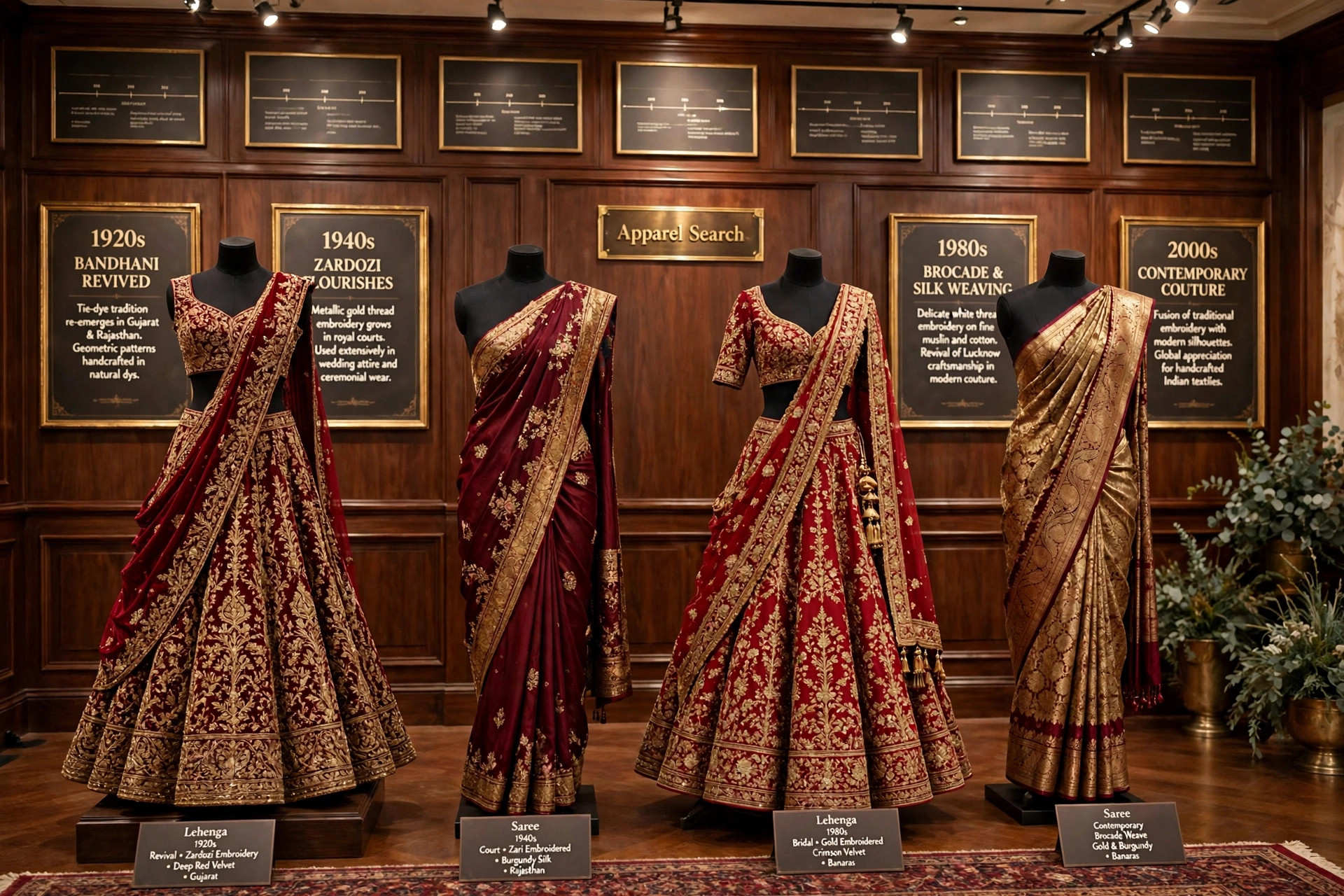
Illustrative image created for this guide — an artistic impression, not this designer's own garments.
Early Life & Training
Manish Malhotra was born in Mumbai, the city that has remained his home and the base of his atelier throughout his career. He studied at Elphinstone College in Mumbai, and — unusually for a designer of his standing — he had no formal training in fashion design. He worked briefly as a model, and a lifelong love of Hindi cinema pulled him towards the film sets where he would build his career. In his own words, quoted in magazine profiles of the label, he is an untrained, self-taught designer who learnt on the job.
That outsider beginning shaped his whole approach. Instead of studying fashion in a classroom, he learned it through character, camera and colour: what a fabric does when an actor turns, how embroidery reads at a distance, how a silhouette tells an audience who a character is before a line is spoken. Those lessons, absorbed on set rather than in school, still define his work — clothes designed to move, to catch light, and to make an entrance.
The Career
Malhotra began his career in 1990 as a costume designer in the Indian film industry, popularly known as Bollywood, making his debut with the film Swarg, styling Juhi Chawla. Through the early 1990s he built a reputation for giving film wardrobes a contemporary polish, and the turning point came with Rangeela in 1995: its modern, confident styling won him the Filmfare Award for Best Costume Design — the first such award of his career — and made him the industry's most in-demand costume designer.
What followed was a long run of films whose looks entered popular culture: the wardrobes of Dilwale Dulhania Le Jayenge, Kuch Kuch Hota Hai and Kabhi Khushi Kabhie Gham…, the New York polish of Kal Ho Naa Ho, the retro glamour of Om Shanti Om and the sequinned saree that became a party-wear standard after Dostana. He treated costume as storytelling — outfits that were character-driven and trend-setting at the same time — and in doing so he redefined and contemporised how actors looked in Indian cinema, dressing successive generations of leading stars, from Sridevi and Kajol to Kareena Kapoor Khan, Priyanka Chopra, Deepika Padukone and Alia Bhatt.
The move from costumes to couture came in stages. In 1999 he ventured into mainstream fashion with a high-profile couture store in Mumbai — the first costume designer to make that crossing — designing first for private brides and then for a growing clientele who wanted the film-set glamour for their own weddings. In 2005 he launched his couture label under his own name, Manish Malhotra. The label grew from bridal couture and occasionwear into diffusion lines, ready-to-wear and menswear, and in time into high jewellery and beauty, retailing from Mumbai, Delhi and beyond, including Dubai. Through it all, the label stayed synonymous with one idea: opulent, contemporary Indian wear, made with Indian colours, textures, embroideries and craftsmanship.
Design Signature
Malhotra's signature is cinematic Indian glamour. Its first element is light-catching embellishment: sequins, crystals, zardozi and metallic threadwork layered so a garment shimmers as its wearer moves — embroidery engineered for an entrance, whether the entrance is a wedding aisle or a red carpet. The second is fluidity: chiffon, georgette, organza, tulle and velvet chosen because they drape and flow on the body rather than standing away from it. The third is colour used theatrically — rich jewel tones and dramatic ombrés for brides, soft pastels, ivories and metallics for cocktail evenings — and the ombré gradient in particular has become a hallmark technique closely associated with his name.
Beneath the sparkle sits heritage craft, reimagined. He champions Indian embroidery traditions — chikankari, Kashmiri embroidery, and in his collections phulkari, mirror-work, sozni, gota and zari — and glamorises them rather than museum-freezing them: chikankari sprinkled with glitter, traditional silhouettes dramatised with modern blouses, capes and corsetry. Bridal couture is the heart of the house: the embellished lehenga, in classic reds, jewel tones, signature pastels and ombrés, and the sequinned saree, which he turned from a film costume flourish into a staple of Indian evening dressing. It is a design language built to be recognised across a room — and, as Air India would show, across an airport.
The Air India Uniform
On 28 September 2023, Air India announced its partnership with Manish Malhotra to design new uniforms for its frontline employees — cabin crew, cockpit crew, ground and security staff — as part of the airline's new global brand identity under the Tata group. The collection, crafted in his Mumbai atelier and developed in close consultation with cabin crew representatives and the airline's in-flight services team, was unveiled on 12 December 2023, and introduced in a phased rollout over the following months, debuting with the entry into service of Air India's first Airbus A350.
For female cabin crew, the centrepiece is a ready-to-wear ombré saree — a saree that keeps the silhouette of the airline's long saree tradition without requiring intricate draping on duty. Its patterns are reminiscent of Indian heritage architecture, the jharokha, and of the Vista, the airline's new logo icon, and it is worn with a comfortable blouse and blazer. Rank is written in colour: senior crew wear aubergine-to-burgundy ombré sarees with aubergine blazers, a pairing the airline describes as exuding authority and sophistication, while junior crew wear vibrant red-to-purple ombré sarees with red blazers, embodying youthfulness and energy. In a first for the uniform, the sarees can optionally be worn with comfortable pants — the pant-saree option — giving crew the flexibility to choose the style they most identify with, in what the airline calls a unique East-meets-West look.
Male cabin crew wear bandhgalas, the high-collared Indian formal jacket, bringing the same heritage tailoring to the men's uniform. Cockpit crew wear a classic black double-breasted suit with a print inspired by the Vista, signifying professionalism and timelessness. The details complete the picture: dual-tone black and burgundy block heels, pearl earrings and sling bags for female crew, and black brogues for male crew — all in a palette of deep red, burgundy and aubergine with accents of gold, paying homage to India's cultural heritage. Malhotra also crafted uniforms for ground staff, engineers and security personnel, to be revealed in due course. Read piece by piece, the uniform is his couture signature translated into workwear: the ombré, the jewel tones and the Indian silhouette, made practical for a working cabin. Our dedicated guide walks through every garment: see the Air India uniform guide.
Beyond the Uniform
The Air India commission matters beyond aviation because it shows the reach of a career that began with a sketchbook on a film set. Malhotra took the visual language he had built for cinema — glamour rooted in Indian craft — and applied it first to the wedding, the most tradition-bound occasion in Indian life, and then to a national flag carrier, the most public uniform in Indian travel. In each setting the method is the same: respect the silhouette people already love, then modernise its construction, its colour and its finish until it feels unmistakably current.
His legacy, as this guide records it, is the bridge he built between Bollywood and Indian couture. Before him, film costume and high fashion were largely separate worlds; he made the costume designer a couturier, the film look a bridal reference, and the sequinned, ombré, richly embroidered Indian garment a global shorthand for celebration. For students of fashion, his career is also a case study in the self-taught route: no design school, but three decades of learning in public, one character, one bride and one uniform at a time.
Airline Uniform Designers
Common Questions
Who is Manish Malhotra?
Manish Malhotra is a Mumbai-born Indian fashion designer and couturier who began as a Bollywood film costume designer in 1990 and launched his couture label in 2005, becoming known for bridal couture and sequin-and-embroidery glamour.
When did Manish Malhotra launch his label?
He launched his couture label, Manish Malhotra, in 2005, after more than a decade dressing film stars and after opening his first couture store in Mumbai in 1999.
What is Manish Malhotra's design signature?
His signature is cinematic Indian glamour: sequins, crystals and heritage embroidery such as chikankari and Kashmiri work on fluid fabrics, in jewel tones, pastels and dramatic ombrés, most famously in bridal lehengas and sequinned sarees.
What did Manish Malhotra design for Air India?
He designed Air India's new crew uniforms, unveiled on 12 December 2023: ready-to-wear ombré sarees — aubergine-to-burgundy for senior crew and red-to-purple for junior crew — with a pant-saree option, bandhgalas for male cabin crew and double-breasted suits for pilots, debuting with the airline's first A350.