Ettore Bilotta Profiles
The Roman couturier who brought haute couture to the cabin — for Etihad, Turkish Airlines and beyond.
Ettore Bilotta is an Italian haute couturier who carried the discipline of the couture salon into the aircraft cabin. From his atelier in Milan he built a reputation first on haute couture and bridal gowns — clothes cut with a tailor's sense of proportion and finished by hand — and then, unusually for a couturier, on uniforms: the wardrobes of entire airlines. He is the designer behind the Etihad Airways uniform revealed in December 2014 and the Turkish Airlines uniform unveiled in September 2018, two of the most discussed airline wardrobes of their decade, and he also dressed Alitalia and Kuwait Airways. This profile follows the whole arc: the surveyor who became a couturier, the apprenticeship that taught him classical tailoring, the couture collections that followed, and the two flagship airline programmes — for two different flag carriers — that made his name known far beyond Rome and Milan.
Airlines come to a couturier when a uniform has to do more than identify staff: it must carry a brand at altitude and in a hundred airports, and survive the working day of the people who wear it. Bilotta's answer was to treat the uniform as couture with a job to do — real tailoring, noble fabrics, a palette drawn from the airline's own identity, and accessories finished with the same care as the garments.
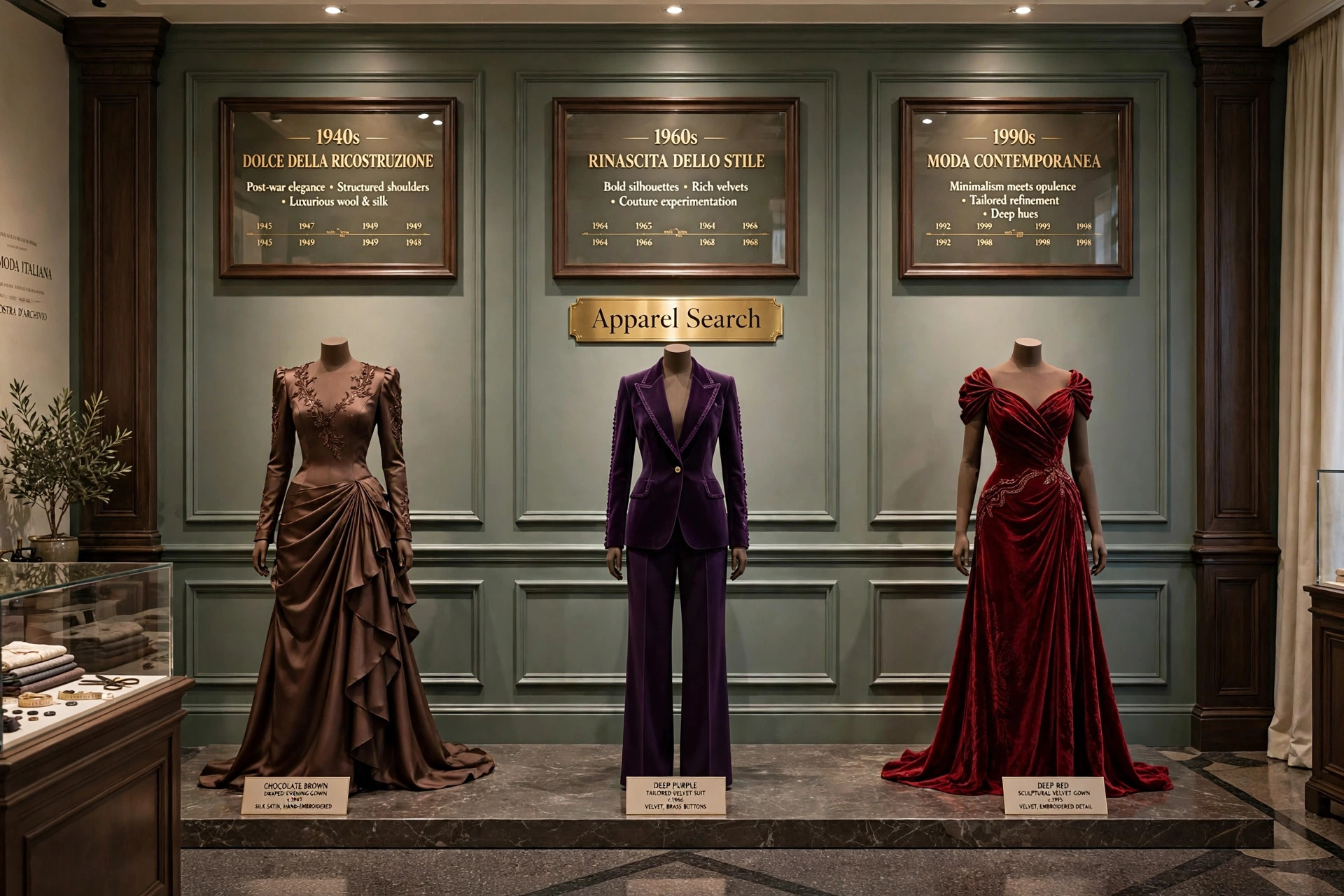
Illustrative image created for this guide — an artistic impression, not this designer's own garments.
Early Life & Training
Bilotta came to fashion by an indirect road. He was a surveyor before he became a designer — work that trained his eye in measurement and line, even if, as he recalls, his hand was very stiff at first when he turned to cloth. His journey began out of pure passion after he completed his studies, and his first assignment was a formidable one: haute couture for a bridal collection. Bridal is the least forgiving corner of couture, where fit, structure and finish are all on show at once, and it remained a constant in his work — he never abandoned it.
Travel completed his education. In 1988 he was in Zurich working in prêt-à-porter, learning the ready-to-wear side of the trade. In 1992 he moved to Milan to work alongside Raffaella Curiel, and in her atelier he learned the secrets of haute couture: the sense of proportion for a suit or a gown, and the entire classical terminology of tailoring — he has described living there as entering paradise. He then returned to Rome to collaborate with Lancetti. Rome is his city of origin — he is a Roman couturier — and the Roman years turned the apprentice into an independent designer.
The Career
Working independently, Bilotta created his first haute couture collections for the Arab market — work that established his name with clients who expected ceremony and impeccable finish, and brought him to the attention of the Gulf's new flag carrier. He has said that since the launch of Etihad in 2003 he came to know the airline and its management very intimately, developing a style that evolved as the airline grew: in his words, it was about dressing a brand and an ethos, not a workforce.
The couture collections continued in parallel. In 2005 came his first haute couture collection inspired by Jugendstil, followed by Ninfe — Nymphs — dedicated to Marie Antoinette, and Acqua, themed on water: historical ornament, mythology and nature, all filtered through a classical Italian cut. Among the performers who have worn his creations is the singer Laura Pausini, for a Grammy Awards appearance — the red-carpet side of a practice that also dressed flight crews on several continents.
Design Signature
Bilotta's constant source of inspiration is the female figure. Women are his absolute muse, he says, and must always be exalted like goddesses — which is why his clothes avoid the oversized and the clumsy: no shapeless volumes, no clunky shoes, nothing that hides the wearer. In uniform design that philosophy produces skirt suits and dresses with a defined waist, fitted gloves, retro hats, and scarves carrying a designed pattern rather than a plain logo — plus detailed guidelines extending to makeup and hairstyle, so the whole presentation reads as one designed look.
The second half of the signature is place. Each programme begins from the client's own culture and colours: 1960s Paris and Rome and the Hollywood silver screen for Etihad; the golden days of Italian fashion for Alitalia; Istanbul's calligraphy, mosaics, ceramics and glassware for Turkish Airlines; diamonds and desert colours for Kuwait Airways. The couturier's hand is the constant — proportion, jacquard and print degradé, Italian wool and silk — while the story belongs to the airline wearing the clothes.
The Airline Uniforms
Etihad Airways
Etihad revealed its new Bilotta uniform at a spectacular show in Abu Dhabi on 18 December 2014, the grand finale of the airline's landmark year and timed to the arrival of its first Airbus A380 and Boeing 787-9 aircraft. It was the first major uniform relaunch since the airline's formation in 2003, and it entered service system-wide from 27 December 2014, coinciding with the A380's inaugural flight to London. The brief was timeless sophistication, glamour and elegance, and the collection merged dramatic elements of old-world haute couture from 1960s Paris and Rome with the contemporary fashions of the London, New York, Milan and Tokyo runways.
The palette came straight from the airline's brand identity. A warm chocolate brown forms the base of every variation; deep purple accents the cabin crew and lounge teams; burnt orange marks out ground crews and Special Services. The cloth was 100 per cent Italian wool with an intricate jacquard design, made across Italy with further manufacturing in Shanghai, Tunis and Bucharest, and a notable share of each outfit was handmade or hand-stitched. Women wear a skirt suit with fitted gloves, belt, hat and scarf — the hats newly aerodynamic and retro at once, inspired by Hollywood silver-screen stars and by the sweeping formations of the Emirati desert dunes. Men in the cabin wear a three-piece suit, ground crew a two-piece, and a classic trench coat adds catwalk drama over every variation. The wardrobe reached every corner of the operation, from cabin crew and Flying Nannies to First Class Inflight Chefs and the Butlers of The Residence, whose long-tailed jackets in warm brown with ivory trousers echoed the apartment they serve. Norman Jean Roy photographed the collection on the Liwa dunes — couture presented, deliberately, as landscape.
Turkish Airlines
Four years later Bilotta did it again, for a very different airline at a very different turning point. Turkish Airlines unveiled his new cabin crew uniform in September 2018, created to celebrate the carrier's 85th anniversary and to be worn from the opening of the new Istanbul Airport, entering service from 2019. Where Etihad's wardrobe looked to Rome and the golden age of flight, this one began from Istanbul itself. Bilotta said the city was the first thing that inspired him — a melting pot of art and civilisation for centuries — and he brought elements of traditional calligraphy and mosaics, together with new interpretations of Turkish motifs on modern lines, into the foulards and ties to reflect a contrast and duality. Patterns from artisanal glassware and ceramics run through the collection, and a new 'flow detail' drawn from the Bosphorus symbolises the energy flowing through the city where East meets West.
The palette is instantly recognisable: deep red with anthracite grey, carried across hats, gloves, dresses, bags and accessories. The programme was deliberately holistic — cabin crew, cockpit crew, flying chefs and ground services streamlined under a single design approach — and the garments were tested on long-haul trial flights in different climates before Miles Aldridge photographed the collection across Istanbul. The same couturier had now defined the public image of two rival flag carriers without repeating himself: brown, purple and desert romance for Abu Dhabi; red, anthracite and Ottoman geometry for Istanbul.
Alitalia and Kuwait Airways
Between the two flagship programmes came the home commission. Bilotta's Alitalia Collection, unveiled in May 2016 and introduced from early July that year, was created and tailor-made in Italy: fabrics from Tuscany, silk from Como, men's tailoring in Puglia, leather gloves from Naples and shoes from the Marche region. Inspired by the glamorous golden days of Italian fashion, it used a chevron print to shade female cabin crew from burgundy into lighter red, and ground crew from charcoal grey into green — red for Italian passion, green for the countryside and richness of Italian culture. In January 2023 Kuwait Airways announced its own Bilotta uniform, inspired by diamonds and desert colours and by the airline's 'Blue Bird' identity, worn from May 2023. He also redesigned the uniforms of Italy's Guardia di Finanza — the same eye for degradé and detail, turned to a financial police force at home.
Beyond the Uniforms & Legacy
The atelier endures alongside the airline work. Bilotta left Milan — oversaturated, in his view, with ateliers and showrooms — and in October 2024 established his atelier on the piano nobile of Palazzo Anguissola di Grazzano in Piacenza, steps from the Duomo, where haute couture dresses, bridal gowns and the tailor workshop can be seen among frescoes and gilded mirrors. Rome, the city he remains deeply attached to, honoured him in 2024 with the Margutta Award. His legacy is a rare double achievement: a working couturier's salon, still cutting bridal and haute couture by hand, whose other great body of work is worn daily at altitude by the crews of leading airlines — proof that the distance between the salon and the cabin is shorter than the industry assumed, provided the clothes are truly designed.
Airline Uniform Designers
Common Questions
Who is Ettore Bilotta?
Ettore Bilotta is an Italian haute couturier, Roman by origin and trained in Milan, who built his name first on haute couture and bridal gowns and then became the designer behind celebrated airline uniform programmes for Etihad Airways, Turkish Airlines, Alitalia and Kuwait Airways.
Which airlines has Ettore Bilotta designed uniforms for?
Bilotta has designed uniforms for Etihad Airways, Turkish Airlines, Alitalia and Kuwait Airways, and he also redesigned the uniforms of Italy's Guardia di Finanza.
What colours define Ettore Bilotta's Etihad Airways uniform?
His Etihad Airways uniform uses a warm chocolate brown base, with deep purple for cabin crew and lounge teams and a burnt orange accent for ground crews and Special Services teams, all made from 100 per cent Italian wool.
What inspired Ettore Bilotta's Turkish Airlines uniform?
Istanbul itself was his starting point: he brought traditional calligraphy and mosaics, and patterns from artisanal glassware and ceramics, into a deep red and anthracite grey collection made to mark the airline's 85th anniversary and its move to the new Istanbul Airport.